
Pont Louis-Philippe — History & Facts
What if beauty was never meant to be finished? In Pont Louis-Philippe, the play of color and form invites us into an unfinished dialogue between light and shadow, where every brushstroke speaks of possibility. Look to the left at the vibrant strokes of blue and green that coalesce around the bridge, drawing your eye toward the delicate archway. Notice how the light dances on the water’s surface, creating shimmering reflections that pulse with life. The palette is a symphony of colors, with soft pastels mingling with deeper hues, giving a feeling of both tranquility and movement.
The composition captures not just the structure of the bridge, but the very essence of the atmosphere surrounding it. Delve deeper into the painting’s emotional layers, where the contrast between the solid, steadfast bridge and the fluidity of the water symbolizes the interplay between permanence and transience. The fleeting moments of nature are caught in the reflections, presenting a juxtaposition of stability against the ephemeral. Each brushstroke seems to hold a memory, a whisper of the city’s life, suggesting that beauty can be both anchored and elusive. In the 19th century, Pont Louis-Philippe was created by Pierre-Marcel Roy during a time when artists were increasingly turning toward Impressionism, seeking to capture the immediacy of visual experience.
Living in France, Roy was influenced by the changing landscapes and urban life of Paris, a city in the throes of modernization. His work reflects this tension between the old and new, as well as his desire to explore the emotional resonance of color in a rapidly evolving world.
More Artworks by Pierre-Marcel Roy
Browse all →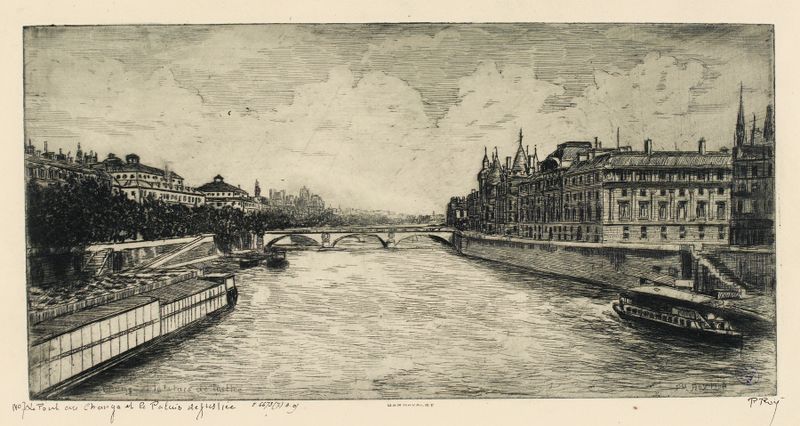
Le Pont au Change et le Palais de Justice
Pierre-Marcel Roy

Pavillon de l’Asie Russe
Pierre-Marcel Roy

La Sainte Chapelle
Pierre-Marcel Roy
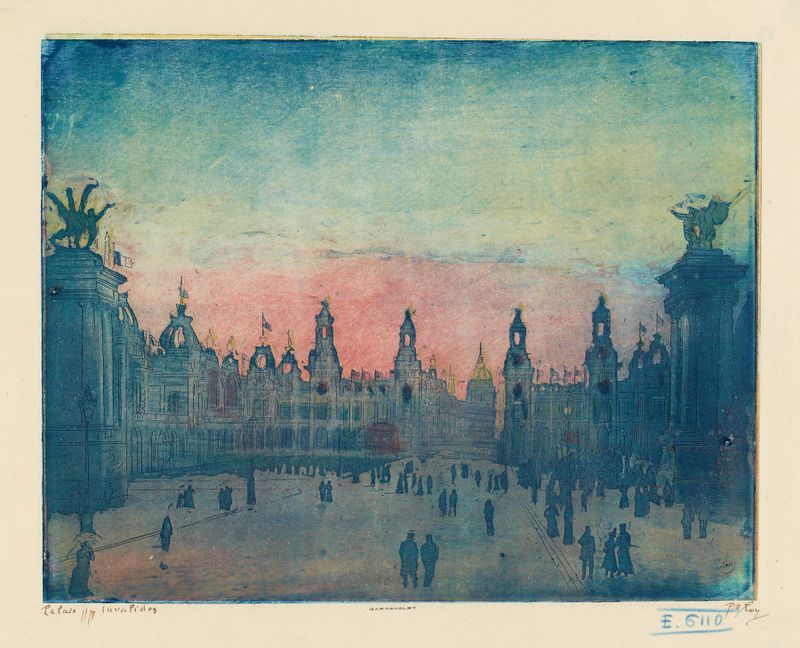
Palais des Invalides
Pierre-Marcel Roy

Eglise de Ste Eustache
Pierre-Marcel Roy

Pont Sully – Abside de Notre-Dame
Pierre-Marcel Roy

Place Maubert
Pierre-Marcel Roy

Palais d’Italie, de Norvège, d’Allemagne, d’Espagne et Roumanie
Pierre-Marcel Roy
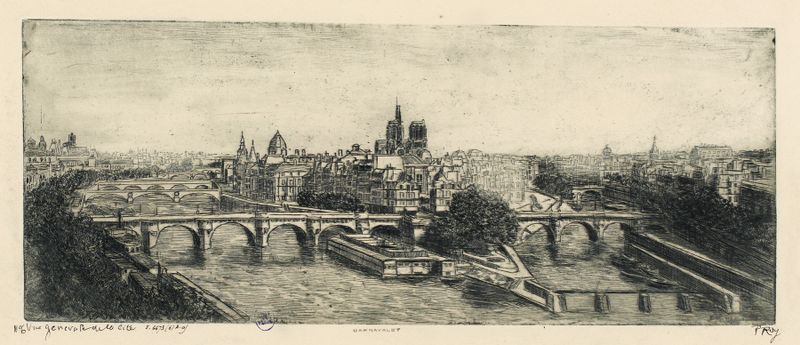
Vue générale de la Cité
Pierre-Marcel Roy

Palais de l’Electricité
Pierre-Marcel Roy





