
Poort van het slot van Heemstede — History & Facts
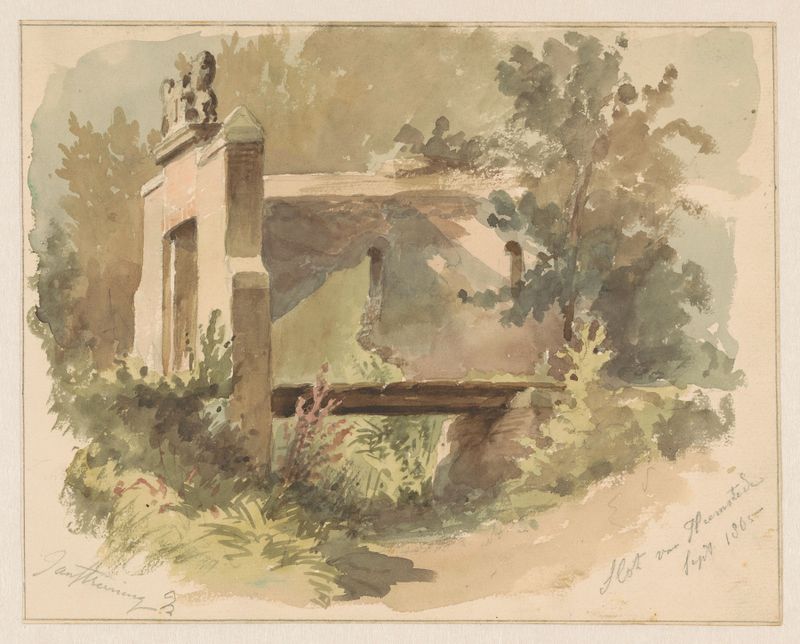
What if beauty was never meant to be finished? The stillness captured in Poort van het slot van Heemstede invites contemplation on the nature of completion and the serenity found in silence. Look to the center where the imposing gate stands tall and resolute, its stone façade textured with age and history. The artist deftly employs soft earth tones, infusing the scene with warmth, while dappled light filters through the surrounding trees, creating contrasting shadows that dance along the cobblestones. The meticulous detailing of the architecture draws the eye to the arches, beckoning viewers to explore the depth of the scene. Behind the gate lies a world of implied stories, suggesting both the weight of tradition and the quiet passage of time.
The overgrown foliage hints at nature’s reclamation, a subtle reminder of the impermanence of human constructs. This juxtaposition of manmade strength against the tender encroachment of nature fosters an emotional resonance that suggests beauty exists in decay and the untouched moments that linger in silence. Striening painted this piece in 1865, during a time when the Netherlands was experiencing shifts both in society and the art world. The artist was known for his landscape works that often captured local scenes, establishing a connection between the present and the past.
With the Romantic movement in full swing, he was influenced by the deeply rooted connection between nature and heritage, a sentiment clearly reflected in the tranquility of this work.
More Artworks by Jan Striening
Browse all →
More Architecture Art
Browse all →
The statue of Liberty
Frédéric Auguste Bartholdi

View of Houses in Delft, Known as ‘The Little Street’
Johannes Vermeer

View of Houses in Delft, Known as ‘The Little Street’
Johannes Vermeer

The Cathedral in Rouen. The portal, Grey Weather
Claude Monet

The yellow house
Vincent van Gogh

The Church in Auvers-sur-Oise, View from the Chevet
Vincent van Gogh