Ruïne van het slot van Heemstede — History & Facts
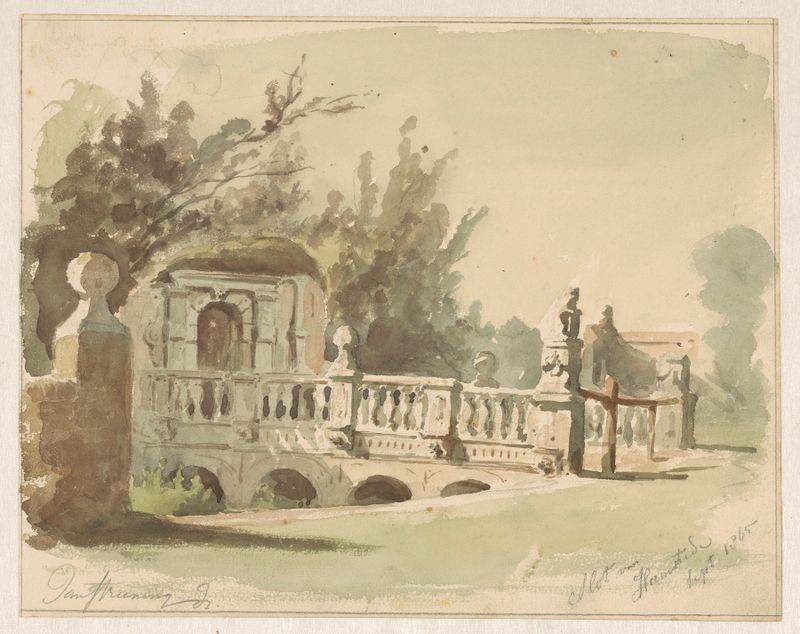
In the interplay of decay and beauty, how do we confront our truths? Jan Striening's work offers not just a glimpse of a ruin, but a portal into the heart of forgotten stories. Look closely at the crumbling walls of the castle, where ivy clings tenaciously to stone, suggesting both nature's reclamation and the passage of time. Notice the subtle play of light and shadow across the structure, as if illuminating memories of grandeur while simultaneously shrouding them in a melancholic haze. The muted earth tones evoke a sense of nostalgia, inviting the viewer to linger, to imagine the whispers of lives once lived within these walls. As you explore the composition, consider the contrast between the solidity of the ruin and the fragility of the overgrowth.
Each crack in the stone tells a tale of perseverance, while the lush greenery signifies the relentless march of nature reclaiming human endeavors. Striening captures a poignant tension—the inevitability of change and the beauty found in what remains, suggesting that truth often lies in the remnants of the past. In 1865, Striening painted this piece during a period of burgeoning interest in landscape and historical themes, reflective of the Romantic movement. Working in the Netherlands, he was influenced by his surroundings and the increasing appreciation for capturing the sublime in decaying architecture.
This artwork stands as a testament to his engagement with the ruins of history, embodying both personal introspection and the broader cultural shifts of his time.