
Pope House at Twickenham — History & Facts
Could beauty survive in a century of chaos? Pope House at Twickenham invites the viewer to ponder the enduring grace of architecture amidst the tumult of the late 18th century. Painted by Elias Martin, this work captures not just a physical structure but a longing for stability and serenity in a world increasingly marked by upheaval. Look to the center of the canvas, where the elegant facade of the house stands proudly, framed by gently swaying trees and lush greenery. Notice how the light dances upon the soft, pastel tones of the building, illuminating its classic lines and tranquil setting.
The meticulous detailing of the windows and doorway draws your eye, creating a sense of warmth and welcome, while darker shadows in the foreground evoke a contrast that deepens the scene’s complexity. Beneath the surface beauty lies a profound tension between nature and human creation, suggesting a fleeting moment of peace. The juxtaposition of the house against the wildness of the surrounding landscape hints at a longing for connection and permanence in an era of uncertainty. Each brushstroke whispers stories of lives lived within those walls and the inevitable passage of time that encroaches upon them, embodying a delicate balance between aspiration and reality. Elias Martin painted this work in 1773 during a time of significant change in Europe, marked by the stirrings of Enlightenment thought and the onset of revolution.
Living in London, he found inspiration in the shifting artistic landscape that encouraged a focus on landscape and architecture. As the world around him faced upheaval, his brush captured the serene beauty of this iconic structure, a reminder that in even the most chaotic times, the allure of harmony persists.
More Artworks by Elias Martin
Browse all →
View of Stockholm II
Elias Martin
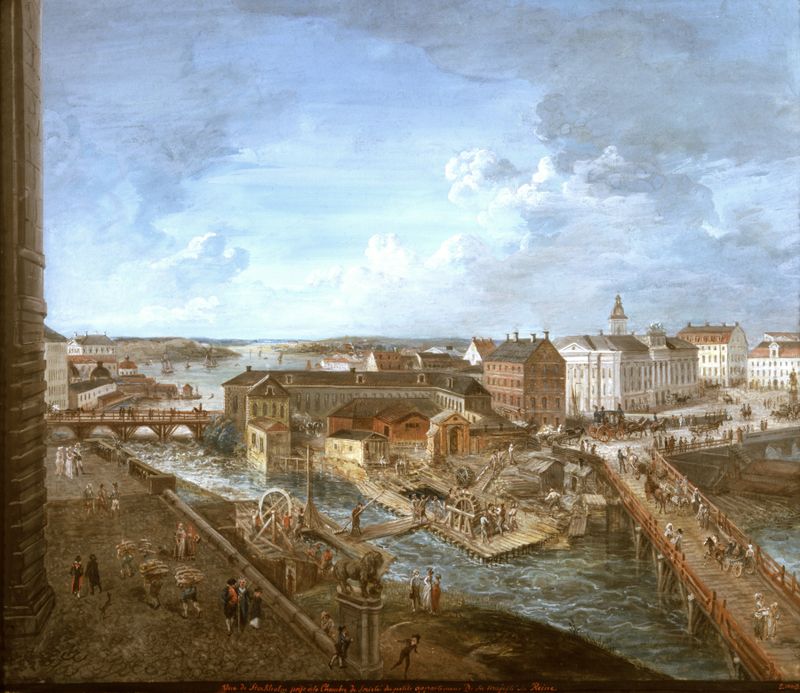
View of Stockholm from the Royal Castle.
Elias Martin
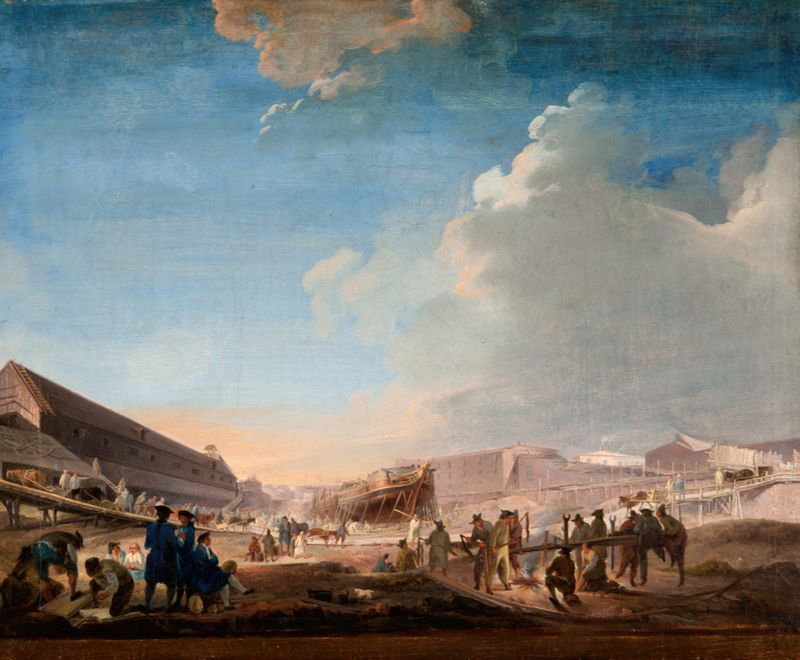
The Galley Dock at Sveaborg under Construction, viewed from west
Elias Martin

View of Stockholm I
Elias Martin
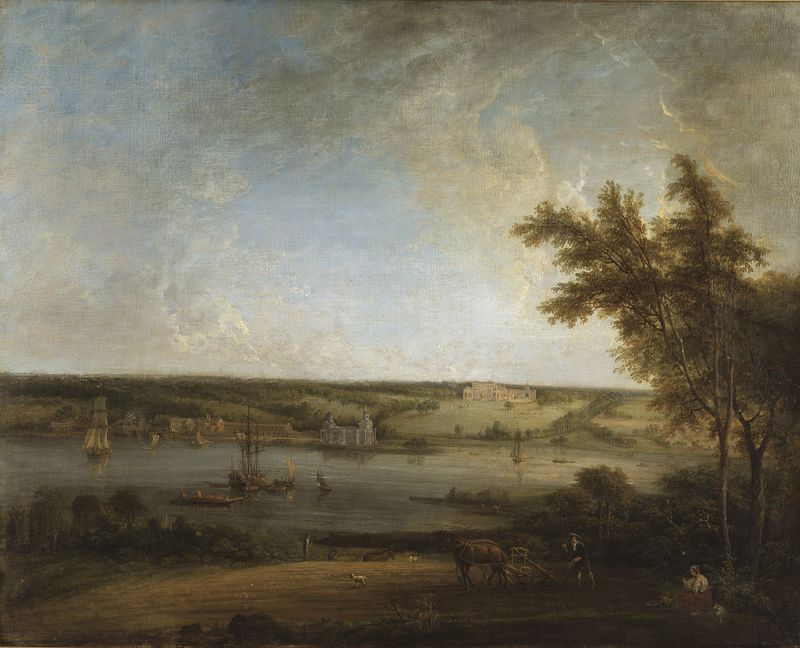
English Landscape from Mistley Hall, Essex
Elias Martin

View of Stockholm V
Elias Martin
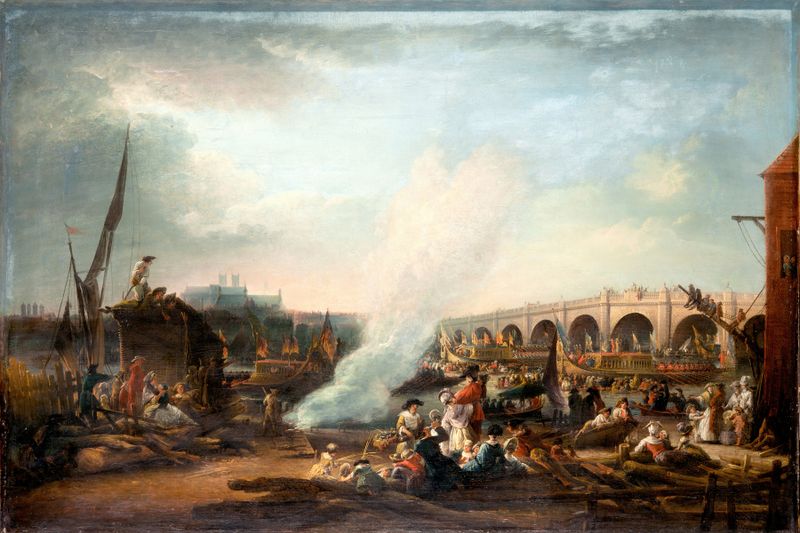
Westminster Bridge and the Thames Procession of King Christian VII of Denmark in 1769
Elias Martin

View of Uppsala cathedral from the North
Elias Martin

Landskap med herde
Elias Martin

View of Paris from the Embankment beneath the Pont Neuf
Elias Martin
More Architecture Art
Browse all →
The statue of Liberty
Frédéric Auguste Bartholdi

View of Houses in Delft, Known as ‘The Little Street’
Johannes Vermeer

View of Houses in Delft, Known as ‘The Little Street’
Johannes Vermeer

The Cathedral in Rouen. The portal, Grey Weather
Claude Monet

The yellow house
Vincent van Gogh

The Church in Auvers-sur-Oise, View from the Chevet
Vincent van Gogh