
Portrait of a Lady — History & Facts
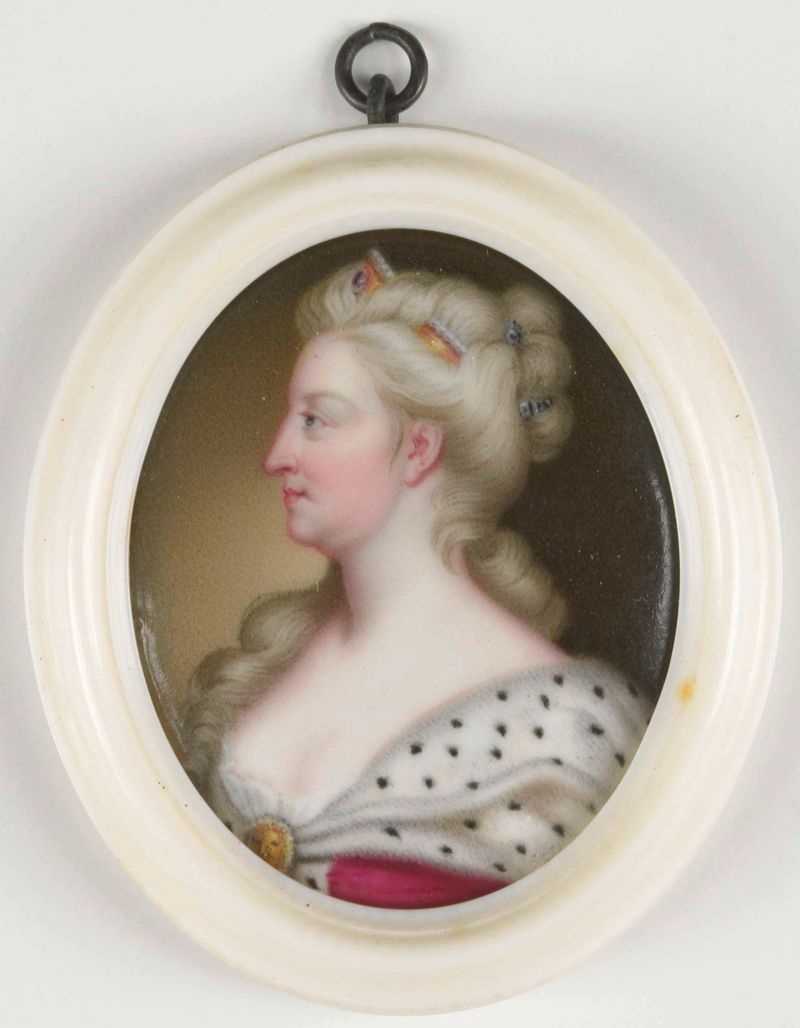
Where does light end, and longing begin? This question lingers in the air as one gazes upon this exquisite portrait, inviting deeper reflections on truth and the human condition. Look to the left at her eyes, which are strikingly alive, capturing a moment of contemplation. The delicate brushwork reveals tender textures in her skin, while the soft light casts a gentle glow that accentuates the graceful contours of her face. Notice how the rich, muted colors of her attire contrast with the ethereal warmth of her expression, creating an atmosphere that oscillates between refinement and introspection.
The meticulous detail in her lace collar speaks to an era steeped in elegance and societal expectation. Beneath her serene exterior, there lies an intricate dance of emotions. The slight upward turn of her lips hints at an inner world filled with unspoken thoughts, while the positioning of her hands suggests both restraint and yearning. The background remains intentionally vague—blurring the line between her identity and the world around her, suggesting that our truths may often be obscured by our surroundings.
Each element feels deliberate, inviting the viewer to ponder not just the lady’s identity but their own truths reflected in her gaze. In the early 1720s, Zincke was emerging as a prominent portrait painter, having relocated to London after honing his craft in Germany. This period marked a growing interest in intimate, psychological portrayals in the realm of portraiture, reflecting the evolving values of society at the time. As he painted, the art world was shifting towards a more personal exploration of character, making this work a hallmark of both his talent and the broader artistic zeitgeist.
More Artworks by Christian Friedrich Zincke
Browse all →

More Portrait Art
Browse all →
Las meninas
Diego Velázquez

Self-portrait with a Bandaged Ear and Pipe
Unidentified artist

Girl with a Pearl Earring
Johannes Vermeer

The Sampling Officials of the Amsterdam Drapers’ Guild, Known as ‘The Syndics’
Rembrandt van Rijn

The Hundred Guilder Print: the man seen on the back in the lower left corner
Rembrandt van Rijn

Portrait of Dr Gachet
Vincent van Gogh