
Portrait of Samuel Armitage — History & Facts
What if beauty was never meant to be finished? In the Portrait of Samuel Armitage, a blend of elegance and chaos unfolds, inviting contemplation on the complexities of identity captured in paint. Look to the right at the gentle sweep of Samuel Armitage's hair, meticulously rendered to convey both precision and a sense of unrestrained movement. Notice how the light falls upon his finely tailored coat, illuminating the intricate patterns of fabric while casting shadows that dance across his face, hinting at hidden depths. Birch uses a warm palette, rich browns mingled with soft highlights, to create a dynamic interplay of light and shadow, drawing the viewer into Armitage’s introspective gaze. Yet, beneath the surface of this polished exterior lies a tension between order and chaos.
The poised expression of Armitage suggests confidence, yet the fluid brushwork surrounding him evokes a sense of turmoil. There’s an undercurrent of emotion captured in the slight furrow of his brow, as if the artist has caught him in a moment of unguarded vulnerability. This juxtaposition speaks volumes about the nature of beauty, where polish and rawness coexist in a delicate balance. Thomas Birch painted this engaging portrait around 1840, during a period when American art was beginning to establish its identity.
Birch, an accomplished artist who specialized in landscapes and portraits, was deeply influenced by the Romantic movement, which emphasized emotional expression and the individual spirit. The world of art at the time was on the brink of transformation, as artists sought to explore more personal and evocative themes, paving the way for future generations.
More Artworks by Thomas Birch
Browse all →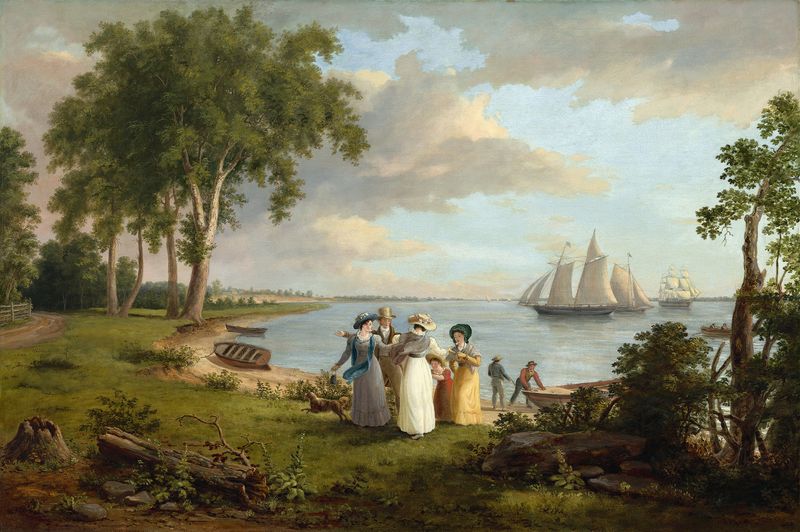
View of the Delaware near Philadelphia
Thomas Birch
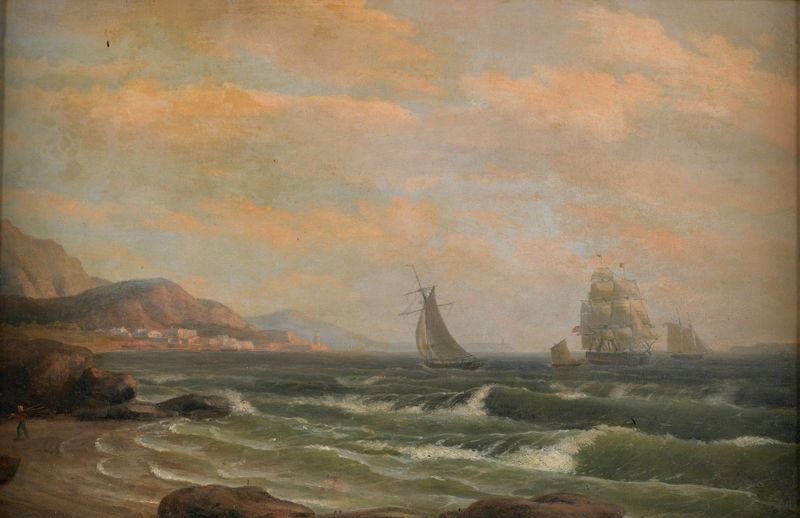
American Frigate in the Bay of St. Helena
Thomas Birch
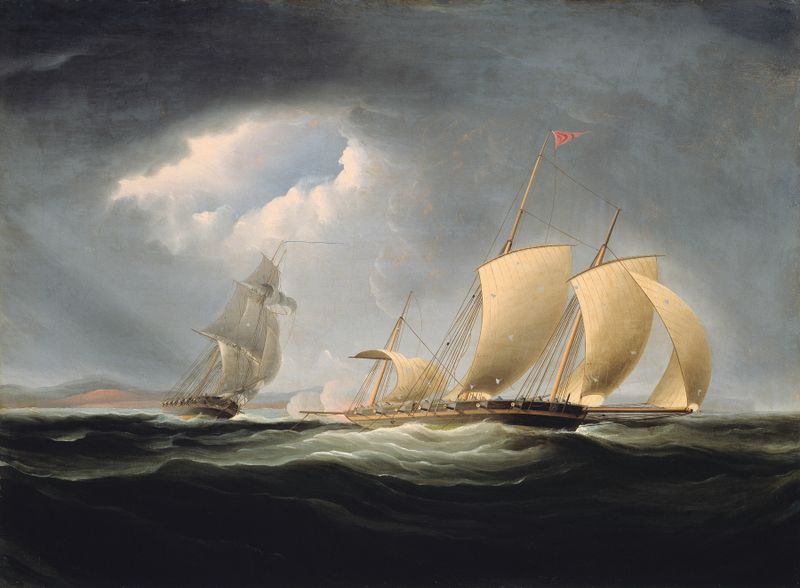
Capture of the Tripoli by the Enterprise
Thomas Birch

Southeast View of ‘Sedgeley Park,’ the Country Seat of James Cowles Fisher, Esq.
Thomas Birch

Shipwreck near a Rocky Coast
Thomas Birch
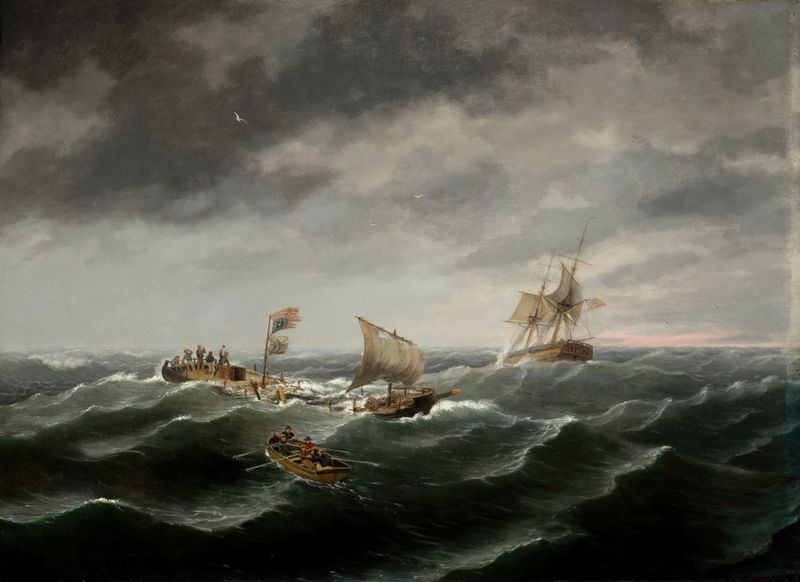
Loss of the Schooner ‘John S. Spence’ of Norfolk, Virginia, 2d view-Rescue of the Survivors
Thomas Birch

Philadelphia Harbor
Thomas Birch

U.S. Frigate President
Thomas Birch
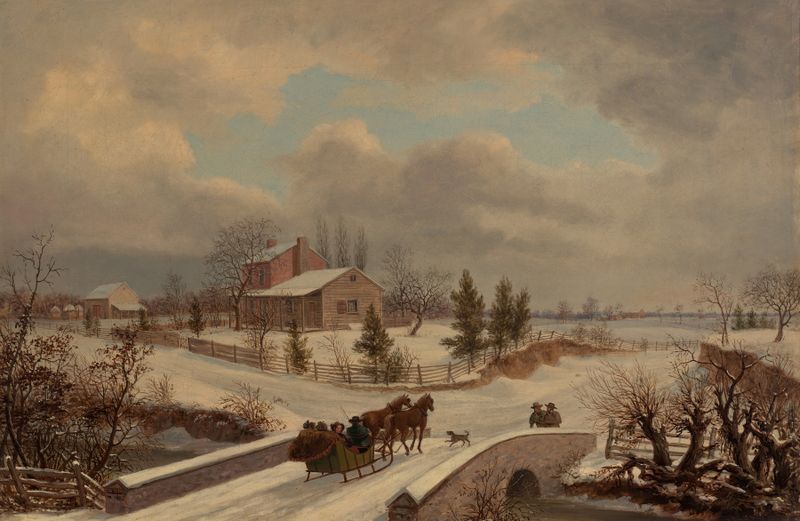
Pennsylvania Winter Scene
Thomas Birch
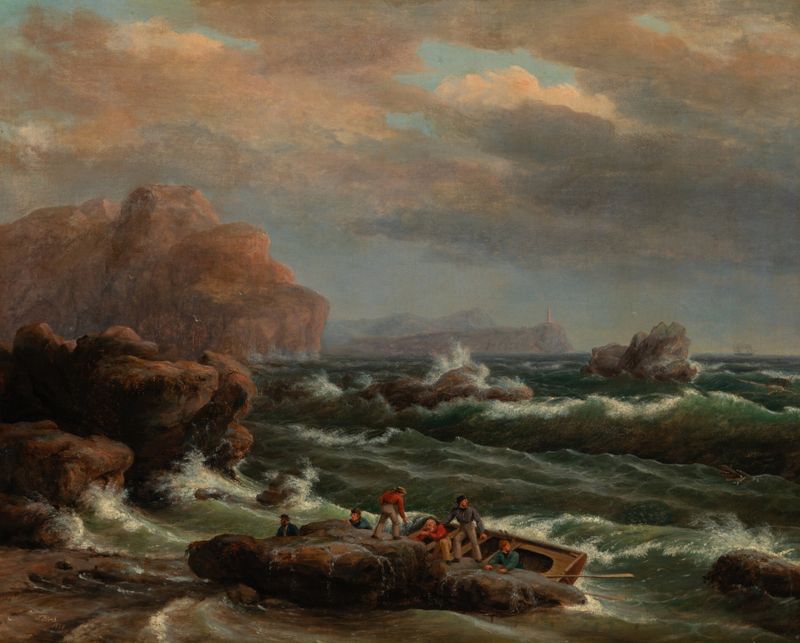
Pulling to Shore
Thomas Birch
More Portrait Art
Browse all →
Las meninas
Diego Velázquez

Self-portrait with a Bandaged Ear and Pipe
Unidentified artist

Girl with a Pearl Earring
Johannes Vermeer

The Sampling Officials of the Amsterdam Drapers’ Guild, Known as ‘The Syndics’
Rembrandt van Rijn

The Hundred Guilder Print: the man seen on the back in the lower left corner
Rembrandt van Rijn

Portrait of Dr Gachet
Vincent van Gogh