
Pulling to Shore — History & Facts
In the stillness of the moment captured, time seems to hold its breath, revealing layers of decay beneath the surface of beauty. The tug of nostalgia and the weight of loss hover in the air, inviting reflection on the transience of life and nature. Look to the left at the gentle curve of the shoreline, where a small boat makes its way homeward. The painter employs muted greens and browns, their faded hues echoing the quiet dignity of a world giving way to time.
Pay attention to the way the water ripples softly against the boat’s hull, the delicately rendered waves contrasting the solid, yet weathered, contours of the approaching land. Birch’s masterful use of light casts a warm glow on the scene, yet the shadows linger long, implying the inevitable grasp of decay even in moments of serene beauty. In the distance, the crumbling cliffside hints at the passage of time, a poignant reminder that all things, even the most beautiful, are subject to deterioration. The fishermen, seemingly in harmony with their environment, are unaware of the transient nature of their existence — their toil holds a sense of purpose, yet it is underscored by an unspoken melancholy.
The tension lies in this duality: the relentless march of decay juxtaposed against the hope of renewal found in each day’s labor. Birch painted this work in 1850, during a period that saw the rise of the American landscape movement. At this time, he was establishing his reputation, influenced by his love for the natural world and the idealism of the Hudson River School. In this evolving art landscape, he captured not only the beauty of his surroundings but also hinted at the fragility inherent in the natural order, reflecting both personal and societal awareness of impermanence.
More Artworks by Thomas Birch
Browse all →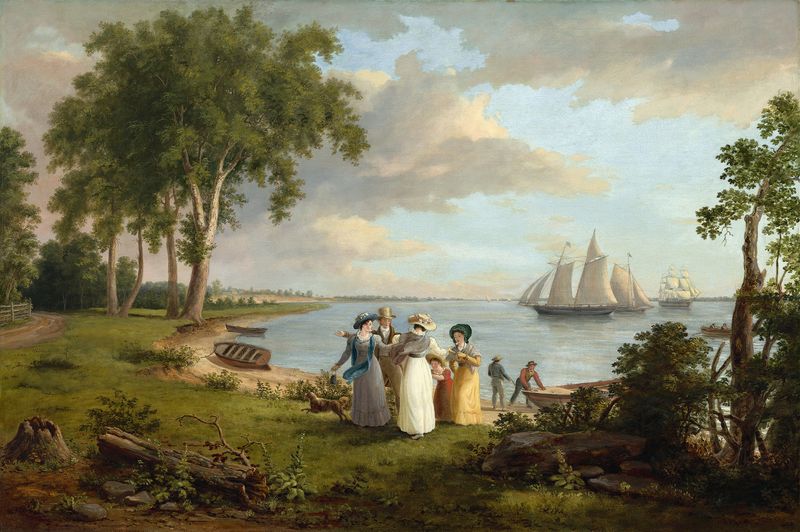
View of the Delaware near Philadelphia
Thomas Birch
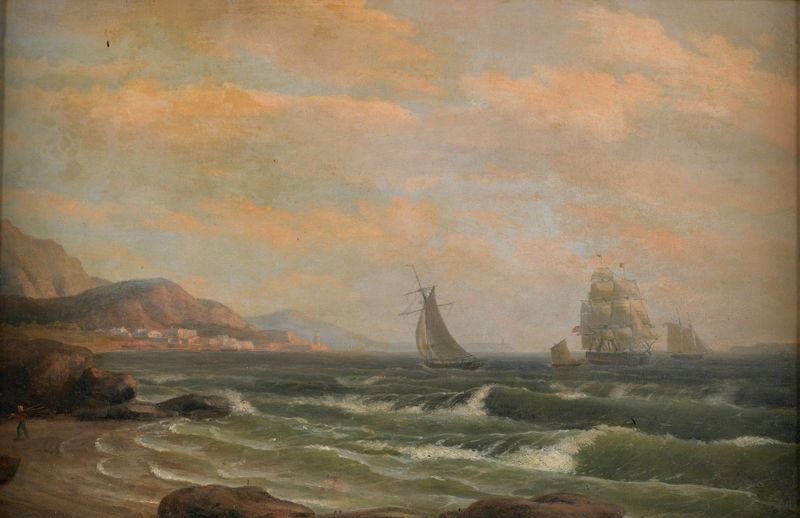
American Frigate in the Bay of St. Helena
Thomas Birch
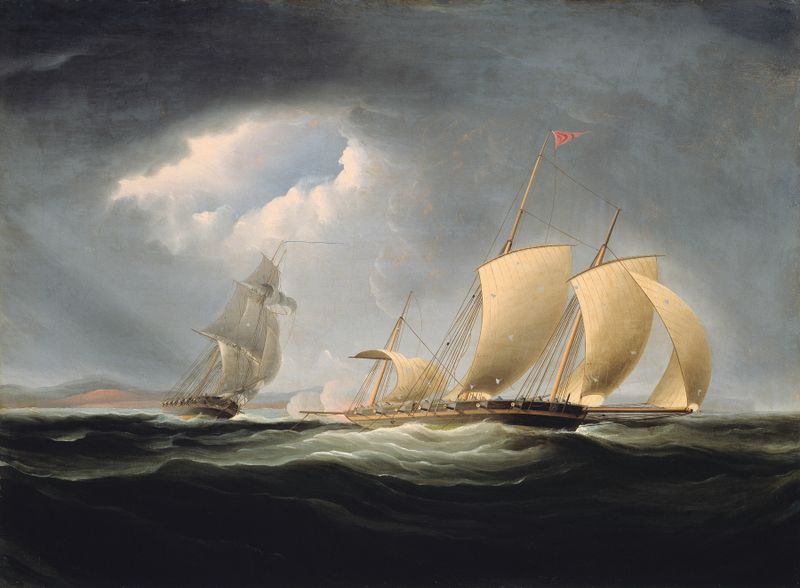
Capture of the Tripoli by the Enterprise
Thomas Birch

Southeast View of ‘Sedgeley Park,’ the Country Seat of James Cowles Fisher, Esq.
Thomas Birch

Shipwreck near a Rocky Coast
Thomas Birch
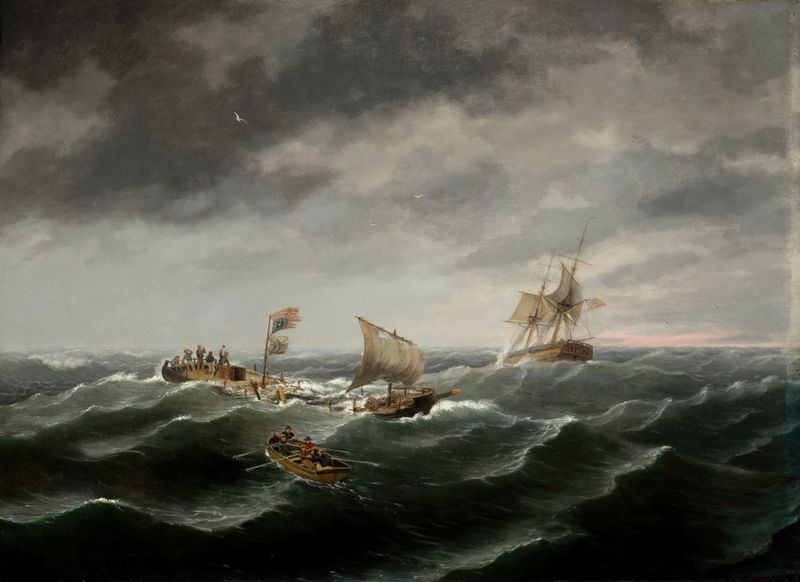
Loss of the Schooner ‘John S. Spence’ of Norfolk, Virginia, 2d view-Rescue of the Survivors
Thomas Birch

Philadelphia Harbor
Thomas Birch

U.S. Frigate President
Thomas Birch
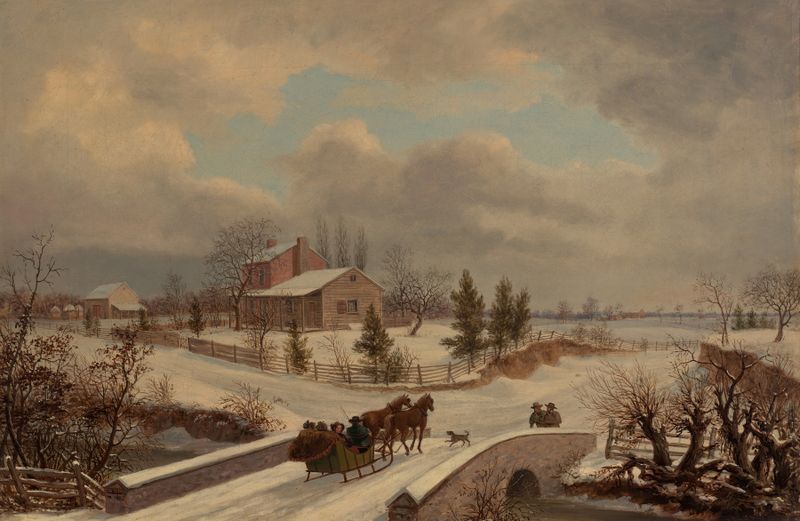
Pennsylvania Winter Scene
Thomas Birch

The Constitution
Thomas Birch





