
Southeast View of ‘Sedgeley Park,’ the Country Seat of James Cowles Fisher, Esq. — History & Facts
Can beauty exist without sorrow? In the tranquil expanse of a country estate, the essence of innocence is captured in a moment that beckons reflection. Look to the left at the meticulously rendered façade of the grand mansion, its whitewashed walls glimmering under a soft, golden sunlight. The lush greenery surrounding the estate gently leads the eye, inviting exploration of the abundant trees and flowerbeds that frame this idyllic scene. Birch’s use of vibrant greens and soft blues creates a serene atmosphere, harmonizing the natural landscape with the architectural elegance of the home, where life’s simple pleasures unfold. Yet, beneath this picturesque exterior lies an emotional tension; the solitude of the estate hints at isolation, the absence of human presence suggesting stories untold.
One can almost feel the weight of history in the shadows cast by the towering trees, whispering of both joy and melancholy. The interplay of light and shadow evokes a sense of transience, a reminder that the beauty of innocence is often tinged with the inevitability of change and loss. In 1819, when this work was created, Birch was living in Philadelphia, a city at the crossroads of burgeoning American identity and artistic expression. The early 19th century saw a rising interest in landscapes that captured the essence of the American experience, a departure from the more formal European styles.
Birch’s affection for depicting natural beauty and refined architecture reflects a broader trend as artists sought to portray the harmony between human endeavor and the untamed wilderness, marking a significant moment in American art history.
More Artworks by Thomas Birch
Browse all →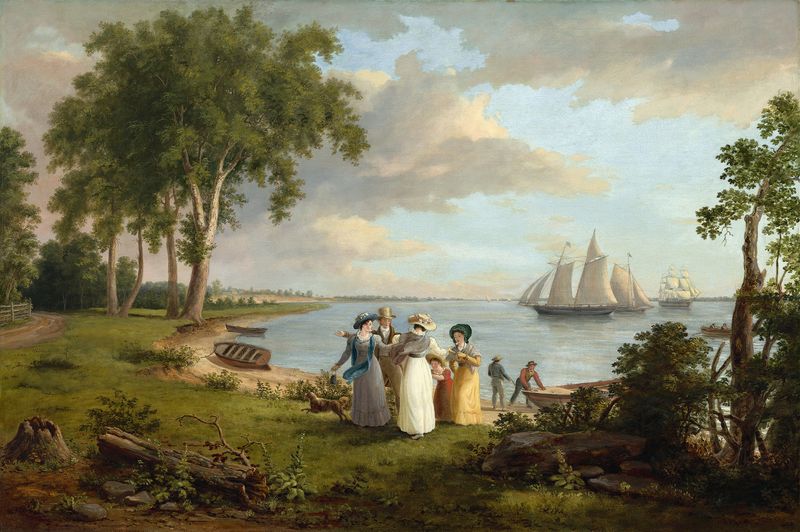
View of the Delaware near Philadelphia
Thomas Birch
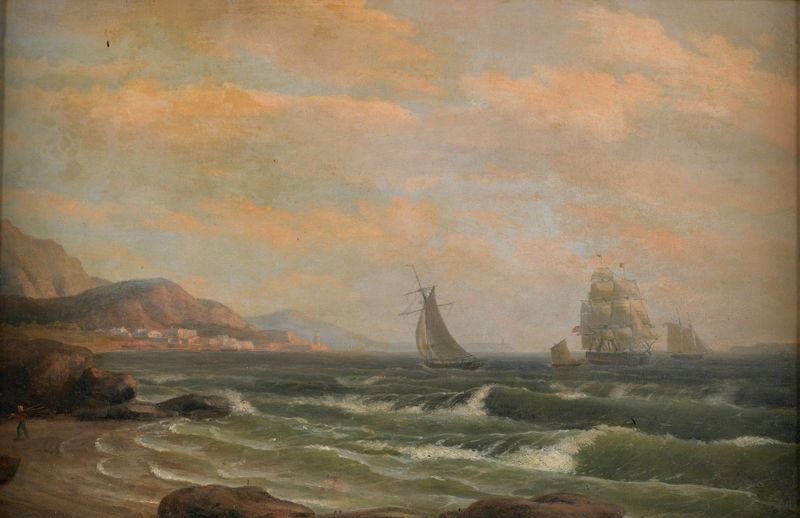
American Frigate in the Bay of St. Helena
Thomas Birch
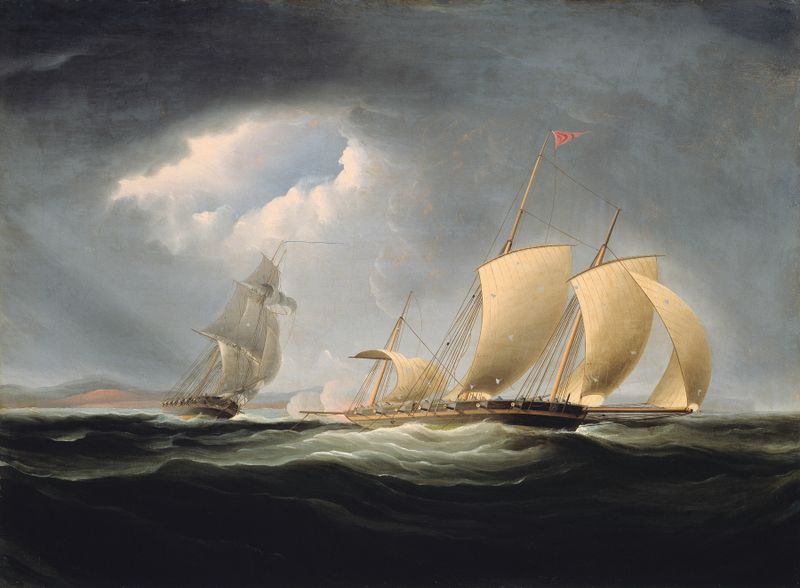
Capture of the Tripoli by the Enterprise
Thomas Birch

Shipwreck near a Rocky Coast
Thomas Birch
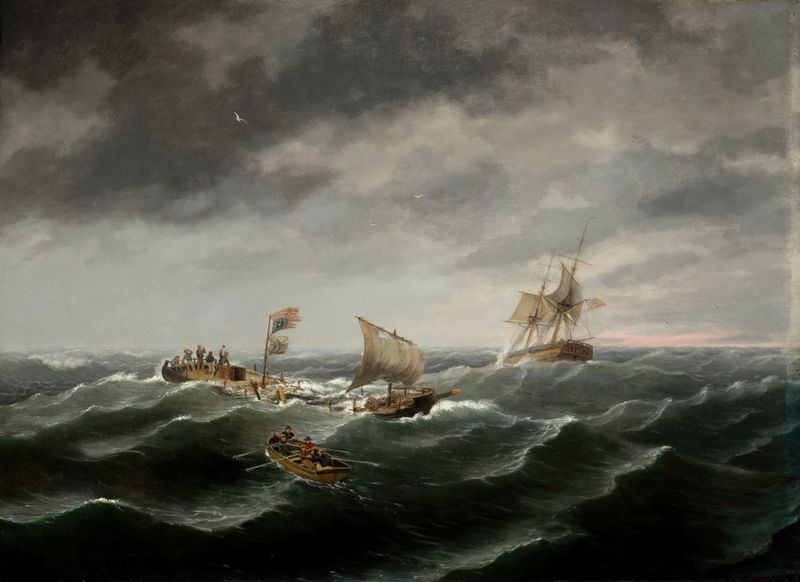
Loss of the Schooner ‘John S. Spence’ of Norfolk, Virginia, 2d view-Rescue of the Survivors
Thomas Birch

Philadelphia Harbor
Thomas Birch

U.S. Frigate President
Thomas Birch
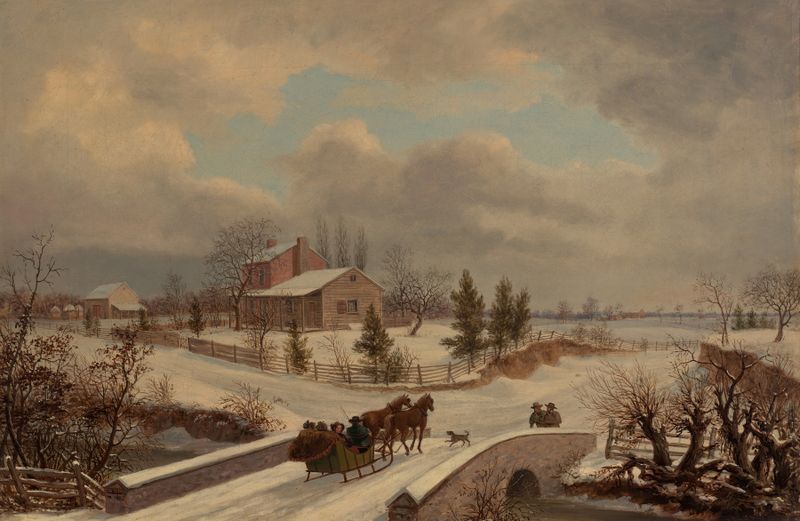
Pennsylvania Winter Scene
Thomas Birch
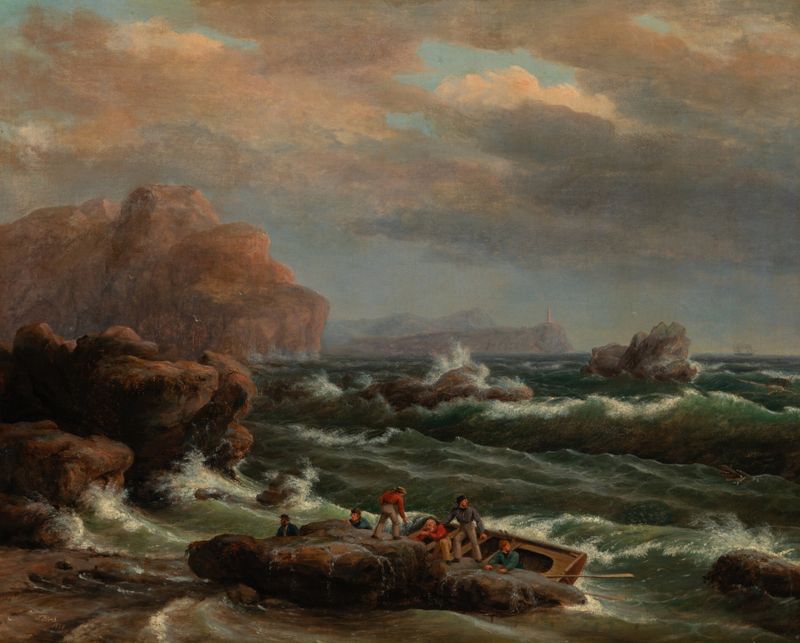
Pulling to Shore
Thomas Birch

The Constitution
Thomas Birch





