Prince’s Bay, Staten Island — History & Facts
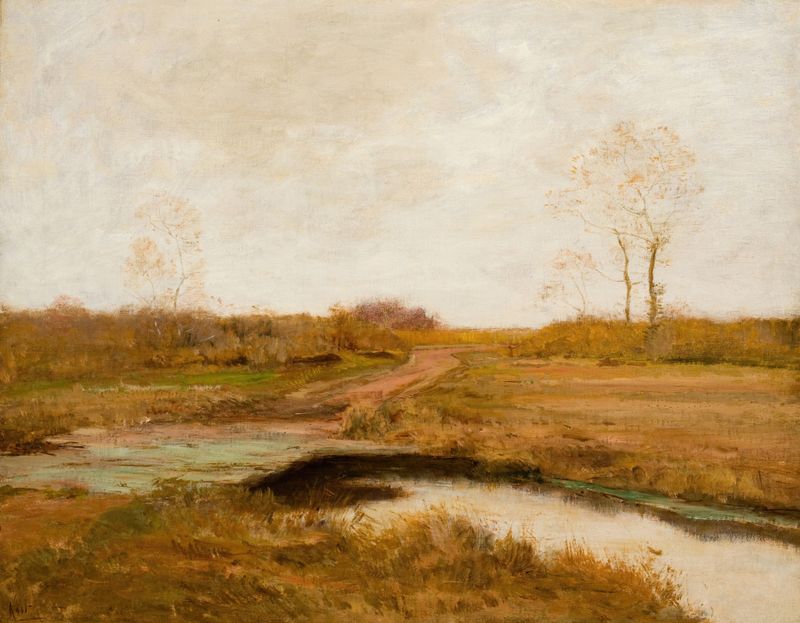
In Prince’s Bay, Staten Island, the viewer is invited to explore the delicate interplay between illusion and reality, as nature’s splendor can often mask its tumultuous essence. Look to the horizon, where soft, golden hues melt into the serene water. The gentle brushstrokes create a dreamlike quality, pulling your gaze across the canvas. The sunlight dances on the surface, blurring the lines between the real and the imagined.
Notice how the trees, though vibrant and full, seem almost ethereal, their forms merging with the sky in a mesmerizing blend of greens and blues. Here, Kost employs a rich palette to evoke tranquility while simultaneously hinting at the transient nature of beauty. Upon closer inspection, the juxtaposition of light and shadow reveals the underlying tension within the idyllic scene. The luminous sunlight suggests warmth and safety, yet the lurking shadows may symbolize hidden fears or despair, reminding us that even the most beautiful places can harbor darkness.
The subtle ripples in the water could be interpreted as echoes of emotions, stirring beneath the surface, creating a dialogue between peace and turmoil. Frederick W. Kost created this work during a time when American artists were increasingly exploring the themes of nature and its representation. Little is known about the exact date of its creation, but it reflects an era when the Hudson River School's influence was still palpable, as nature remained a profound muse amid the industrial changes of the late 19th century.
This painting resonates with a collective yearning for a simpler, untouched beauty, suggesting a longing for connection amidst the complexities of modern life.