
Prison Mazas, 12ème arrondissement, 15 juillet 1871 — History & Facts
In the shadows of a tumultuous time, where voices of revolution clashed with the silence of despair, some images linger on, capturing echoes of humanity's plight. Focus on the foreground, where heavy, oppressive shadows cloak the prison's facade, hinting at the confinement within. The stark contrast between light and dark shapes the viewer's emotions, drawing attention to the intricate architectural details that suggest a heavy, looming presence. The muted tones reflect a somber mood, while the few glimmers of light seem to struggle against the encroaching darkness, symbolizing hope and despair intertwined. The painting speaks volumes through its use of shadow, inviting us to ponder the hidden lives of those incarcerated within.
Every dark corner holds the weight of unspoken stories, while the light areas represent fleeting moments of freedom and clarity. The juxtaposition of the solid structure against the ethereal elements of light and dark creates a tension that resonates with the struggles of the time, making the viewer contemplate the price of freedom. In 1871, Gautier captured this scene during a period rife with political upheaval in Paris, shortly after the Franco-Prussian War and the Paris Commune. These events shaped not only his artistic direction but also the cultural landscape of France.
The artist’s focus on architectural subject matter reflects a shift toward capturing the urban experience, as the nation grappled with its identity amidst chaos.
More Artworks by Armand Gautier
Browse all →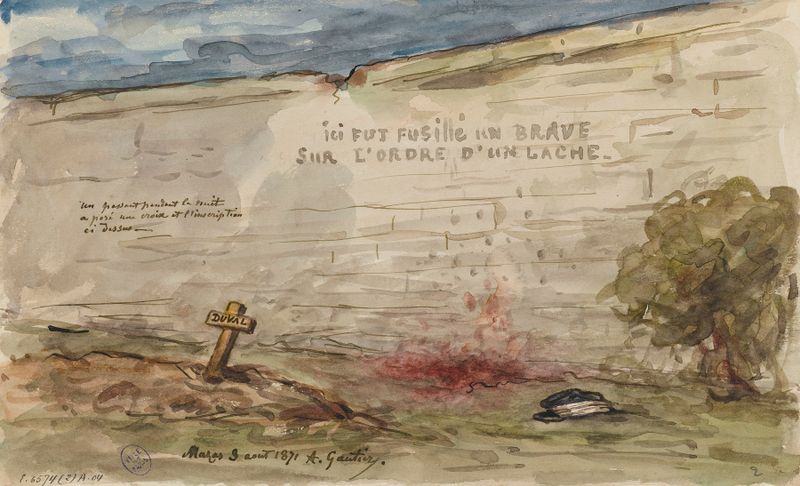
More Architecture Art
Browse all →
The statue of Liberty
Frédéric Auguste Bartholdi

View of Houses in Delft, Known as ‘The Little Street’
Johannes Vermeer

View of Houses in Delft, Known as ‘The Little Street’
Johannes Vermeer

The Cathedral in Rouen. The portal, Grey Weather
Claude Monet

The yellow house
Vincent van Gogh

The Church in Auvers-sur-Oise, View from the Chevet
Vincent van Gogh