
Ici fut fusillé un brave sur l’ordre d’un lâche — History & Facts
Every stroke, every hue, carries the weight of history's sorrow and the possibility of redemption. Look closely to the foreground, where the figure of the fallen man lies amidst the tumult. The artist's use of deep, shadowy blues contrasts sharply with the fiery reds that encapsulate the background, hinting at the clash of brutality and valor. Notice how the light, though dim, catches the edges of the soldier’s uniform, suggesting a final moment of dignity amidst despair.
The composition, with its diagonal lines, propels the viewer's gaze toward the horizon, echoing the struggle between life and death. As you explore further, consider the tension between the heroic and the cowardly. The title itself speaks volumes, opening a dialogue about bravery in the face of treachery. Small details, like the distant forms of onlookers, amplify this contrast, serving as witnesses to the tragedy unfolding.
Their muted expressions question the morality of those in power while evoking deep empathy for the fallen, turning an event of violence into a profound contemplation of sacrifice. Gautier painted this piece during 1871, a tumultuous year marked by the aftermath of the Franco-Prussian War and the Paris Commune. In this climate of social upheaval, he sought to reflect the turmoil of his time through art, emphasizing themes of courage amidst oppression. This work not only stands as a memorial to the brave but also critiques the cowardice of authority, encapsulating the uncertainties of post-war France.
More Artworks by Armand Gautier
Browse all →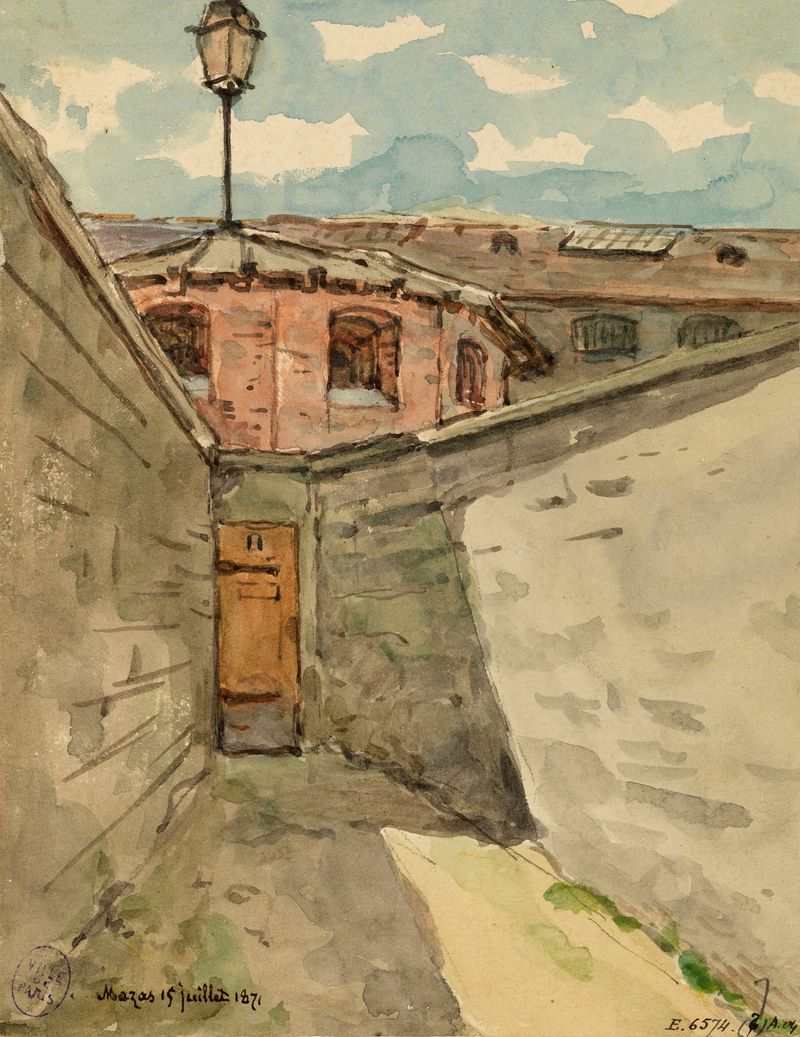
More Historical Art
Browse all →
The Night Watch Militia Company of District II under the Command of Captain Frans Banninck Cocq
Rembrandt van Rijn
Lincoln Memorial
Henry Bacon
The Third of May 1808
Francisco de Goya

Isaac and Rebecca, Known as ‘The Jewish Bride’
Rembrandt van Rijn
The Charge of the Mamelukes (1814)
Francisco de Goya

De vier ruiters van de apocalyps
Albrecht Dürer