
Provincetown Street — History & Facts
In the quiet expanse of an empty street, one can almost feel the weight of absence. The muted tones invite introspection, reminding us that even in stillness, narratives linger like whispers in the air. Focus on the soft interplay of ochres and muted blues that define the buildings lining the street. Notice how the light dances subtly across the facades, each brushstroke creating texture and depth.
The composition draws you inward, guiding your gaze through the vacant space, hinting at lives once lived here, now evanescent shadows captured in time. What emerges is a poignant contrast between vibrancy and void. The absence of figures amplifies the emotional resonance of the scene, prompting reflections on solitude and the passage of time. The warmth of the color palette juxtaposes the apparent emptiness, suggesting a memory that reverberates through the landscape, enveloping the viewer in a complex web of nostalgia and longing. In the period between 1935 and 1943, Wells created Provincetown Street while navigating the currents of American art's shift toward modernism.
Living in a vibrant artistic community, he synthesized regional influences with broader avant-garde movements. This work reflects not just his personal exploration of color and form but also the collective zeitgeist of an era marked by transformation and the haunting echoes of history.
More Artworks by James Lesesne Wells
Browse all →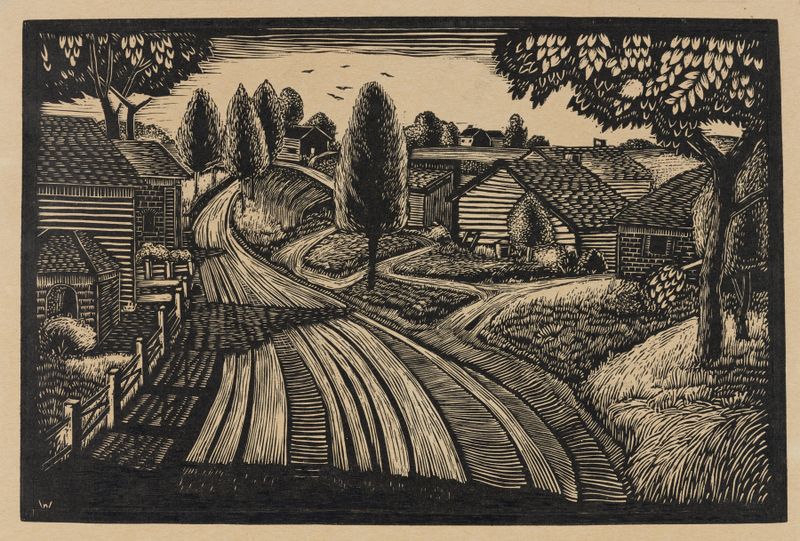
More Architecture Art
Browse all →
The statue of Liberty
Frédéric Auguste Bartholdi

View of Houses in Delft, Known as ‘The Little Street’
Johannes Vermeer

View of Houses in Delft, Known as ‘The Little Street’
Johannes Vermeer

The Cathedral in Rouen. The portal, Grey Weather
Claude Monet

The yellow house
Vincent van Gogh

The Church in Auvers-sur-Oise, View from the Chevet
Vincent van Gogh