Przystań — History & Facts
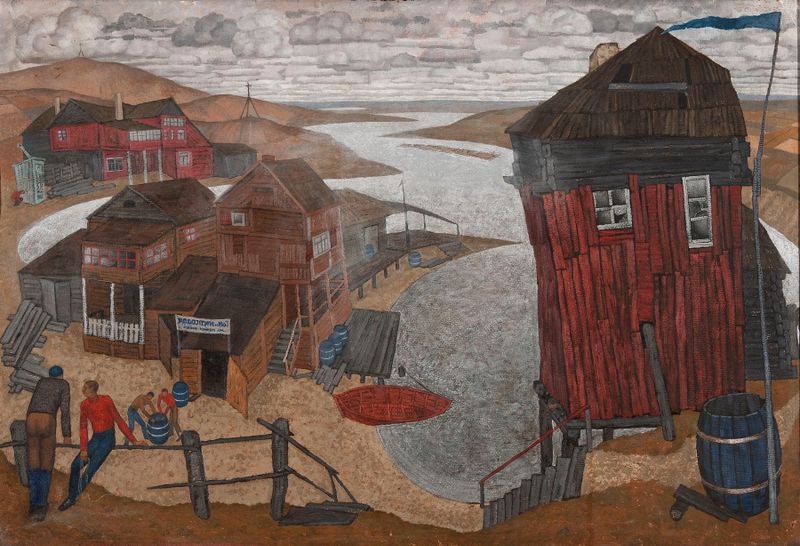
Who listens when art speaks of silence? In Przystań, the stillness envelops the viewer like a shroud, inviting contemplation of the unspoken truths that lie beneath the surface. Look to the center of the canvas, where a solitary figure stands amidst a haunting emptiness. The muted palette of browns and grays evokes a sense of desolation, while the gentle touch of light highlights the figure's silhouette, suggesting both vulnerability and resilience. Notice how the brushwork is fluid yet deliberate, capturing the tension between movement and stillness, as if the figure is suspended in a moment of introspection. Beneath this apparent solitude lies a profound exploration of madness.
The chaotic strokes in the background mirror the inner turmoil of the subject, creating a stark contrast with the calm exterior. The absence of detail in the surroundings amplifies the isolation, prompting questions about the figure’s past and the weight of their silence. Each element, from the color choices to the composition, speaks to the delicate balance between sanity and insanity, inviting the viewer to reflect upon their own experiences of solitude. Created in 1939, Przystań emerged during a tumultuous period in Europe, as the art world grappled with the impending shadows of war.
Walenty Romanowicz, an artist influenced by the trends of expressionism, sought to explore the depths of human emotion amidst the chaos of his time. This work serves as a poignant reflection of his inner struggles and the societal tensions that surrounded him, encapsulating a profound moment in the evolution of modern art.