Pulling Oars under Clearing Autumn Skies 晴秋涉櫂圖 — History & Facts
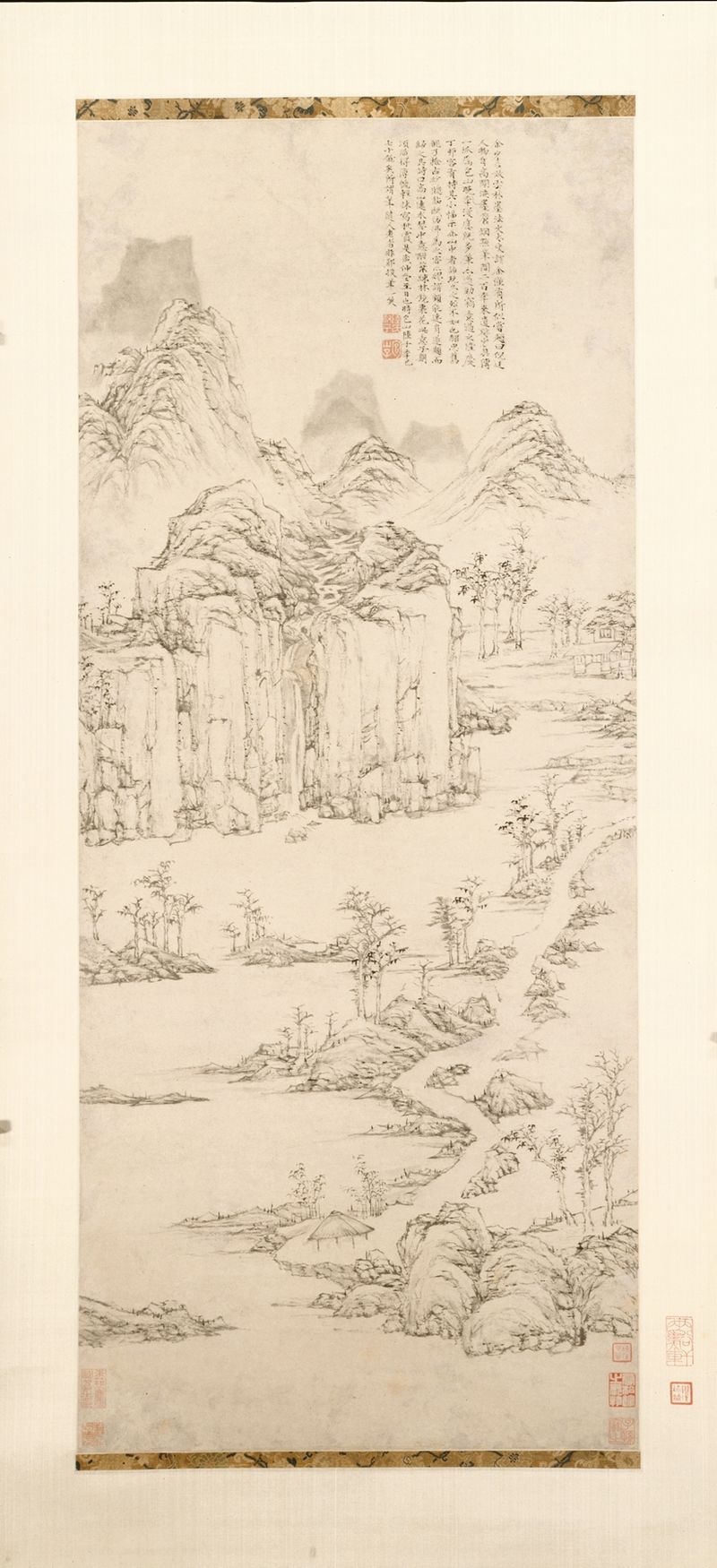
In the delicate balance of nature and humanity, we find layers of emotion that transcend time. The dance of oars against water whispers of melancholy—a quiet reflection on life's transient beauty. Look to the left at the figures in a graceful formation, their oars gliding through the rippling water. The painter employs soft strokes of blues and greens, harmonizing the tranquil landscape with the vitality of human endeavor.
Notice how the gentle hues of autumn leaves contrast with the muted tones of the sky, creating a seamless blend that draws the eye across the canvas, imparting both movement and stillness. Within the scene lies a profound tension between the characters and their environment. The rhythmic pulling of oars suggests a struggle against the current, mirroring the human experience of navigating life’s inevitable changes. The clouds above, tinged with a hint of melancholic gray, serve as a reminder of the fleeting nature of seasons and moments, encapsulating the essence of transience.
Each detail resonates with a depth of feeling, inviting reflection on the intertwining of labor and beauty. Lu Zhi crafted this piece around 1545 during the Ming dynasty, a period marked by cultural flourishing and intricate artistic expression. As he painted amidst the evolving landscape of Chinese art, he navigated his personal journey, creating works that explore the harmony between nature and humanity. This painting, rich in emotional undertones, encapsulates the delicate coexistence of joy and sorrow that defines our interaction with the world around us.