Punts on a River — History & Facts
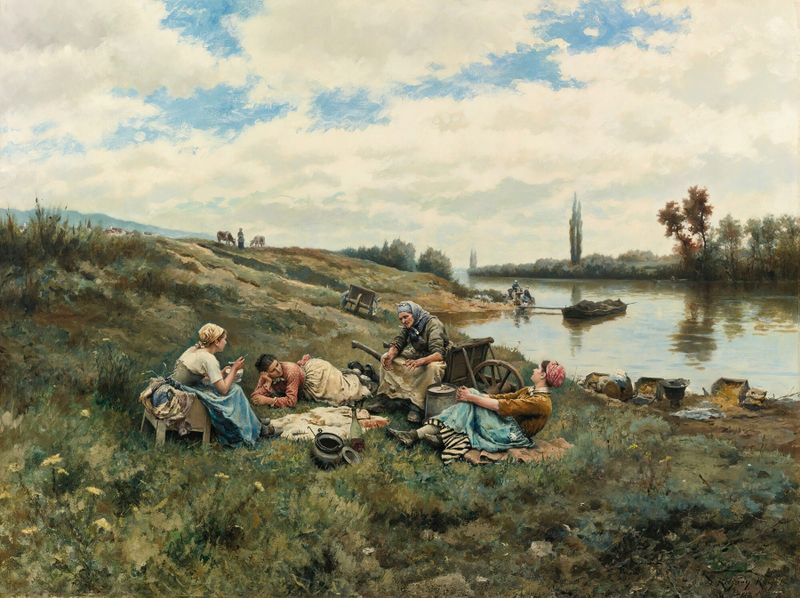
Could beauty survive in a century of chaos? In Punts on a River, the delicate interplay of solitude and serenity invites reflection on this timeless question. Look to the left at the gentle curve of the riverbank, where the water shimmers under the soft embrace of sunlight. The strokes of emerald green and golden yellows merge seamlessly, creating a tapestry that reflects both the tranquility of nature and the isolation of the figures within it. Focus on the small boats, or punts, gliding quietly across the surface, their muted colors contrasting with the vivid scenery, hinting at the stillness of their passengers, lost in thought. The emotional weight of this composition lies within the juxtaposition of nature’s beauty and the solitude of the human spirit.
The rowers, although surrounded by vibrant life, seem distant and introspective, as if adrift in their own thoughts. The rustling leaves and the gentle lapping of water suggest a world alive with sound, yet the figures remain in silence, embodying a profound sense of loneliness that transcends the picturesque landscape. During the late 19th century, Daniel Ridgway Knight was at the height of his career, often focusing on the idyllic rural scenes of France, where he lived. This period was marked by an artistic exploration of realism intertwined with impressionistic elements, reflecting a desire to capture everyday life amidst a rapidly changing world.
The artist’s work resonated with the evolving sensibilities of the time, highlighting the tension between nature and the encroaching modernity of urban life.