
Quartier De Constantinople — History & Facts
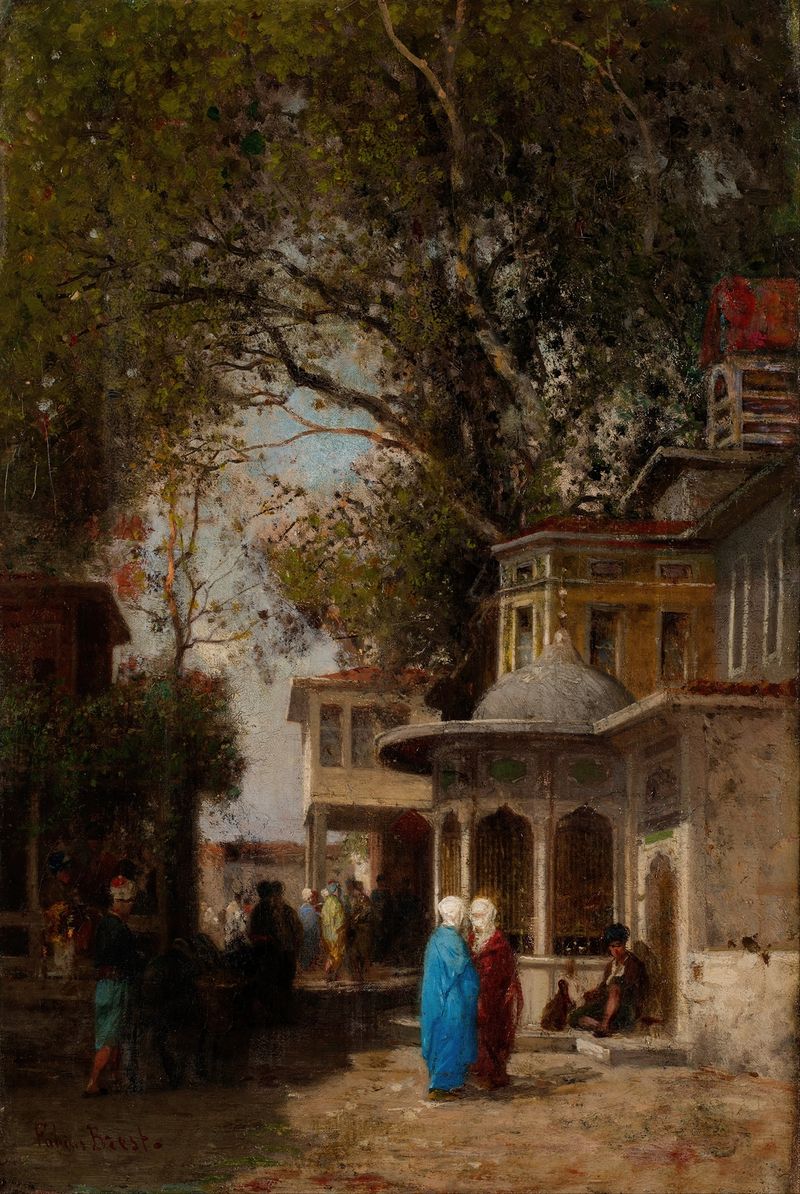
What if silence could speak through light? In Quartier De Constantinople, a world unfolds where every shadow breathes a story, and transformation hangs delicately in the air. Focus on the vibrant interplay of colors that dance across the canvas. Notice how the warm ochres and deep blues draw you in, inviting you to explore the textured buildings and the sun-dappled streets. Look to the left where a lone figure stands, seemingly in conversation with the architecture around them, their presence a still point amidst the lively surroundings, while the subtle gradations of light suggest the passage of time. The contrast between the rigidity of the structures and the fluidity of the light evokes a tension between permanence and transience.
The vibrant hues suggest life and movement, hinting at the bustling activity that must exist beyond the edges of the painting. The viewer might feel a sense of nostalgia, as though witnessing a fleeting moment before it slips away, a reminder that every still scene is but a snapshot of transformation. In 1857, Germain Fabius Brest painted this work during a period of personal and artistic evolution. Living in Paris, he was influenced by the emerging Impressionist movement, which sought to capture light and atmosphere with a fresh perspective.
As the world around him began to shift towards modernity, Brest's artwork reflects both a reverence for the past and an embrace of change, speaking to a broader narrative of transformation in the 19th century.
More Artworks by Germain Fabius Brest
Browse all →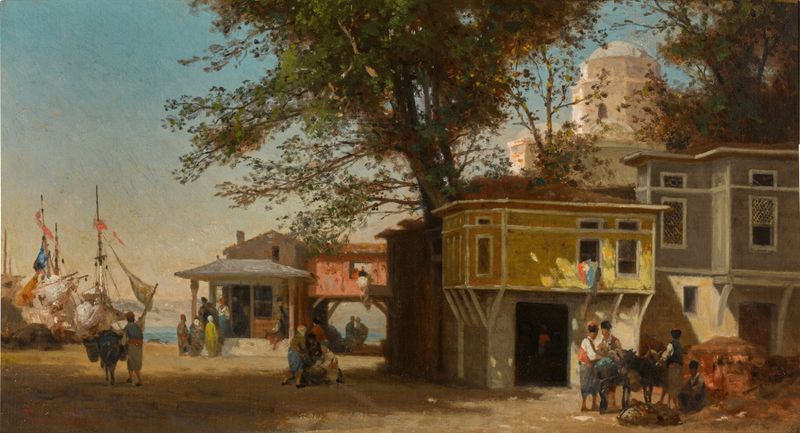
On the Bosphorus
Germain Fabius Brest

A Turkish Street
Germain Fabius Brest

A Capriccio of Constantinople
Germain Fabius Brest
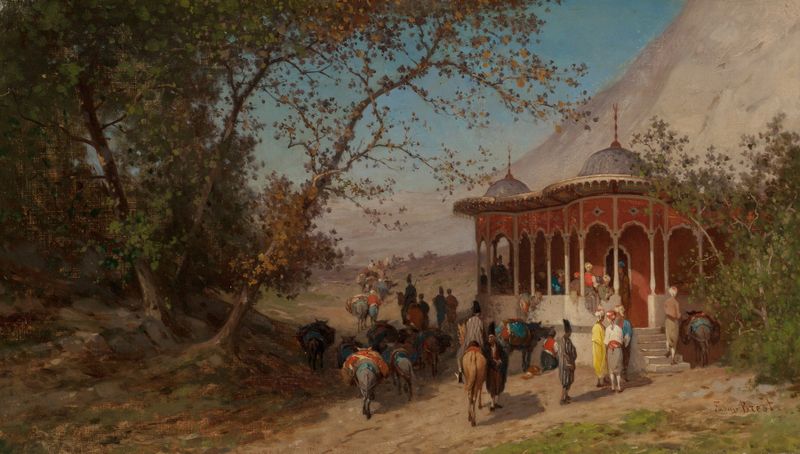
Kief sur la route de Kerrassunde à Amassia
Germain Fabius Brest

The Fountain of Sultan Abdül Hamid I, Constantinople
Germain Fabius Brest

On The Bosphorus
Germain Fabius Brest
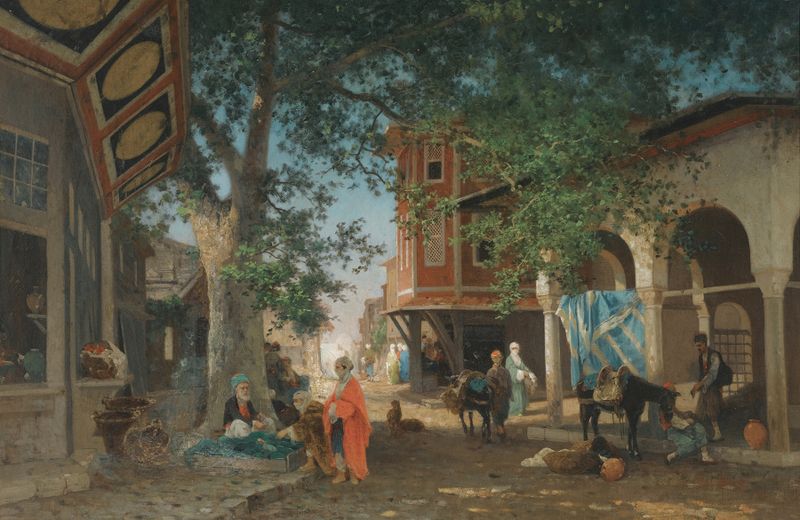
Quartier De Constantinople
Germain Fabius Brest
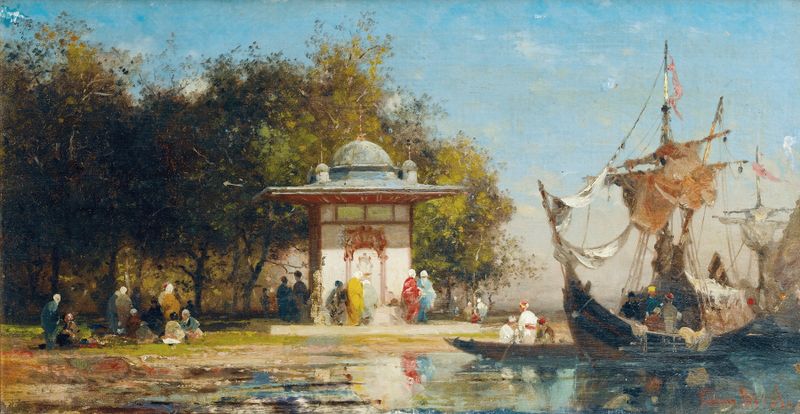
A Fountain By The Sea In Turkey
Germain Fabius Brest
The Street
Germain Fabius Brest





