
The Fountain of Sultan Abdül Hamid I, Constantinople — History & Facts
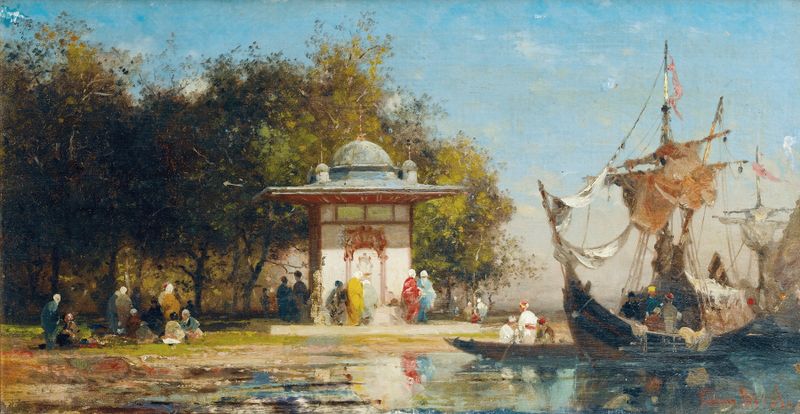
When did color learn to lie? The vibrancy that dances across this canvas speaks not just of beauty, but of the darker currents of history that swirl beneath its surface. Look to the center, where the fountain stands as a symbol of opulence and power. The intricate tilework, with its lush blues and shimmering golds, pulls the eye with an irresistible allure. Notice how the water cascades, glimmering under the deft hand of light, transforming each droplet into a jewel.
The surrounding architecture envelops the fountain, creating a delicate balance between man-made perfection and the forces of nature, inviting reflection on the past. Yet, beneath the surface beauty lies a subtle tension. The fountain’s grandeur starkly contrasts with the whispers of revolution that filled Constantinople’s streets in the late 19th century. Each tile tells a story of excess amid the struggles of the people, while the flowing water, often a symbol of life, evokes the bittersweet passage of time and the inevitability of change.
This duality of opulence and discontent is a microcosm of an empire on the brink of transformation. Germain Fabius Brest painted this work during a period of profound political upheaval. While the exact date remains uncertain, it emerged amidst the waning years of the Ottoman Empire, a time marked by shifts in power, the push for modernization, and burgeoning national identities. As the artist captured the fountain's exquisite details, he was also reflecting a society grappling with its past while looking uncertainly toward the future.
More Artworks by Germain Fabius Brest
Browse all →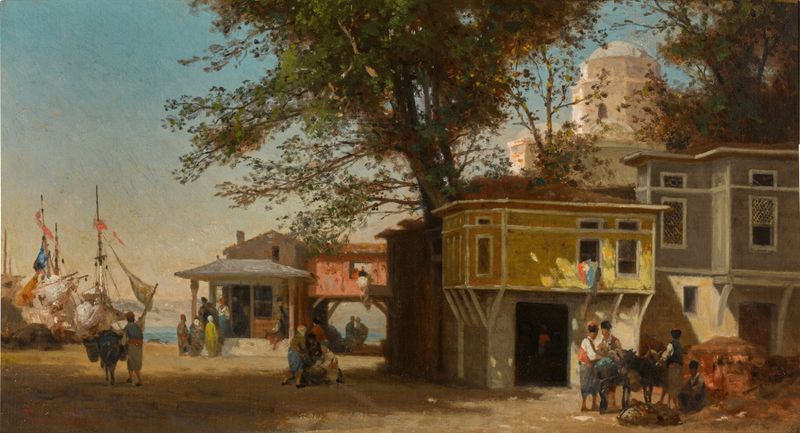
On the Bosphorus
Germain Fabius Brest

A Turkish Street
Germain Fabius Brest

A Capriccio of Constantinople
Germain Fabius Brest
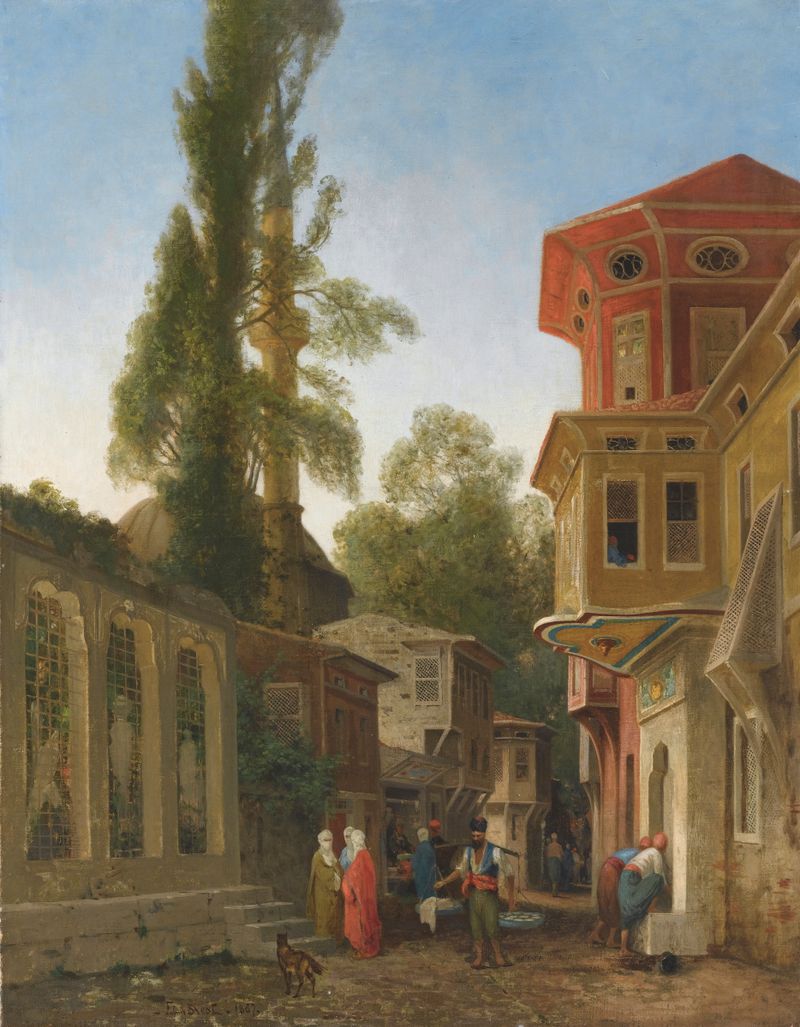
Quartier De Constantinople
Germain Fabius Brest
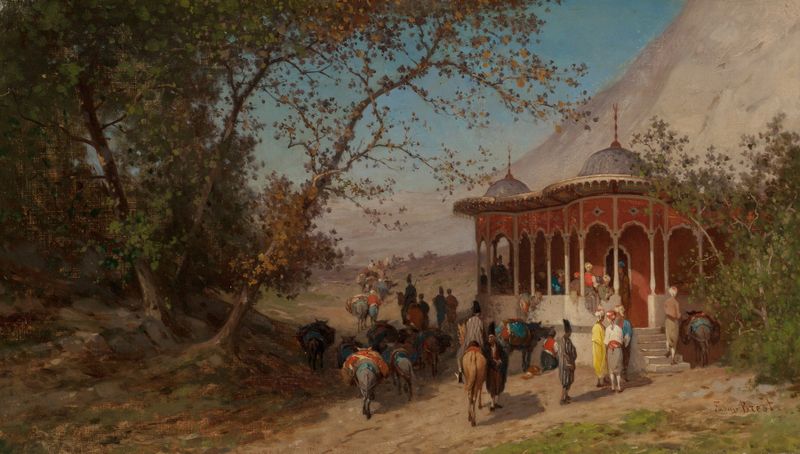
Kief sur la route de Kerrassunde à Amassia
Germain Fabius Brest

On The Bosphorus
Germain Fabius Brest
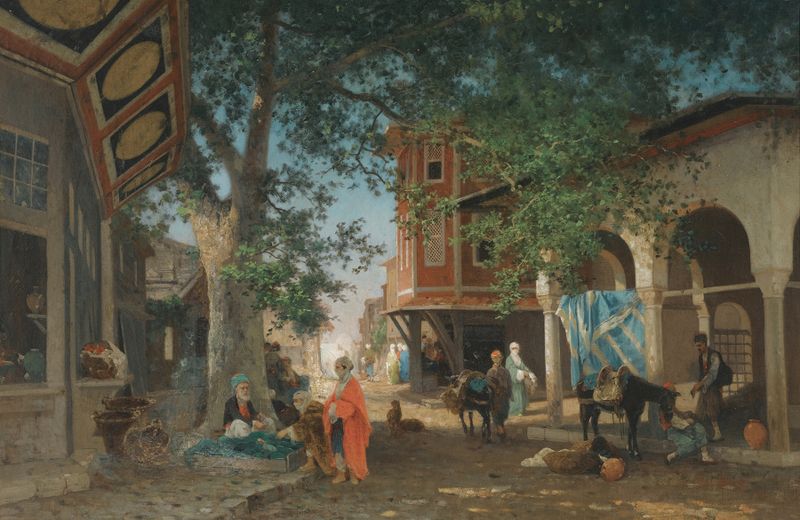
Quartier De Constantinople
Germain Fabius Brest
A Fountain By The Sea In Turkey
Germain Fabius Brest
The Street
Germain Fabius Brest
More Architecture Art
Browse all →
The statue of Liberty
Frédéric Auguste Bartholdi

View of Houses in Delft, Known as ‘The Little Street’
Johannes Vermeer

View of Houses in Delft, Known as ‘The Little Street’
Johannes Vermeer

The Cathedral in Rouen. The portal, Grey Weather
Claude Monet

The yellow house
Vincent van Gogh

The Church in Auvers-sur-Oise, View from the Chevet
Vincent van Gogh