Rafting on the Saint Lawrence — History & Facts
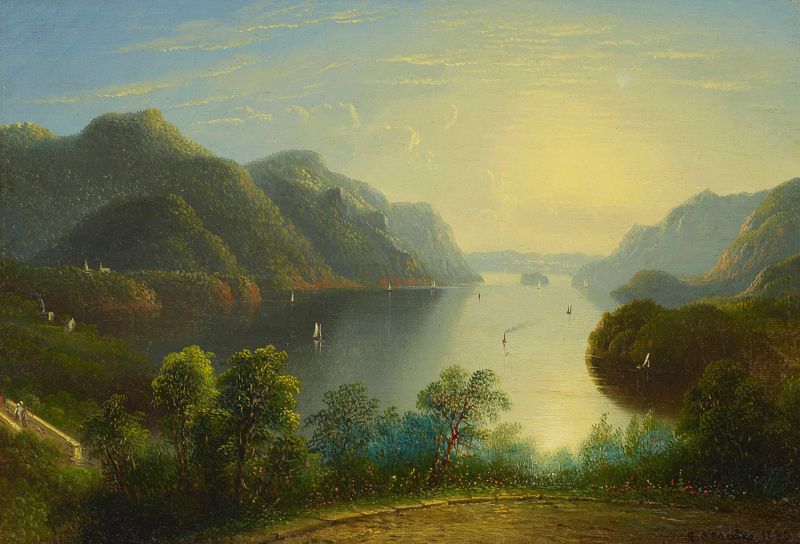
What if silence could speak through light? In the stillness of Rafting on the Saint Lawrence, a divine serenity envelops the scene, inviting contemplative thought about nature's majesty and human perseverance. Focus first on the luminescent waters that stretch across the canvas, their tranquil surface reflecting soft hues of blue and gold. The gentle undulation of the river draws the eye toward the distant horizon, where the sun whispers its last secrets before surrendering to twilight. Notice how the subtle brushstrokes blend together, creating a sense of movement and life, while the silhouetted figures on the raft appear almost ethereal against the vibrant backdrop, suggesting both vulnerability and resilience amidst the vastness of nature. Delve deeper into the contrasts within the piece—between the delicate beauty of the landscape and the robust frame of the raft, symbolizing the struggle of humanity against the elements.
The light, in its fleeting quality, evokes a sense of divinity, reminding us of the sacred relationship between man and the natural world. Each figure is tethered to the wooden beams of their craft, yet their gazes extend toward the infinite sky, revealing an innate longing for connection and transcendence. Edmund C. Coates created Rafting on the Saint Lawrence in 1853 during a time of significant artistic evolution in America.
Working primarily in New York, he was influenced by the burgeoning Hudson River School, which celebrated American landscapes. This period marked a growing appreciation for the natural world within the world of art, paralleling the nation’s expansion and exploration of its vast terrains.