View of the Hudson Near West Point — History & Facts
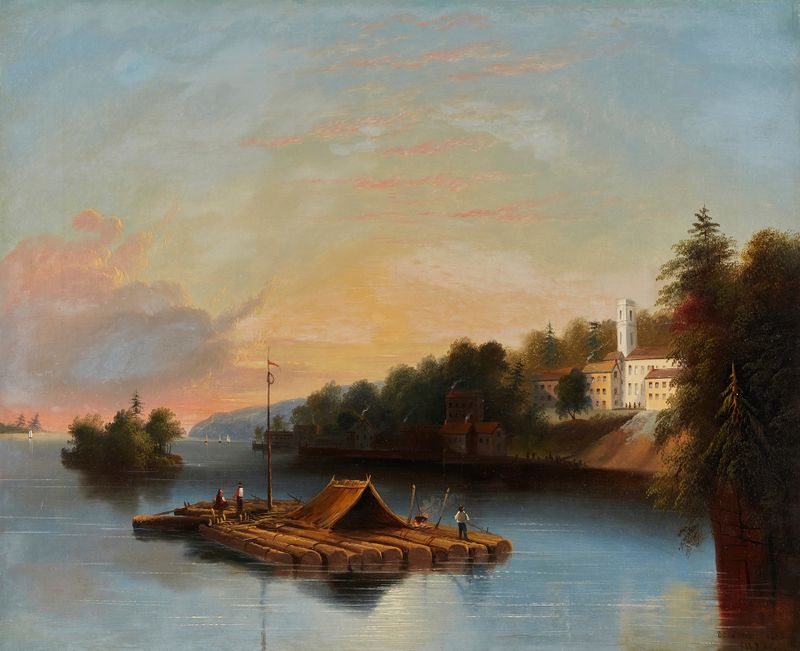
What if silence could speak through light? In View of the Hudson Near West Point, the delicate interplay of fading daylight and enveloping shadows provides a whisper of fragility that resonates deeply. Look to the left at the cascade of trees, their leaves a blend of ochre and deep green, as they embrace the riverbank. The gentle curve of the Hudson winds through the canvas, reflecting a sky that transitions from azure to twilight hues. Notice how the soft brushstrokes of the water create a shimmering effect, inviting the viewer to linger, while the distant mountains, rendered with a subtle touch, loom like silent guardians.
This composition, with its serene palette and layered textures, evokes a profound sense of calm amidst nature’s grandeur. Yet, beneath the tranquil surface lies a tension that speaks to the ephemeral nature of beauty. The fleeting light suggests the passing of time, reminding us that every moment is both precious and transient. The meticulously detailed foliage contrasts with the vastness of the river, highlighting a delicate balance between the minuscule and the monumental.
This silent dialogue between elements captures the essence of a world that is both vibrant and vulnerable. Edmund C. Coates created this piece in 1865, a time when American art was navigating its own identity amidst the backdrop of a nation emerging from civil strife. Having relocated to New York, Coates was heavily influenced by the Hudson River School's principles, emphasizing natural beauty and emotional depth.
As the landscape evolved, so too did the artist, merging personal experience with the larger narrative of an America in transition.