Railroad on the Dalles of the St. Louis — History & Facts
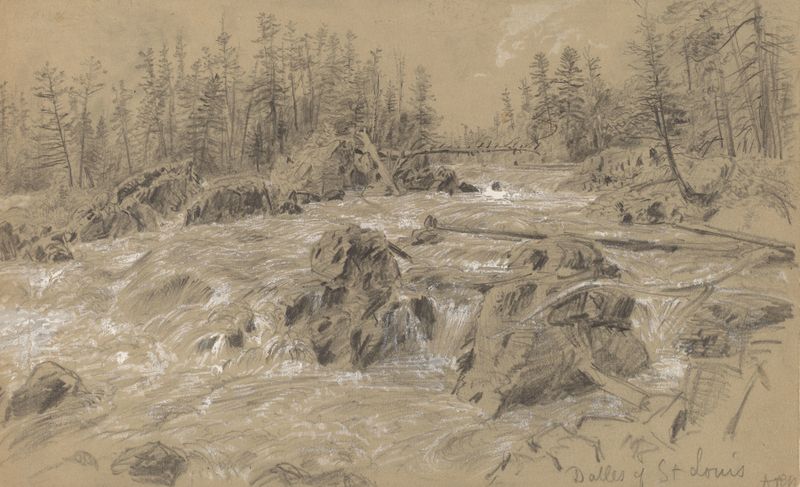
Who listens when art speaks of silence? In Railroad on the Dalles of the St. Louis, a stillness hangs in the air, almost palpably charged with the whisper of impending change. Look to the center of the canvas where the railroad cuts through the rugged landscape, a stark line of ambition piercing the serenity of the natural world. Notice how the muted earth tones of the ground contrast with the almost ethereal quality of the sky, capturing both the enormity of the scene and the fragility of human endeavor.
The meticulous details of the train tracks, stretching into the distance, draw the eye along a journey that feels both promising and uncertain. In the foreground, small patches of grass and rocks coexist with the metallic insistence of the railroad, suggesting a tension between nature and progress. The quietude of the scene belies the revolutionary changes that this iron serpent heralded for the American West. Each element, from the distant mountains to the soft clouds overhead, encapsulates the delicate balance of transformation — a reminder that with progress comes the weight of silence and the echoes of what was lost. Alfred Rudolph Waud painted this piece in 1882 during a time when America was rapidly expanding westward.
His work captured the essence of an era marked by industrialization and the transformative power of the railroad, reflecting both his own experiences as a sketch artist for the Civil War and the evolving landscape of American society.