Rainy Day on the Square — History & Facts
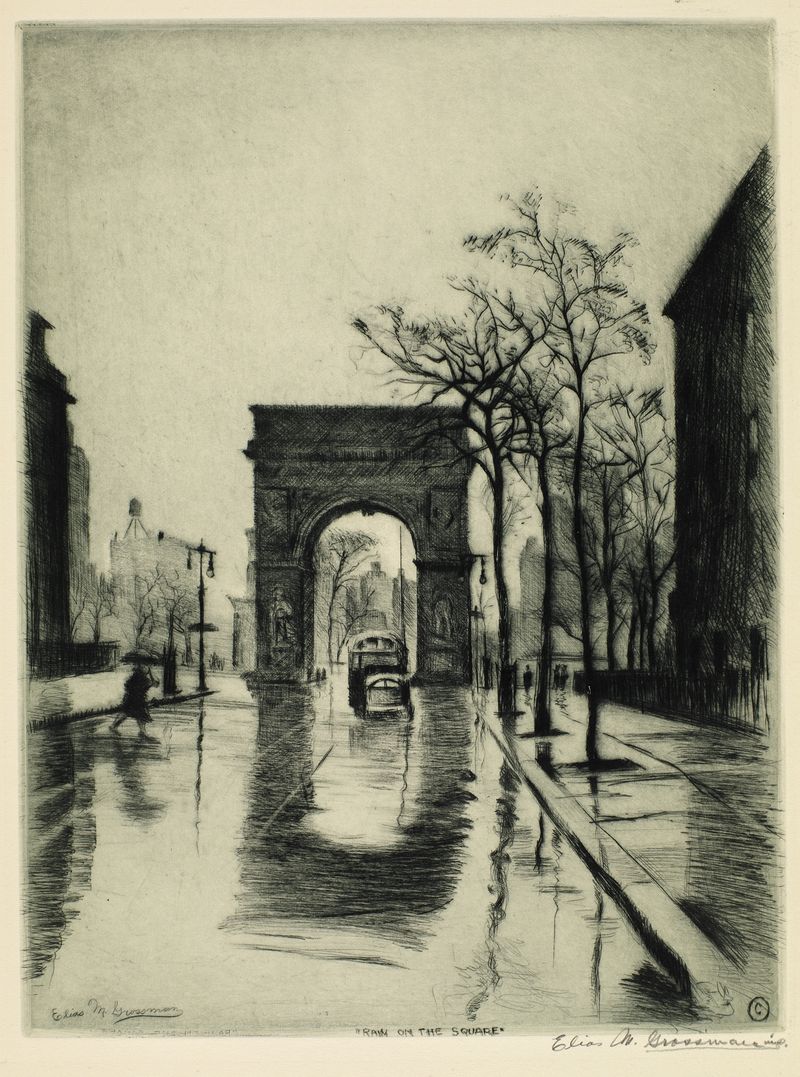
Under the brush, chaos becomes grace. The interplay of raindrops and vivid colors invites viewers into a world where emotion transcends the mundane. Focus on the bottom left corner, where reflections dance in the slick cobblestones, creating a kaleidoscope of vibrant hues. Notice how the painter employs swift, sweeping strokes to capture the fluidity of rain and movement, blurring figures under umbrellas that appear almost ethereal.
The color palette pulses with deep blues and warm yellows, harmonizing melancholy with bursts of joy, a testament to the beauty found within a rainy day. Hidden within the swirling clouds of color are layers of emotional tension. The juxtaposition of lively figures against the somber backdrop of rain hints at the ecstasy of life amidst struggle. Each face expresses a story, caught between the exhilaration of connection and the solitude of the downpour, inviting an exploration of community and isolation in a city constantly reshaped by nature. During the years 1935 to 1943, Grossman painted this piece amidst a turbulent period marked by economic strife and political upheaval.
While grappling with his own artistic identity, he found solace in the vibrant streets of his surroundings, channeling the spirit of urban life into his art. This work reflects not only his personal journey but also the collective emotional landscape of a world yearning for joy amidst chaos.