
Rantamaisema — History & Facts
This sentiment resonates deeply within the layers of Rantamaisema, where balance is not merely an aesthetic choice but an emotional refuge. Look closely at the horizon, where serene blues and greens meet in a gentle embrace. The composition draws the eye to the tranquil water, reflecting not only the landscape but an inner calm, an equilibrium amidst chaotic brushstrokes. Notice how the soft pastels subtly intermingle, creating a visual harmony that invites contemplation, while the darker tones evoke a sense of depth and mystery. Delve into the contrast between the expansive sky and the land below, suggesting a duality of freedom and limitation.
The painter’s deliberate use of light conveys a moment suspended in time, where nature breathes quietly, untouched by the clamor of modern life. Every stroke is a meditation on stillness and movement, portraying the delicate dance between the seen and the unseen. In the early 1910s, Magnus Enckell painted Rantamaisema amidst a burgeoning shift in the Finnish art scene, where national identity was being redefined. This period saw the rise of symbolism and a focus on emotional landscapes, reflecting both personal and collective experiences.
It was during this time that the artist sought to express a profound connection with nature, embracing both harmony and discord in his work.
More Artworks by Magnus Enckell
Browse all →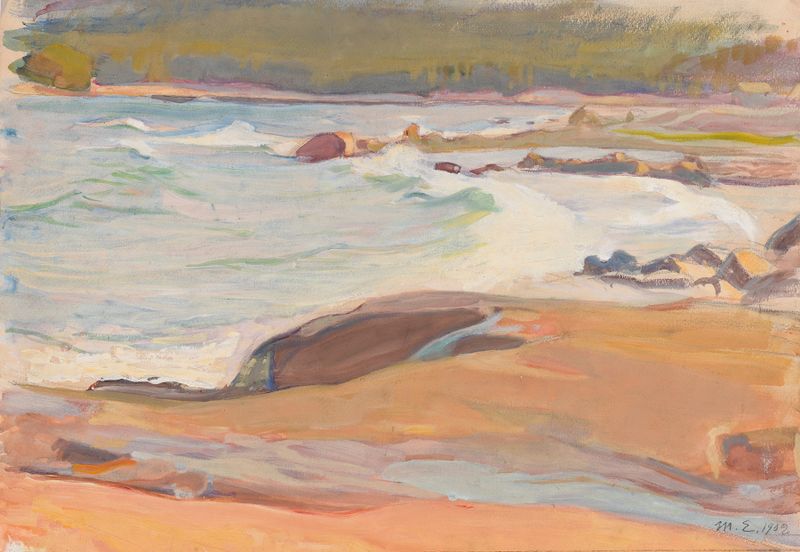
From Suursaari Island
Magnus Enckell
Birches in Vääksy
Magnus Enckell

Maisema, puita
Magnus Enckell

Maisema
Magnus Enckell

Maisema, puita
Magnus Enckell

Seaside Landscape from Suursaari Island
Magnus Enckell

Kaupunkikuva, puistoa, ajureita
Magnus Enckell

Puutarha
Magnus Enckell
Landscape
Magnus Enckell

Maisema, pensaita, puita ja torni, luonnos
Magnus Enckell





