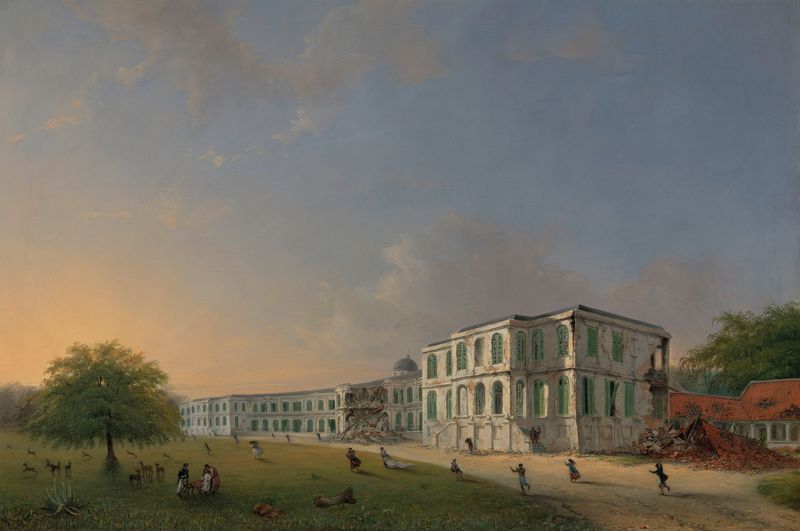
Rear View of Buitenzorg Palace before the Earthquake of 10 October 1834 — History & Facts
When did color learn to lie? The vivid hues of earth and sky suggest a harmony that belies the chaos soon to come, a promise of rebirth draped in an unsuspecting beauty. Look to the left at the sprawling gardens, where the manicured greens contrast sharply with the vibrant blues of the sky above. Notice the delicate brushwork that captures the intricate details of the palace’s architecture, each stroke echoing the grandeur of the scene while hinting at the fragility of man’s creations. The play of light across the facade, warm and inviting, draws the viewer in, yet there’s an underlying tension, an awareness that this tranquility is fleeting. Delve deeper, and you will uncover a narrative of resilience amidst impending disaster.
The distant mountains loom, stark and immovable, while the meticulously arranged foliage seems to whisper secrets of a past soon to be shattered. The juxtaposition of the serene landscape against the upcoming earthquake creates a poignant contrast, evoking themes of vulnerability and the cyclical nature of life — destruction paving the way for renewal. Willem Troost the younger painted this work between 1834 and 1836, during a period when he was deeply influenced by the Romantic movement in Europe. Living in the Dutch East Indies, Troost captured the idyllic beauty of his surroundings, even as he faced the realities of volcanic activity in the region.
This painting serves as a documentation of both the beauty and the fragility of the world, reflecting the artist's fascination with nature and its powerful, sometimes destructive forces.