Red at Night is the Shepherd’s Delight — History & Facts
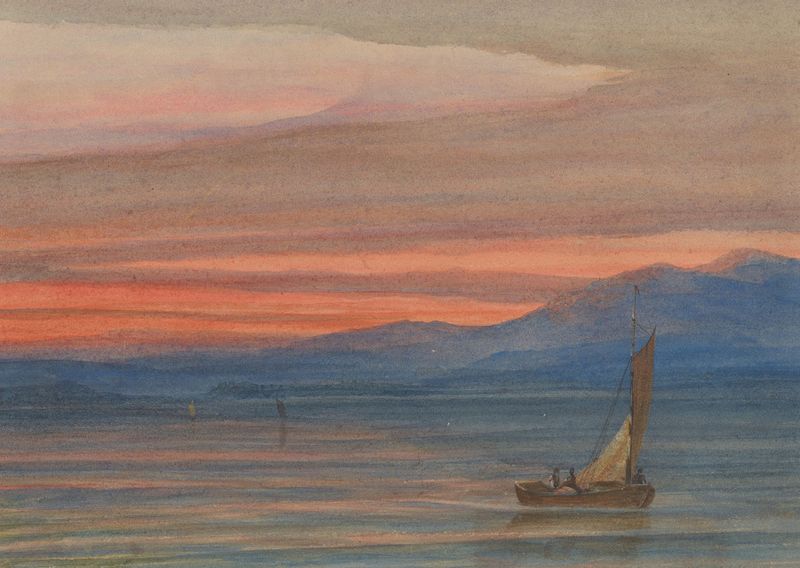
In an era where the vibrancy of nature often coexists with the shadows of strife, how do we unravel the complexities lurking beneath the surface? Focus on the striking hues of red that dominate the canvas, swirling alongside moody tones of blue and purple, creating a tension that feels almost palpable. The brushwork is dynamic and bold, directing your gaze to the horizon where twilight engulfs the landscape. Look closely at the contrasting figures of the shepherd and the flock, rendered with meticulous detail, their forms embodying a fragile peace amidst the chaos implied by the tumultuous sky. Within this work lies an underlying commentary on the duality of existence.
The vivid colors suggest warmth and beauty, yet the ominous darkening of the sky hints at impending violence or turmoil, echoing the unpredictable nature of life itself. The shepherd stands watchful, a silent guardian, reflecting humanity’s struggle to navigate the delicate balance between serenity and unrest, between the tranquil and the violent. Created in 1855, this piece emerged from Noyce's studio during a time of significant social and political upheaval in the United States. The artist, deeply influenced by the Romantic movement, sought to portray the tumultuous relationship between man and nature, capturing both the beauty of the landscape and the darker emotions that simmer beneath.
As the country grappled with the fallout of the Mexican-American War and the seeds of conflict around slavery took root, the themes of duality and tension resonate powerfully within this composition.