The Weary Sun hath Made a Golden Set — History & Facts
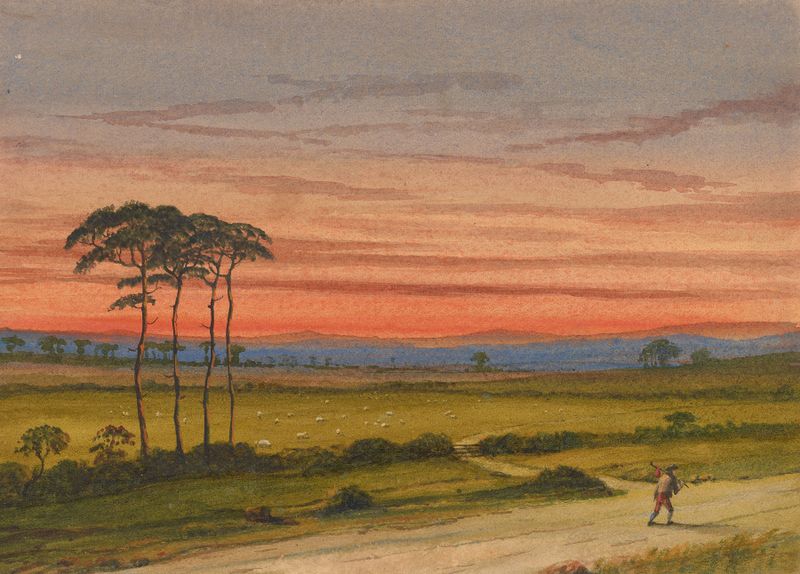
In a world where the glint of sunlight masks shadows lurking beneath the surface, the interplay of light and dark reveals deeper truths about our existence. Look to the lower left corner, where soft, golden hues blend seamlessly into the darker undertones of the landscape. The sun, a radiant orb, descends toward the horizon, casting a warm glow that bathes the scene in an almost ethereal light. The delicate brushwork creates a shimmering effect, drawing your eye upwards through layers of color that shift from vibrant yellows to ominous blues.
This juxtaposition invites a sense of awe while simultaneously hinting at an impending night, reflecting the transient nature of beauty itself. As you explore further, notice how the sprawling fields appear both alive and desolate. The juxtaposition of the radiant sun and encroaching shadows evokes feelings of unease and fear, as if the impending darkness threatens to swallow the light. In the distance, silhouettes of trees stand tall, their shapes almost skeletal against the glowing backdrop, suggesting the fragility of hope amidst despair.
It is in these contrasts that the emotional tension of the piece lies, revealing a complex dialogue between beauty and fear. Created in 1854, this work emerged during a period of personal struggle for the artist, who faced challenges in the burgeoning world of American art. Living in a time when Romanticism was evolving into newer movements, the artist sought to capture the sublime in nature while grappling with his own fears and uncertainties. This piece not only reflects his mastery of light and color but also serves as a testament to the emotional depths he navigated in his craft.