Reh im Lager — History & Facts
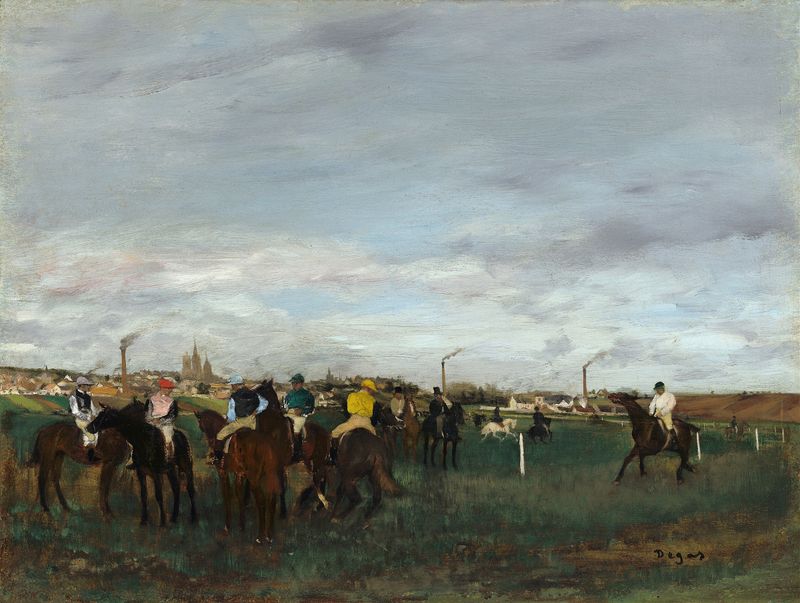
When did color learn to lie? In a world saturated with light, the hues and shades we see can obscure deeper truths, blurring the line between reality and perception. Look to the left at the soft, muted greens that cradle the central figure, a deer standing in serene repose within the confines of a camp. The gentle play of light cascades over its delicate fur, lending a warmth that contrasts with the stark, almost sterile environment. Notice how the artist employs a palette that oscillates between earthy tones and brighter accents, creating a sense of balance amid the chaos implied by the camp setting.
The composition draws the eye inward, inviting viewers to ponder the juxtaposition of innocence and captivity. Deeper meanings emerge in the contrasts woven throughout the scene. The tranquil figure of the deer, seemingly at peace, stands against the harshness of its surroundings, invoking feelings of vulnerability and isolation. The light that envelops it, while warm, also serves as a reminder of the transient quality of nature’s beauty, contrasting with the man-made structures that dominate the background.
This tension between freedom and confinement resonates, compelling viewers to reflect on the fragile relationship between humanity and the natural world. Franz Hein created this work in 1924 while he was immersed in a period of artistic exploration in Germany. During this time, the art world was grappling with the aftermath of World War I, leading to significant shifts in creative expressions. Hein's focus on portraying animal subjects and their environments reflects his awareness of nature's fragility amidst the socio-political turmoil of the era, inviting viewers to contemplate the precariousness of both beauty and existence.