Herbstreifmorgen — History & Facts
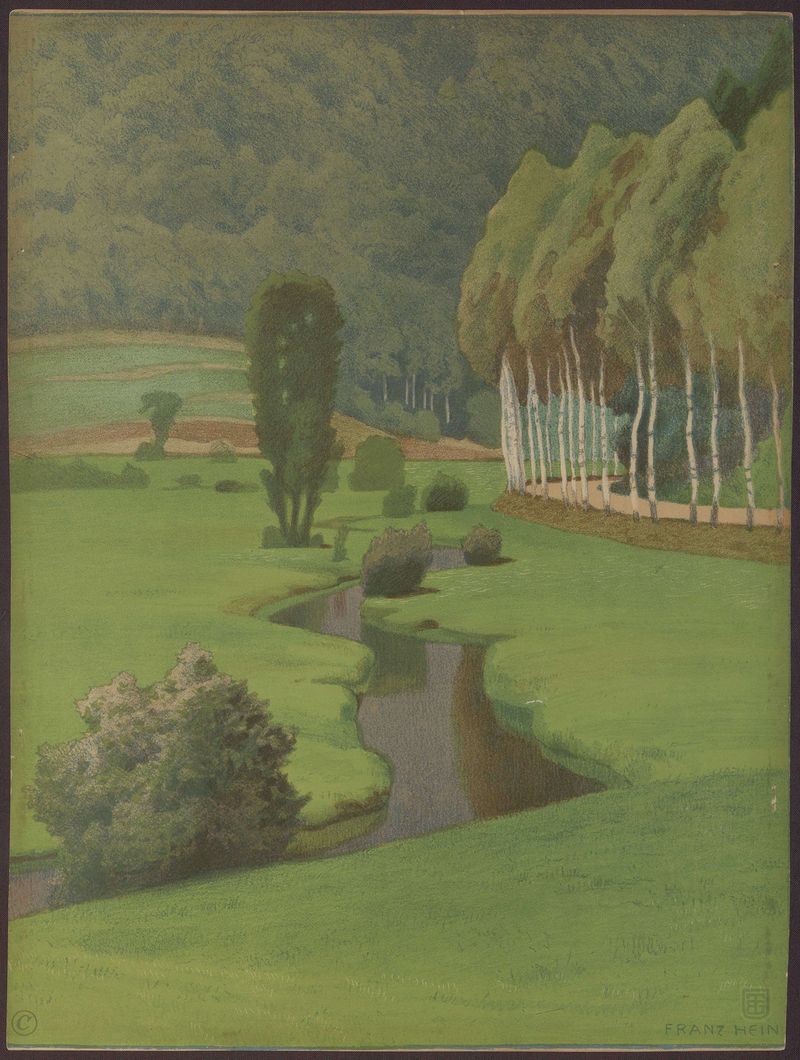
Can beauty exist without sorrow? In Herbstreifmorgen, the delicate interplay of colors suggests that joy and melancholy are inseparable companions in the human experience. Look closely at the gentle gradation of hues across the canvas, where muted earth tones meet the soft blues of the morning sky. The artist’s choice to blend these colors creates a sense of tranquility, yet there is an underlying tension that lingers, like a whisper of grief in the air. Notice how the blurred edges of the landscape evoke a dreamlike quality, urging the viewer to linger in that quiet moment between night and day, as if they are peering into a world that hovers just beyond reach. The composition invites contemplation of transience.
The fading light symbolizes both the end of the night and the promise of a new beginning, while the sparse trees stand like sentinels, guarding the secrets of the past. Each brushstroke seems to carry a weight of unspoken emotions, hinting at loss and longing that resonate deeply within the viewer. This duality creates a poignant tension that speaks to the complexity of life itself. Franz Hein created Herbstreifmorgen in the prelude to the turbulent 20th century, a time when the art world was shifting towards expressionism and abstraction.
Living in Germany, he was enveloped in a landscape of social change and upheaval, which likely influenced his exploration of delicate emotions and natural beauty. This painting reflects his ability to capture the essence of a moment while hinting at the deeper grief that often accompanies beauty, suggesting a profound awareness of the human condition.