Resting — History & Facts
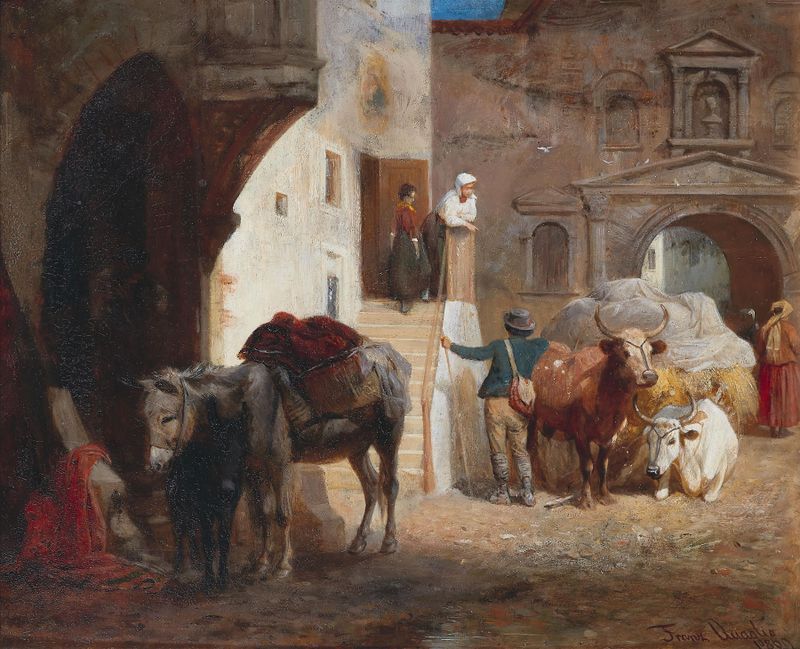
Can paint confess what words never could? In Resting, the silence of the canvas speaks volumes about the weight of destiny and the pauses that define our existence. Look to the center of the artwork where a figure reclines, their body draped in soft hues of earth-toned fabric that whisper of comfort and surrender. The gentle play of light accentuates the contours of their form, suggesting a moment suspended in time—a fleeting pause before life resumes. Notice the subtle brushwork that conveys a sense of intimacy, inviting you to share in this serene surrender, while the muted palette of ochres and grays grounds the piece in a contemplative atmosphere. There’s a profound contrast between the stillness of the figure and the implied motion outside their repose.
The surrounding shadows hint at the chaos of the world, creating an emotional tension that speaks to the universal struggle of finding moments of peace amid turmoil. This stillness invites reflection on the nature of rest as both a physical and metaphysical state—a sanctuary against the relentless march of time and destiny. Franz Quaglio created Resting during a period of artistic exploration, likely in the late 19th century. While specific details of his life remain elusive, this era was marked by a growing emphasis on individuality and emotional expression in art.
Quaglio's work reflects a desire to capture the transient beauty of human experience, situating his practice within a broader movement that sought to evoke introspection through compelling visual narratives.