Südliche Straßenszene mit einem Maultier und einem Ochsenkarren — History & Facts
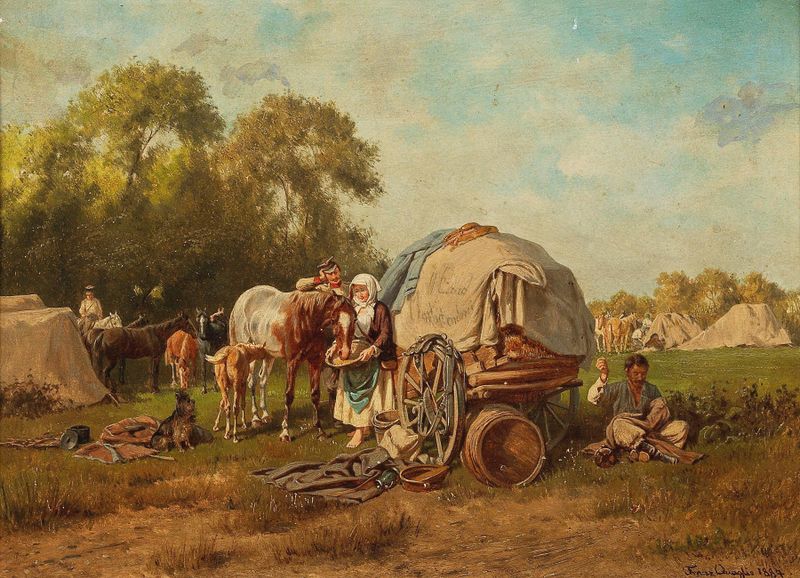
In the act of capturing the fleeting moments of everyday life, an artist can immortalize not just a scene, but the emotions and memories it evokes. Look to the foreground, where the sturdy figure of the mule stands resolute, its muscles taut under the warm wash of ochre and sienna. The ochre tones blend into the earthy road, guiding the eye towards the ox cart that rests calmly beside it. Notice how the soft light bathes the scene, creating a gentle interplay of shadow and illumination that highlights the weathered textures of wood and leather, suggesting a life well-traveled. In the background, the subtle hints of villagers engaged in their daily routines speak to a larger tapestry of communal life.
The contrast between the stillness of the cart and the lively gestures of the figures hints at a story not just of labor, but of shared experiences and memories. There’s a palpable nostalgia in the way space and time seem to converge, suggesting that every element carries the weight of past journeys and untold tales. Franz Quaglio created this work in 1869, a period marked by a rise in interest in realism and the everyday scenes of rural life. Living in Munich, Quaglio was immersed in an artistic environment that valued authenticity in portrayal, reflecting the social changes of his time.
At this moment, he captured not just a street scene, but an essence of life that resonates with the viewer's own memories of home and community.