
Rinder an der Tränke bei Overschie — History & Facts
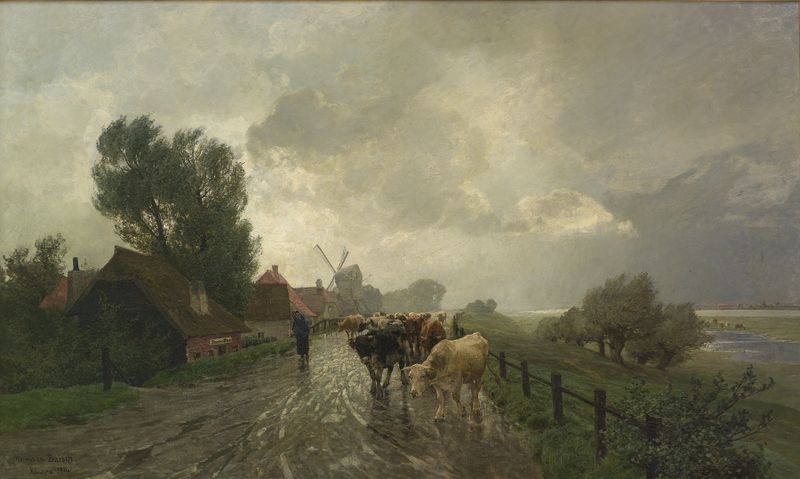
What if beauty was never meant to be finished? In Rinder an der Tränke bei Overschie, a pastoral scene unfolds—a tranquil moment eternally poised between nature and the human condition. Look to the left at the gentle curvature of the horizon, where a soft blend of greens and browns creates a warm embrace. The cows, painted with meticulous detail, draw your gaze toward the shimmering water's edge, where reflections ripple like memories. Notice how the light dances on their coats, highlighting the subtle variations in color, while the dappled sunlight dapples the serene landscape, evoking a sense of peace and harmony. Yet, beneath this idyllic surface lies an undercurrent of existential contemplation.
The cows, at once both serene and heavy with the weight of their existence, symbolize an enduring cycle of life—a hope that resonates deeply in the viewer. The distant trees, silhouetted against the soft sky, whisper of unseen stories, and the stillness in the air invites us to question the fleeting nature of beauty itself. In 1888, Hermann Baisch created this work during a period marked by a growing interest in realism and the beauty of everyday life. Living in Germany, he was part of a broader artistic movement that sought to capture the essence of the natural world with authenticity.
This piece reflects not only his personal artistic journey but also the shifting tides of a society increasingly captivated by the simple elegance of rural landscapes.
More Artworks by Hermann Baisch
Browse all →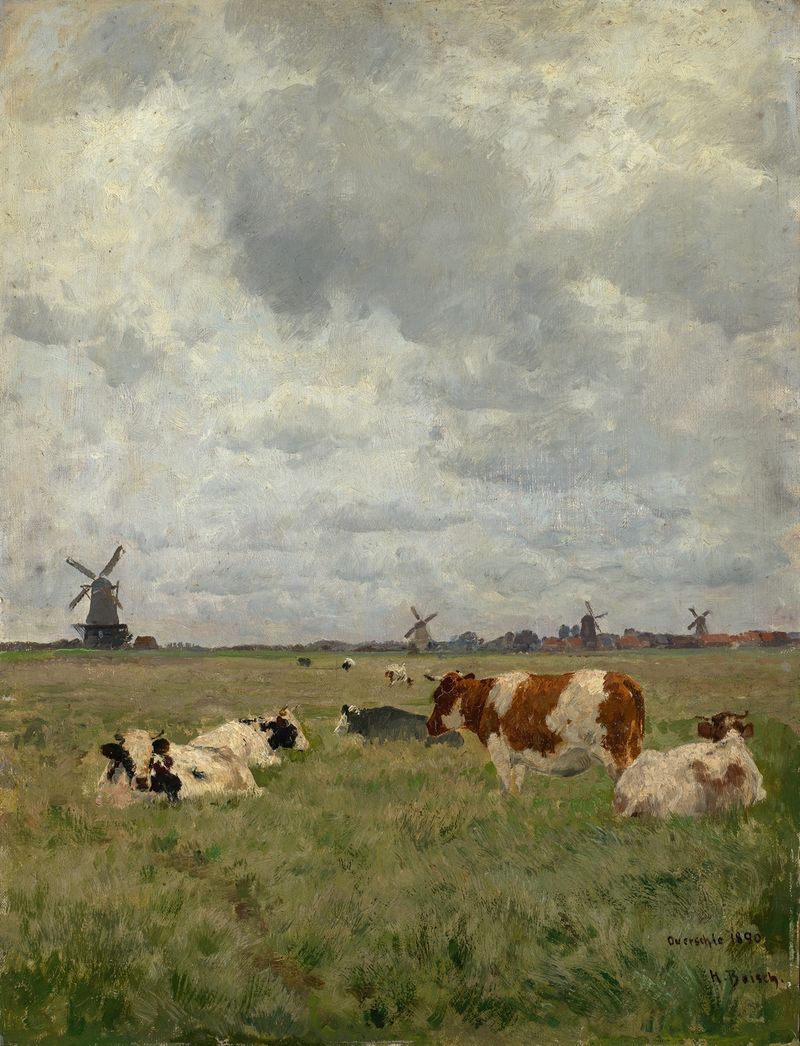
Rinder auf der Weide bei Overschie
Hermann Baisch
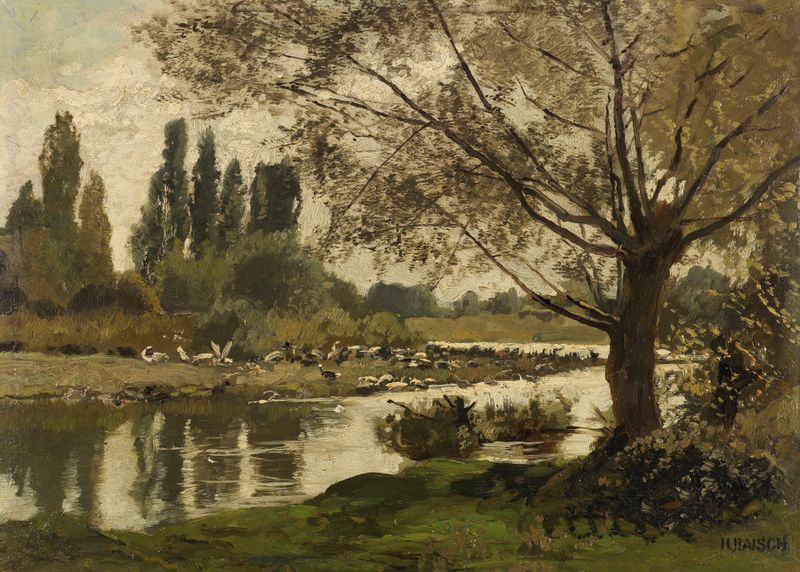
Flußlandschaft mit Vögeln und Weide
Hermann Baisch
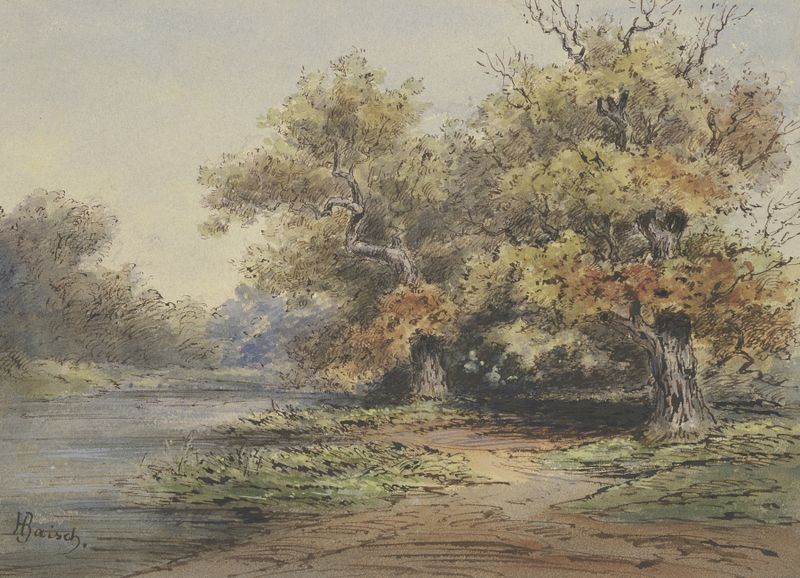
Seeufer mit hohen Bäumen
Hermann Baisch

Waldinneres im Herbst
Hermann Baisch
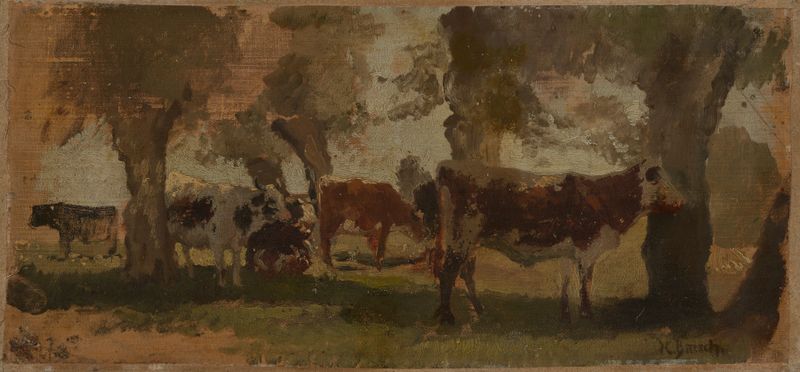
Kühe unter Bäumen
Hermann Baisch
Regentag am Niederrhein
Hermann Baisch

Katwijker Fischer ziehen einen Bom aus dem Schuitengat ins Wasser
Hermann Baisch

Ausziehende Herde
Hermann Baisch

Holländische Landschaft mit Windmühle
Hermann Baisch





