
Flußlandschaft mit Vögeln und Weide — History & Facts
In the soothing embrace of nature, where grief meets beauty, art offers a refuge for the soul. Look to the left at the gentle curve of the river, shimmering under a radiant, yet soft light. The striking contrast of lush greens and deep blues draws the eye toward the delicate brushstrokes that depict birds taking flight, a symbol of fleeting moments and lost tranquility. Warm sunlight pours down through the willows, illuminating the serene landscape and accentuating the tranquil yet poignant atmosphere. As you explore the painting further, notice how the birds’ flight juxtaposes the stillness of the water, creating a tension that reflects the duality of life and loss.
The willows stand as silent witnesses to the unfolding story, their branches swaying gently in the breeze, whispering tales of sorrow and remembrance. Each stroke captures not just the physical beauty of the scene, but also the emotional undercurrents of longing and reflection, inviting viewers to engage in their own contemplations of grief. During the late 19th century, when Flußlandschaft mit Vögeln und Weide was painted, Hermann Baisch was immersed in a flourishing artistic climate in Germany. This period marked a transition towards naturalism, where artists sought to capture the essence of nature with heightened realism and emotional depth.
Baisch's works from this time reflect his personal struggles and the broader existential concerns of a rapidly changing world, bridging the gap between the serene beauty of nature and the complex emotions it evokes.
More Artworks by Hermann Baisch
Browse all →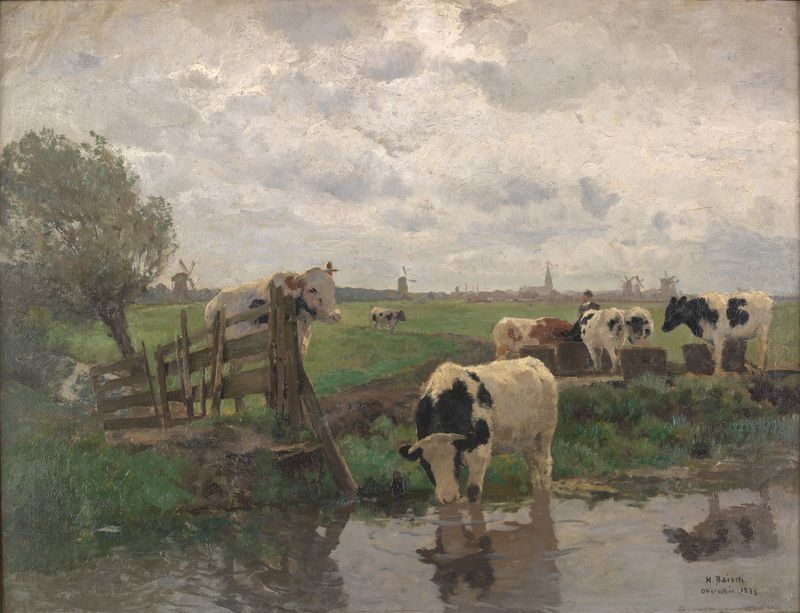
Rinder an der Tränke bei Overschie
Hermann Baisch
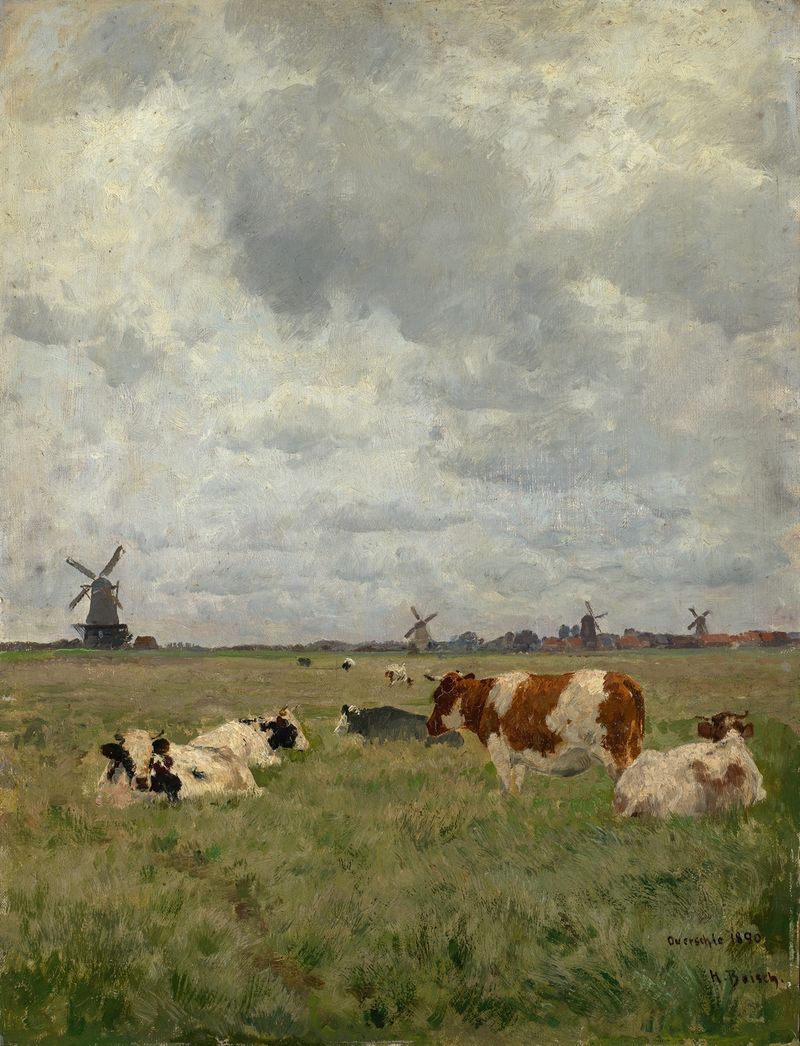
Rinder auf der Weide bei Overschie
Hermann Baisch
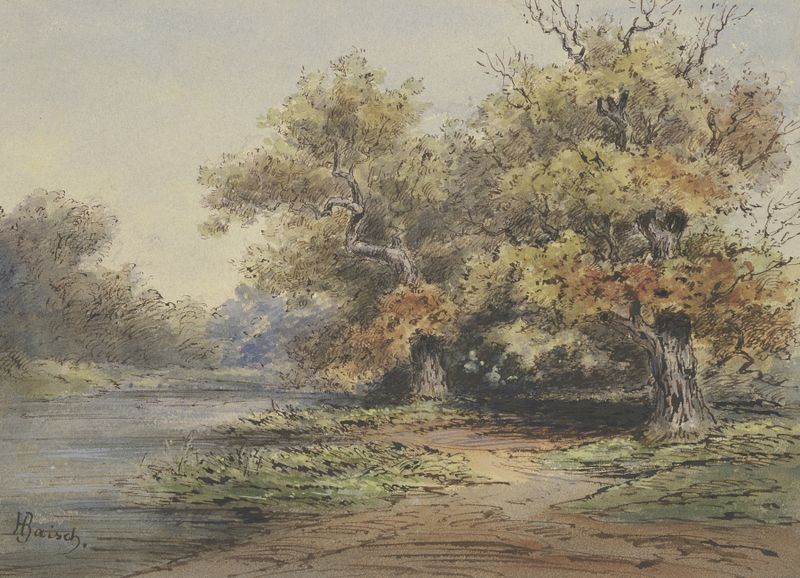
Seeufer mit hohen Bäumen
Hermann Baisch

Waldinneres im Herbst
Hermann Baisch
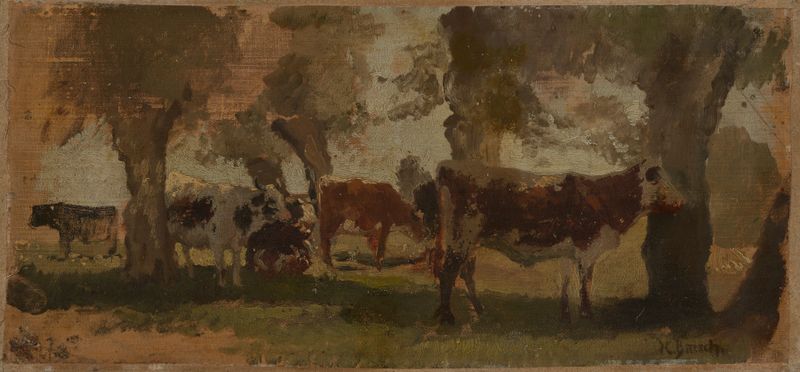
Kühe unter Bäumen
Hermann Baisch
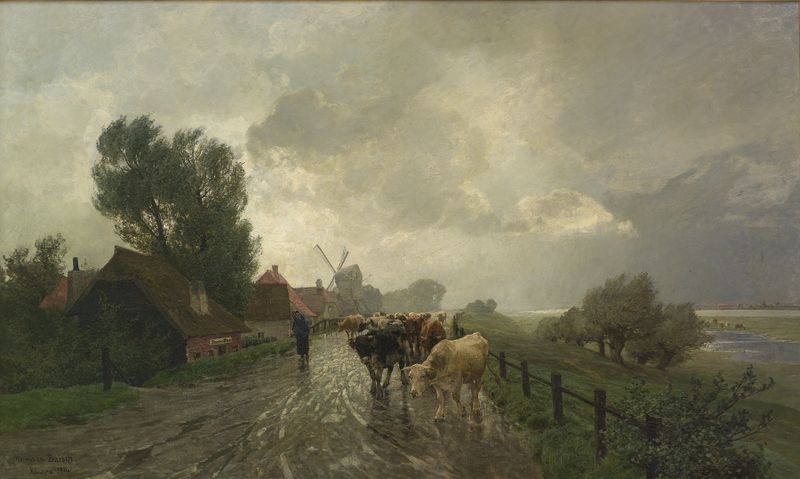
Regentag am Niederrhein
Hermann Baisch

Katwijker Fischer ziehen einen Bom aus dem Schuitengat ins Wasser
Hermann Baisch

Ausziehende Herde
Hermann Baisch

Holländische Landschaft mit Windmühle
Hermann Baisch





