River Bank with Ancient Ruins — History & Facts
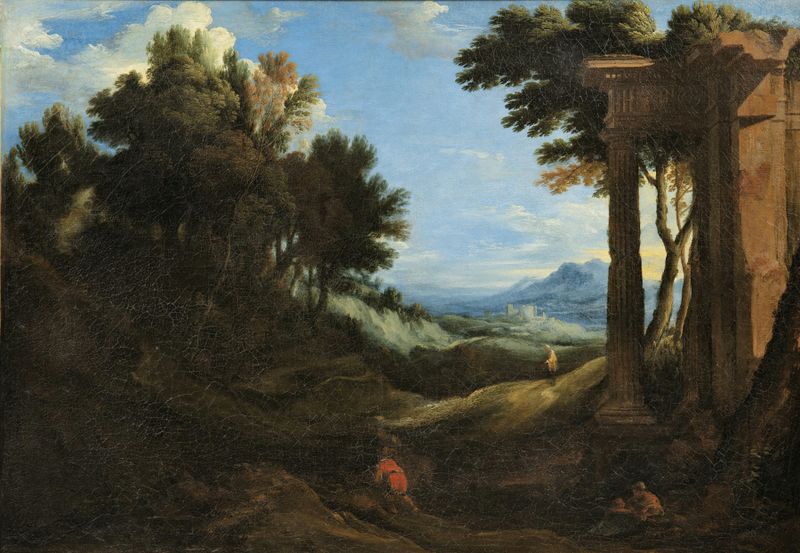
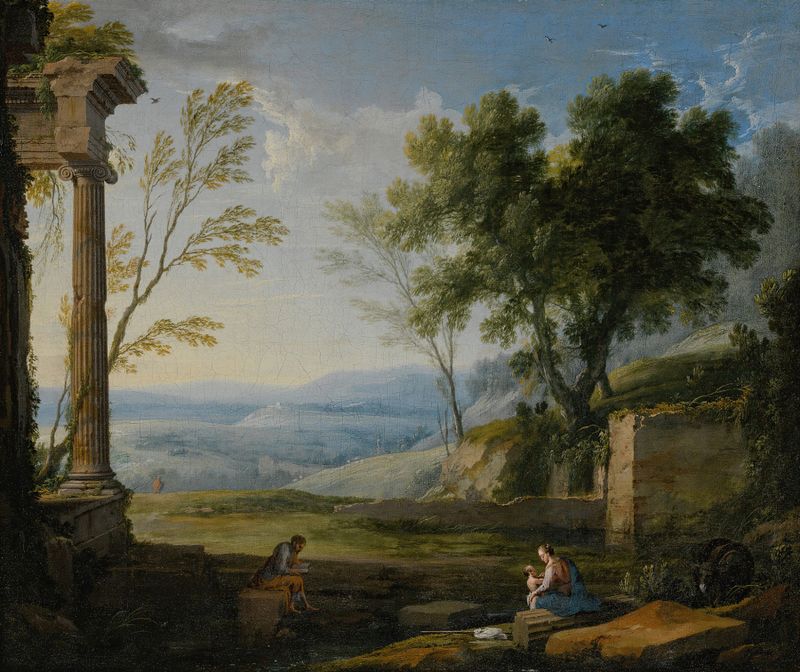
In River Bank with Ancient Ruins, the intricate interplay of reflection and decay invites the viewer to confront the duality of time's passage and nature's reclamation. Look to the foreground, where a shimmering river meanders through the composition, its surface capturing fleeting glimpses of the sky. The ruins rise majestically on the left, their crumbling stones softened by gentle strokes of verdant green and warm earth tones. The artist's skilled technique reveals a delicate balance between light and shadow, as sunlight dapples the landscape, drawing attention to the textures of the ancient architecture and the tranquil water. Upon deeper inspection, the juxtaposition of the serene river and the weary remnants of civilization evokes a bittersweet nostalgia.
The ruins symbolize human ambition and the inevitable decline that follows, while the reflective water hints at continuity, as if time itself is whispering secrets beneath its surface. Notice the way the trees frame the scene, their branches stretching into the sky, suggesting a connection between the earth’s fragility and the eternal. During his career in the mid-17th century, the artist lived in a time of significant artistic evolution in France, where the Baroque style was in full bloom. Creating this piece, likely while in Paris or its surroundings, Patel was influenced by the burgeoning interest in landscape painting, a genre that would soon come to signify the tension between nature and mankind.
The interplay of grandeur and decay in this work reflects not only his mastery but also the cultural dialogues of his era.