Apollo and the Muses in a landscape — History & Facts
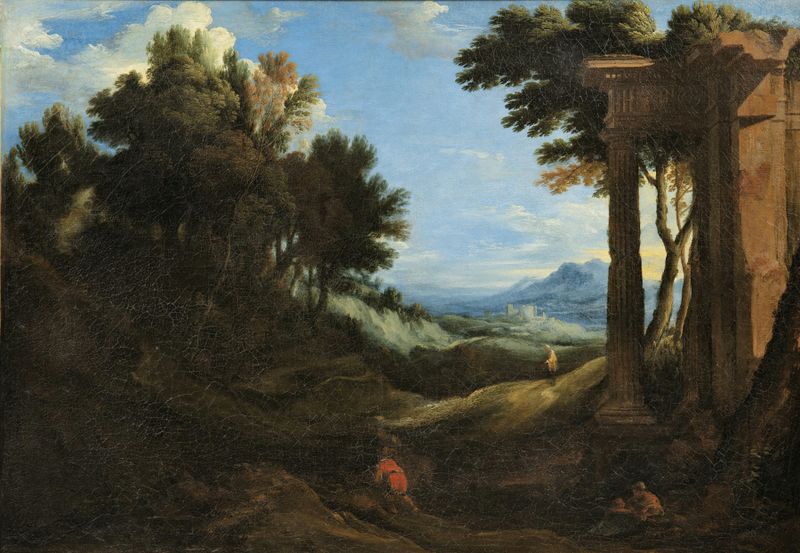
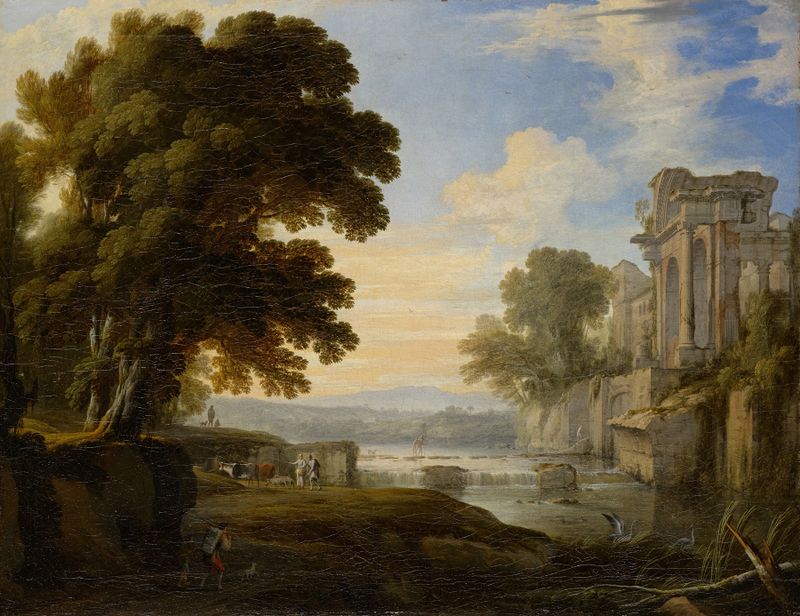
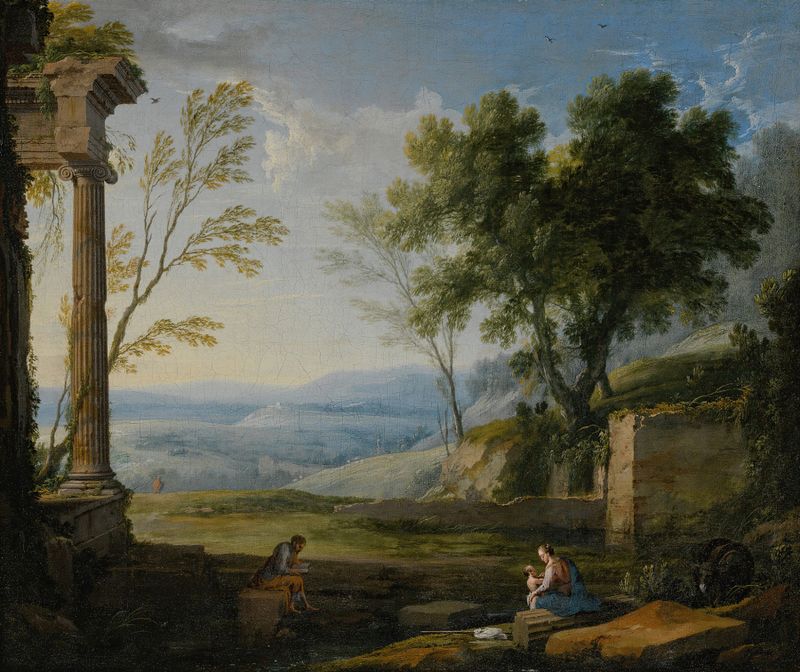
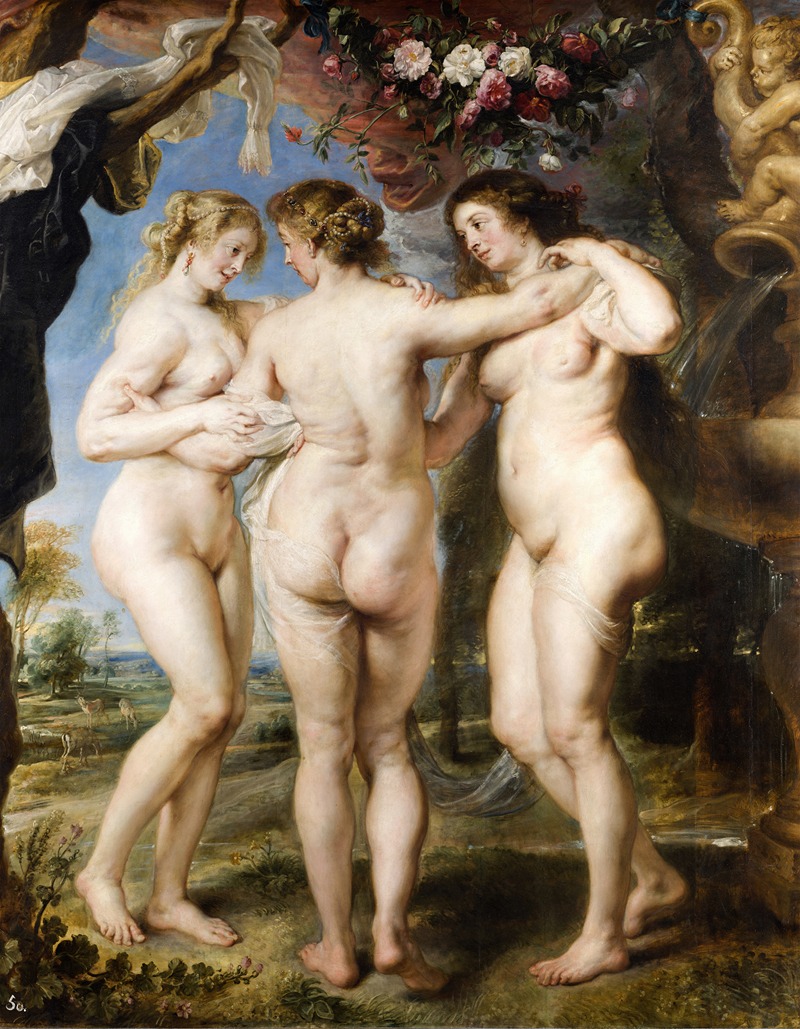
What if beauty was never meant to be finished? In Apollo and the Muses in a landscape, a world of divine inspiration unfolds, inviting viewers to ponder the eternal pursuit of creativity. Look to the center of the composition, where Apollo stands resplendent, his golden rays emanating a warmth that envelops the surrounding muses. Notice how the artist employs soft, luminous colors—gentle greens and blues blend seamlessly, creating a serene backdrop that enhances the figures. The delicate brushwork captures the subtle expressions and gestures of the muses, suggesting a moment of rapture as they engage with the god of art and poetry.
The landscape’s expansive horizon draws the eye outward, reinforcing the idea that inspiration is boundless, stretching infinitely. Deeper layers reveal emotional tensions within this gathering of celestial beings. The muses exhibit varying levels of delight and contemplation, embodying the dichotomy of artistic creation—ecstasy mingled with introspection. The playful interaction between light and shadow serves as a metaphor for creativity’s dual nature; beauty is illuminated, yet the depths of struggle remain hidden, hinting at the complexities of inspiration.
This juxtaposition invites viewers to reflect on the delicate balance between divine guidance and human endeavor. In 1673, Pierre Patel the elder painted this piece during a time when the baroque movement was flourishing in Europe, emphasizing grandeur and emotional depth. Living in France, Patel was influenced by the classical ideals of beauty and harmony, which were prominent in artistic circles. His work encapsulated the era's fascination with mythology and the celebration of art as a divine experience, positioning him as a notable figure in the evolution of landscape painting.