River landscape – Vues d’Hyères — History & Facts
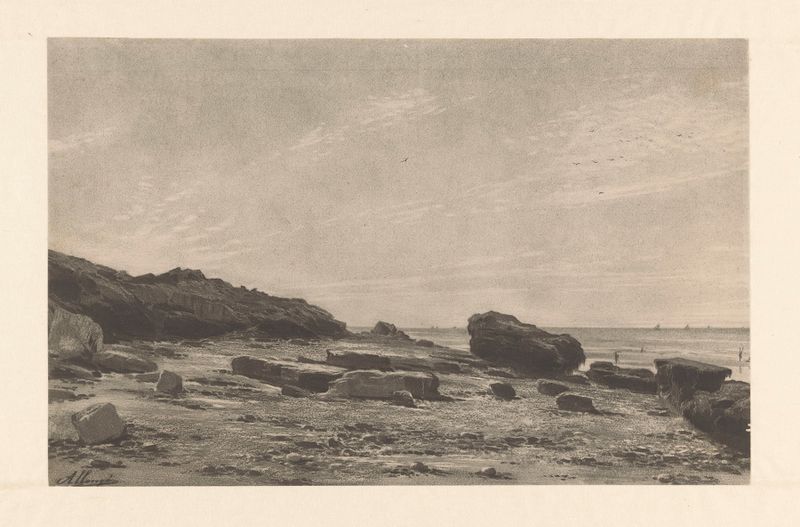
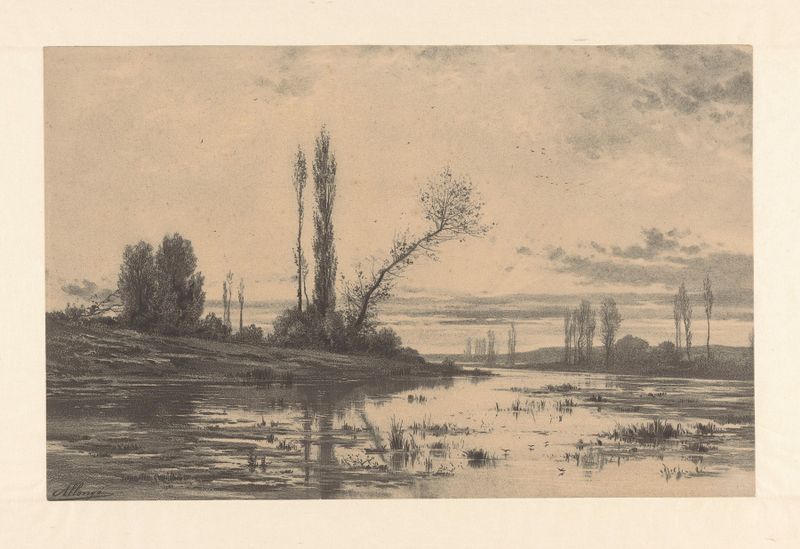
What if silence could speak through light? In River landscape – Vues d’Hyères, the ethereal stillness of the natural world whispers secrets of both beauty and unease, inviting the viewer to listen closely. Look to the foreground where gentle ripples break the water's surface, shimmering under a soft, diffused light. The delicate brushwork captures fleeting moments of movement, guiding your gaze towards the distant horizon where the sky meets the land. Notice how the palette shifts from tranquil greens and blues to deeper, more foreboding hues, suggesting an underlying tension in this seemingly serene vista. Within this landscape lies a contrast of tranquility and fear.
The serene water reflects a calm sky, yet the heavy clouds overhead foreshadow impending change, hinting at nature's unpredictable temperament. Subtle details, like the bending reeds and the distant silhouette of a solitary tree, evoke feelings of isolation, confronting viewers with the fragility of peace that belies the landscape's grandeur. Auguste Allongé painted this work in 1860 amidst the burgeoning movement of French landscape painting, exploring the interplay between light and atmosphere. At this time, he was establishing his voice amid a rapidly changing artistic landscape, as artists began to break away from traditional techniques to embrace more fluid and spontaneous expressions of nature.
Allongé’s work reflects both personal exploration and a wider artistic shift, capturing a moment where beauty and fear coexist.