River Landscape with Travelers — History & Facts
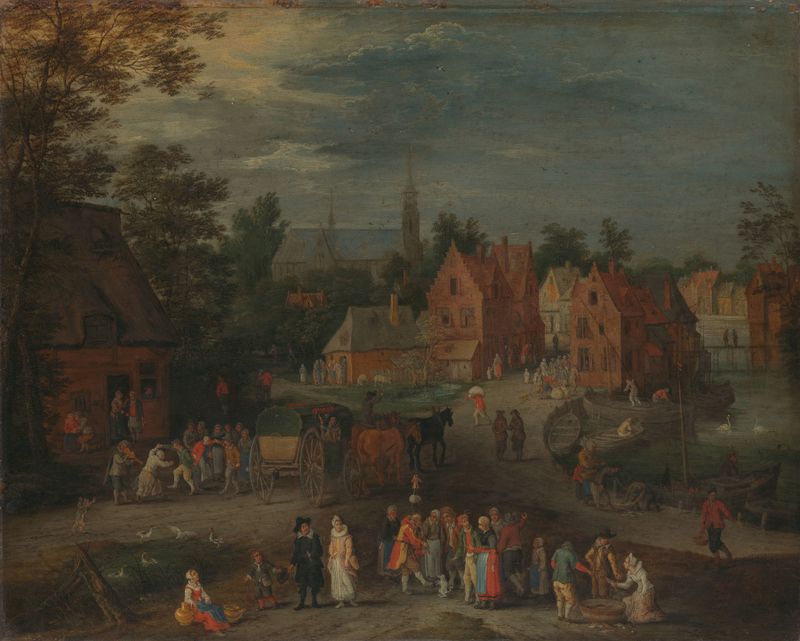
In the quiet whispers of nature, the strokes of a master translate the tumult of life into a serene landscape, awakening the viewer to beauty nestled within the ordinary. Look to the left at the gentle curve of the river, where the shimmering water reflects a vivid sky. Notice how the soft greens of the foliage contrast with the warm hues of the travelers’ garments, enhancing their human presence in this vast landscape. The composition guides your eye along the meandering waterway, creating an inviting journey through the scene, while dappled light plays across the surface, revealing Gijsels' mastery of color and texture. Amidst this tranquility, a subtle tension unfolds.
The travelers, moving deliberately, embody a sense of purpose against the stillness of the surrounding nature, suggesting a story of both journey and destination. The sky, alive with soft clouds, hints at change, perhaps a storm approaching, contrasting the peaceful scene with an undercurrent of uncertainty. Each brushstroke captures fleeting moments of connection to the landscape, evoking a deeper understanding of how nature shapes human experience. Created between 1670 and 1680, this work emerged during a period of Baroque art's maturation in the Netherlands, where artists were increasingly focused on landscapes that celebrated both the sublime and the intimate.
Gijsels painted at a time when the art world was shifting, moving toward more personal interpretations of nature, responding to the growing interest in both the natural world and human interaction within it.