Village with a Puppeteer Entertaining a Small Crowd — History & Facts
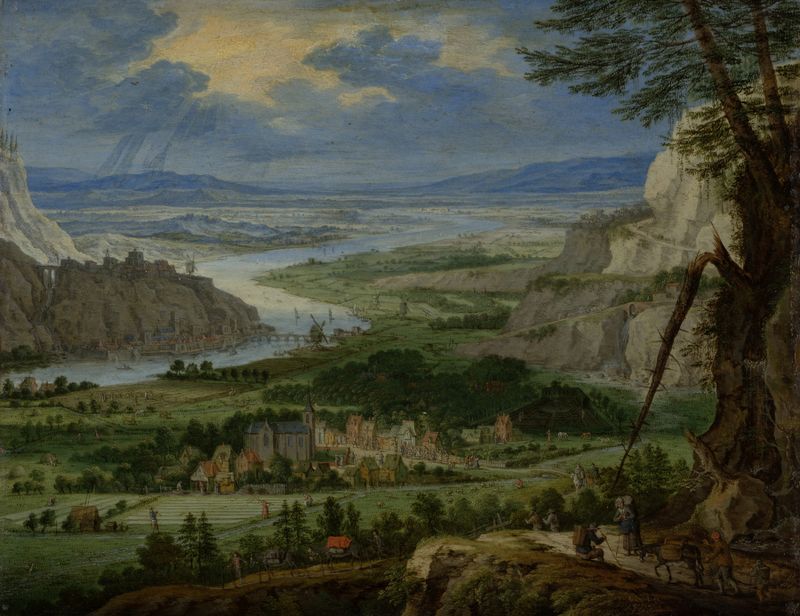
Who listens when art speaks of silence? In Village with a Puppeteer Entertaining a Small Crowd, movement captures the essence of a moment, inviting viewers into a world where laughter hangs in the air and unseen stories weave between marionette strings. Look to the foreground; the puppeteer stands with an air of calm authority, his expressive gestures bringing life to the wooden characters that dance above him. The vibrant colors of the villagers' clothing contrast with the muted earth tones of the setting, drawing your gaze to the small crowd gathered around, their rapt attention evident in their fixed gazes. Notice how the light filters through the trees, creating a dappled effect that enhances the playful atmosphere, while shadows deepen the sense of intimacy, making the viewer feel like a part of the scene. Within the composition, emotional tensions arise from the juxtaposition of the carefree laughter of the children and the more reserved demeanor of the adults.
Each face reflects a unique response: joy, nostalgia, or perhaps longing for simpler times. The puppeteer, in the midst of this delicate balance, embodies both the creator and the conduit of their emotions, hinting at deeper stories untold. The movement of the puppets resonates with the figures around them, blurring the line between performance and reality, evoking a sense of shared humanity. Created between 1650 and 1660, this work emerged during a time when Peeter Gijsels was delving into genre scenes that celebrated daily life.
Living in the Dutch Republic, a period marked by commercial prosperity and artistic innovation, he captured the vibrancy of ordinary moments. In a world increasingly captivated by urbanization, Gijsels' focus on communal gatherings and simple joys reflected a yearning for connection and the enduring power of art to unite.