River Scenery — History & Facts
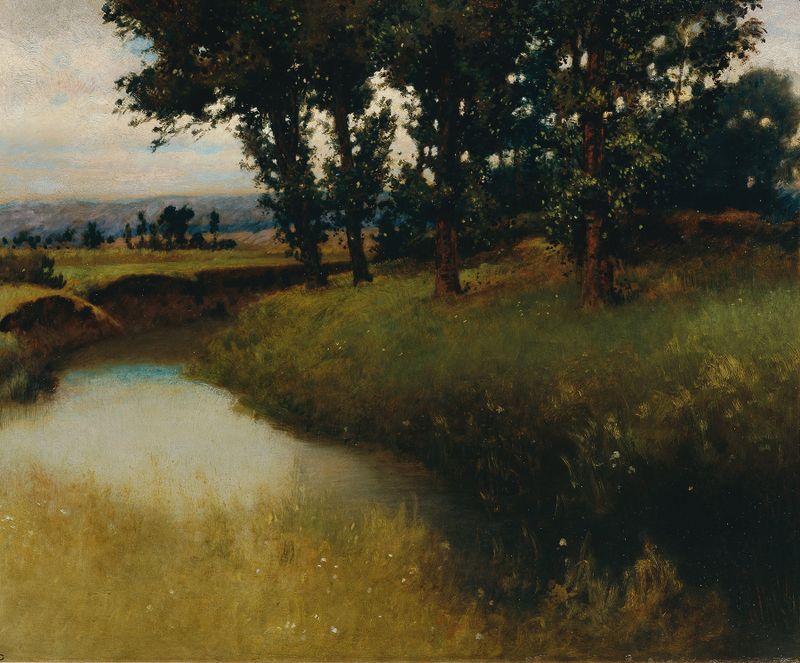
When did color learn to lie? The vibrant hues of blue and green in this piece whisper the tales of innocence while concealing deeper truths beneath their picturesque surface. Focus on the gentle curve of the river; its shimmering surface reflects a sky that dances between twilight and dawn. Notice how the artist skillfully employs soft brushstrokes, creating a sense of movement in the water that invites contemplation. The foreground blossoms with lush foliage that draws the eye, each leaf a testament to the vibrancy of life, while the distant mountains stand sturdy, cloaked in a serene haze, grounding the scene with their permanence. Yet, beneath this idyllic facade lies a subtle tension.
The river, both a source of life and a boundary, suggests the duality of existence—flowing freely yet confined to its banks. The interplay of light and shadow hints at fleeting moments of clarity amidst the drudgery of daily life. Each element invites reflection on the innocence of nature, contrasted by the knowledge that such beauty may mask deeper currents of change. Carl Freiherr von Pidoll zu Quintenbach painted this work around 1889, during a period when Romanticism was giving way to Impressionism.
Living in the picturesque landscapes of Bavaria, he found inspiration in the natural beauty surrounding him. This era was marked by a growing interest in capturing the ephemeral qualities of light and atmosphere, leading artists to explore new techniques that emphasized emotion over strict realism.