
River Town — History & Facts
What secret hides in the quiet of the canvas? In a world bustling with chaos and noise, there exists a serene moment captured by the brush of a master. Look to the foreground, where a tranquil river gently glides past a quaint town nestled along its banks. The delicate play of light on the water's surface draws the eye, inviting contemplation. Notice how the soft hues of green and blue contrast with the warm tints of the buildings, painting a harmonious landscape.
The intricate detail of the architecture, with its steep roofs and chimneys, provides a sense of life, yet it is the stillness of the scene that envelops the viewer. Delve deeper, and you’ll uncover subtle narratives woven into the fabric of the painting. The calmness of the water speaks to the fleeting passage of time, while the distant figures are shadows of life, hinting at daily activities long forgotten. The juxtaposition of nature and human habitation reflects the eternal balance between industry and serenity, offering a moment of reflection on what is lost and what remains. Jacobus Storck created River Town in 1651 while residing in Amsterdam, a time when the Dutch Republic was thriving economically and culturally.
This period marked a significant transition in art, with a growing emphasis on realism and everyday scenes. Storck, active in the burgeoning art scene, utilized his keen eye for detail and mastery of light to capture the essence of his environment, encapsulating both beauty and tranquility in his work.
More Artworks by Jacobus Storck
Browse all →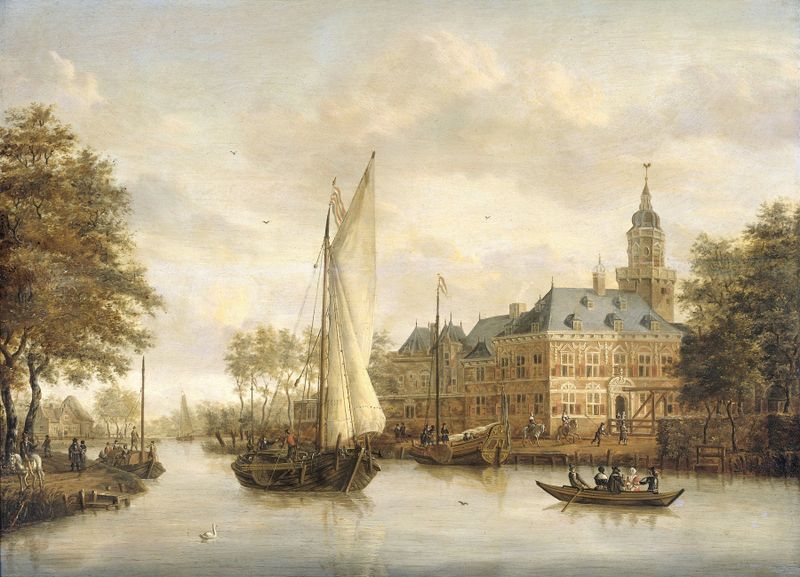
Nijenrode Castle on the Vecht near Breukelen
Jacobus Storck

Castle on a River in Holland
Jacobus Storck
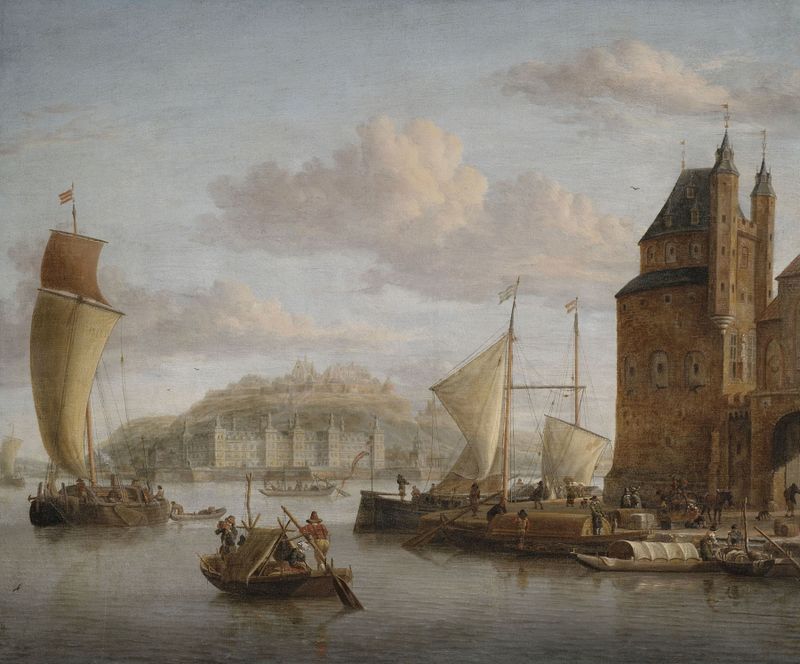
Nördlicher Hafen an einem Schloss mit zahlreichen Lastbooten und Kaufleuten
Jacobus Storck
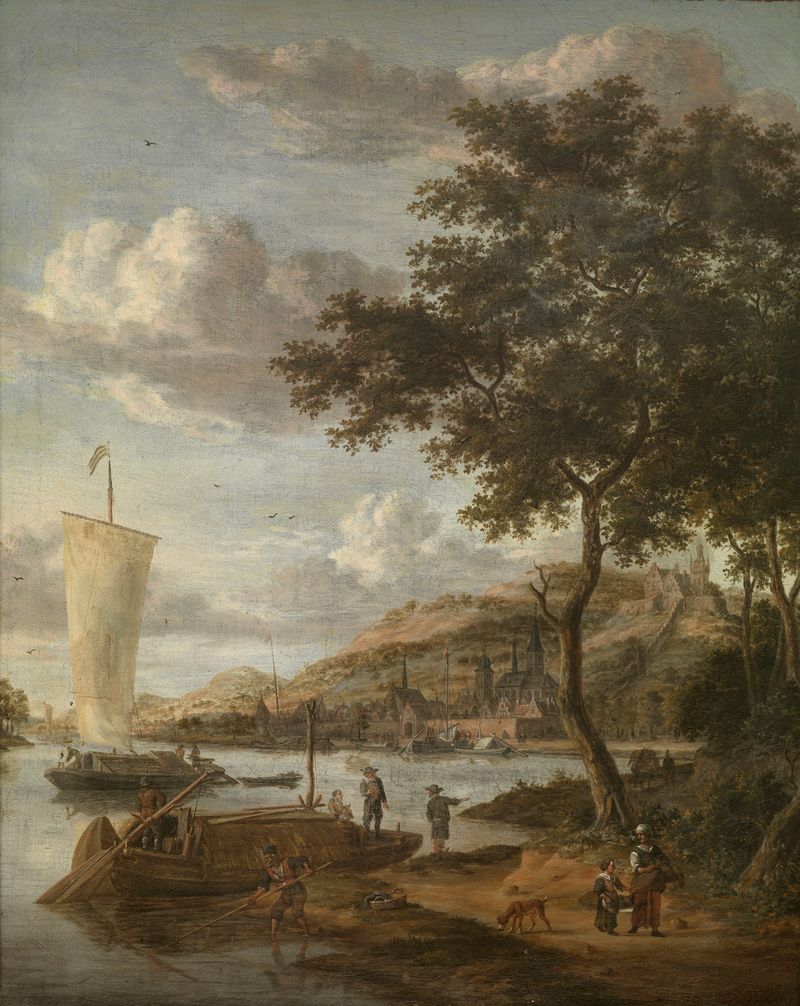
View of the Necker
Jacobus Storck
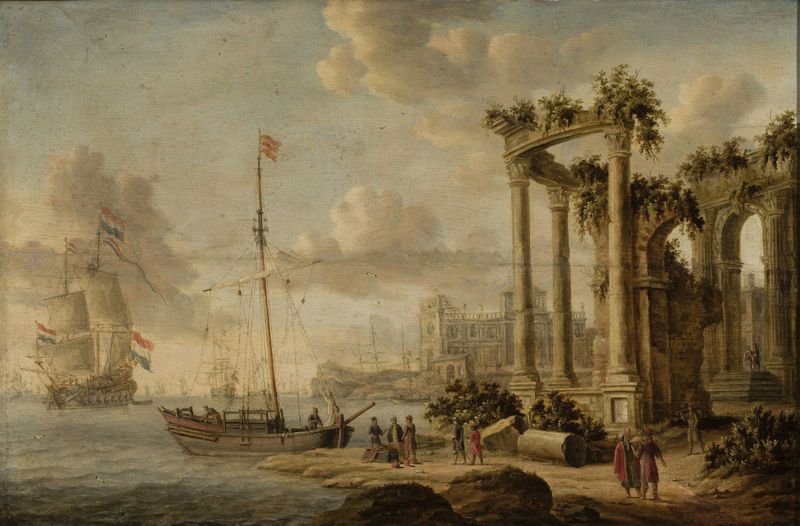
Seaside landscape with ancient ruins on the coast
Jacobus Storck

Harbour Scene with Antique Ruins
Jacobus Storck





