Riverside Farmstead — History & Facts
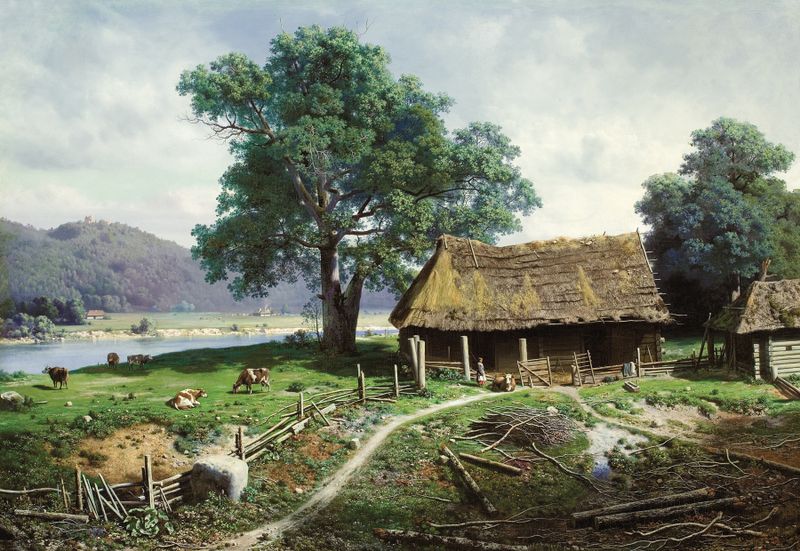
When did color learn to lie? In the tender embrace of Riverside Farmstead, the palette holds a truth that resonates deep within the heart, evoking a yearning for simplicity and connection with nature. Look to the left at the sun-drenched fields, where golden wheat sways gently in a soft breeze. The interplay of light and shadow draws the eye to the rustic farmhouse nestled among the trees, its warm hues echoing the earth beneath. Notice how the artist captures not just the structure, but the very essence of tranquility in the scene.
The delicate brush strokes lend a sense of movement to the clouds above, while the reflections in the water mirror a world suspended in time. In this idyllic landscape, contrasts abound. The vibrant vitality of the fields stands in stark opposition to the quiet solitude of the farmhouse, suggesting a longing for human connection amidst the vastness of nature. The soft blues of the sky, infused with hints of lavender, create a sense of melancholy that suggests unfulfilled desires or memories left behind.
Each element weaves together the threads of nostalgia and hope, inviting the viewer to reflect on their own yearnings. Mikhail Klodt painted Riverside Farmstead in 1858 during his time in Russia, a period marked by artistic exploration and the burgeoning influence of realism. The world was undergoing profound changes, and Klodt's work reflects a deep appreciation for the pastoral beauty surrounding him, capturing a fleeting moment of serenity against the backdrop of an evolving society.