Riverside Farmstead — History & Facts
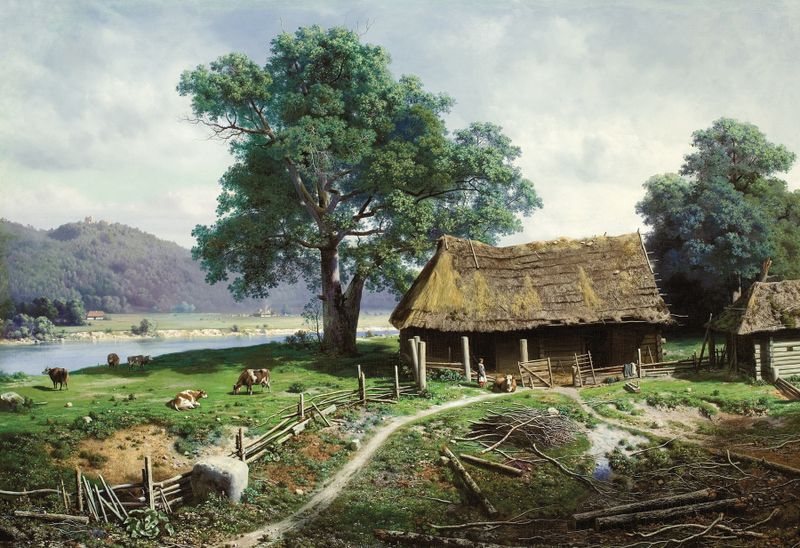
Who listens when art speaks of silence? In Mikhail Klodt's Riverside Farmstead, a scene unfolds where tranquility meets the undercurrents of change, hinting at the revolution stirring just beyond the pastoral calm. Look to the left at the gently flowing river, its surface glistening under the soft embrace of the afternoon sun. Notice how the light cascades over the weathered farmhouse, creating a striking contrast against the lush greens of the surrounding fields. The composition invites the eye to wander, with the horizon line subtly drawing us toward the tranquility of rural life, while the warm tones infuse the scene with a nostalgic warmth.
Klodt’s masterful brushwork captures the delicate balance of nature and humanity, creating a harmonious tableau that belies the tension lurking beneath its surface. Delve deeper into the details: the scattered hay bales hint at labor long past, while the distant treetops sway with an unspoken urgency. The stillness of the water contrasts with the dynamic energy of the clouds above, suggesting a world on the brink of upheaval. Each element, from the small figures tending to their daily tasks to the ominously darkening sky, evokes a bittersweet sense of impending change, encapsulating the quiet before the storm that was about to sweep through Russia. In 1858, Klodt painted this piece during a period of great societal transformation in his homeland.
Living amid rising tensions and calls for reform, he found artistic solace in the countryside, where the simplicity of rural life offered a stark juxtaposition to the turmoil of the times. This work reflects not only his personal vision but also the broader artistic movement that sought to depict the realities of life while foreshadowing the revolutionary spirit brewing within the nation.