Riviergezicht met schepen — History & Facts
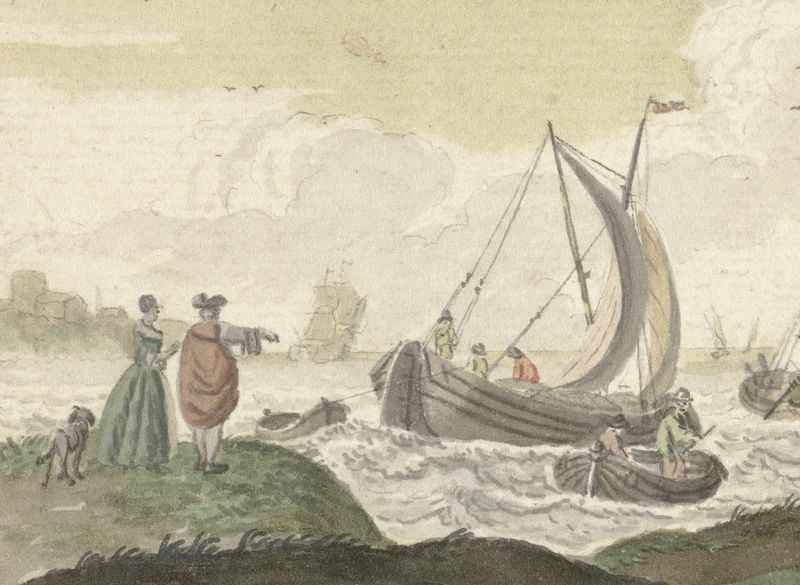
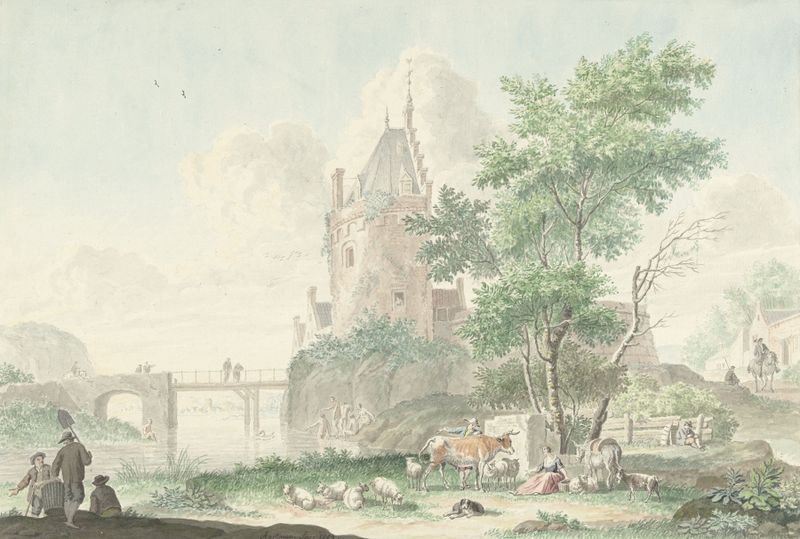
In the stillness of Riviergezicht met schepen, a haunting quietude envelops the river landscape, whispering secrets of solitude and yearning. Each brushstroke captures an untouched moment, inviting the viewer to linger and reflect on the isolation that pervades the scene. Look to the horizon, where the muted hues of the setting sun blend seamlessly with the water’s surface, casting a somber glow. Notice how the gentle waves lap against the small vessels anchored nearby, their stillness contrasting with the vastness of the river.
The artist’s deft use of blues and grays evokes a sense of calm yet melancholic beauty, while the wisps of clouds above hint at a restless sky, amplifying the emotional weight of the scene. Delve deeper into the painting's layers, where the interplay of light and shadow reveals hidden narratives of longing. The vessels, mere silhouettes, seem adrift not just on the water, but in the expanse of their existence, embodying the essence of loneliness. Meanwhile, the quiet banks and distant trees stand as silent witnesses, emphasizing the solitude of the human experience in nature's embrace, creating a profound sense of connection and isolation. Nicolaes Aartman painted Riviergezicht met schepen during a time when Dutch landscape painting was evolving, incorporating more emotional depth and atmospheric perspective.
Created between 1723 and 1760, Aartman was influenced by the Baroque movement, which sought to capture not just the beauty of the landscape, but also the complex emotions tied to it. This period marked a transition in art, as artists began to explore and express personal sentiments through their work.