
Römische Ruinenhalle; die Konstantinsbasilika — History & Facts
Art reveals the soul when the world turns away. In Römische Ruinenhalle; die Konstantinsbasilika, emptiness resonates through the majestic ruins, inviting contemplation of what once was, and the haunting silence that lingers in their absence. Look to the foreground where the majestic columns seem to reach for the sky, their grandeur juxtaposed with the desolation that surrounds them. The light floods in from the left, casting elongated shadows across the cracked stone, emphasizing the texture of age and decay.
Notice how the muted palette of earth tones enhances the sense of nostalgia, while the delicate brushwork brings forth an almost ethereal quality to the ruins, evoking a sense of reverence for history. The composition contrasts strength with fragility; the monumental architecture stands proud, yet its corroded surfaces speak of time's relentless passage. Hidden within the details, one can sense the weight of countless stories echoing through the arches, whispering of lives once lived and aspirations now lost. This tension between permanence and impermanence holds a mirror to our own fleeting existence, reminding us of the fragility inherent in all things. In 1788, Maximilian von Verschaffelt was immersed in the neoclassical movement, capturing the allure of antiquity while reflecting the cultural fascination with ruins during a time of shifting artistic paradigms.
He created this work amidst a backdrop of enlightenment thought and a growing appreciation for classical heritage, embodying the complex interplay between history, identity, and the inexorable march of time in the world of art.
More Artworks by Maximilian von Verschaffelt
Browse all →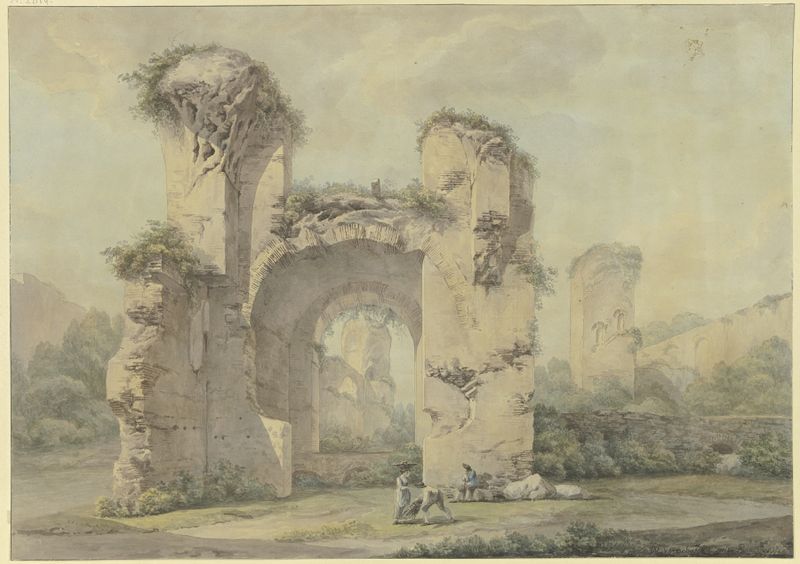
More Architecture Art
Browse all →
The statue of Liberty
Frédéric Auguste Bartholdi

View of Houses in Delft, Known as ‘The Little Street’
Johannes Vermeer

View of Houses in Delft, Known as ‘The Little Street’
Johannes Vermeer

The Cathedral in Rouen. The portal, Grey Weather
Claude Monet

The yellow house
Vincent van Gogh

The Church in Auvers-sur-Oise, View from the Chevet
Vincent van Gogh