Rock Refuge of Reverend Stolarczyk in the Tatra Mountains — History & Facts
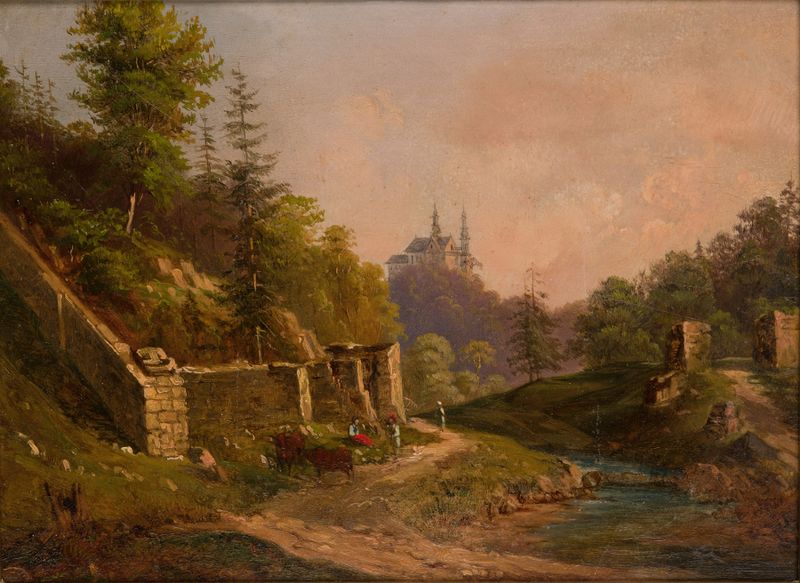
What secret hides in the quiet of the canvas? In the serene embrace of the Tatra Mountains, a stillness envelops the scene, hinting at the stories held within the folds of the landscape. An interplay of rugged rocks and delicate flora suggests a world both enduring and ephemeral, inviting viewers to contemplate the hidden movements of life that pulse beneath the surface. Focus on the central rock formation, where the refuge stands sentinel against the vast sky. The artist employs a palette of earthy tones, contrasted with bursts of vibrant greens and soft blues, guiding the eye to the harmonious balance between nature and human habitation.
Notice how the light subtly caresses the surfaces, revealing textures that speak to the passage of time. Each brushstroke translates the solidity of the stone into a sense of presence, creating a narrative of resilience against the backdrop of the majestic mountains. Delve deeper into the contrasts present in the work—the roughness of the rocks juxtaposed with the delicate wildflowers at their base symbolizes the interplay of strength and fragility. The refuge itself embodies a sanctuary amidst the harshness of nature, a poignant reminder of humanity’s search for belonging.
This painting evokes a sense of movement, as if one can almost feel the winds whispering secrets to the mountains, urging the viewer to reflect on their own journey through life. Created in 1876, this piece emerged from the hand of an artist deeply engaged with the Romantic ideals of nature’s beauty and the sublime. During this period, Eljasz-Radzikowski was exploring Poland’s picturesque landscapes, drawing inspiration from his own travels in the Tatra region. As the art world grappled with the emergence of new movements, his work stood as a testament to the timelessness of the natural world, blending realism with an emotional connection to the land.