View of Czerna near Krzeszowice — History & Facts
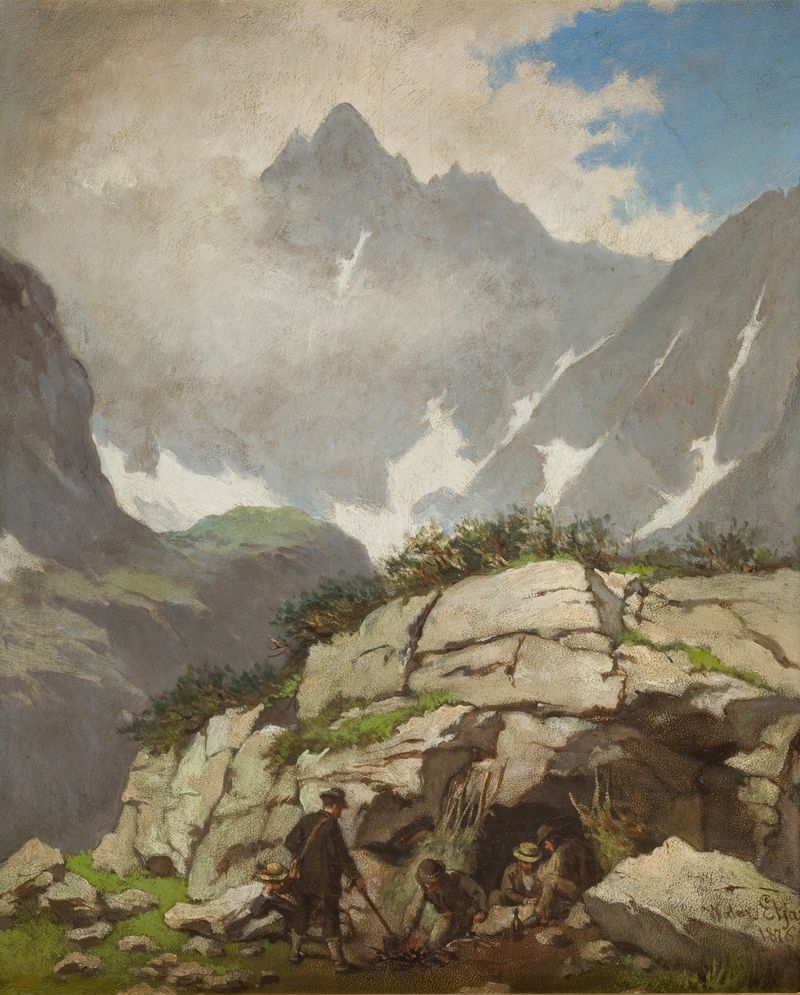
This sentiment reverberates through the vibrant strokes of a landscape that invites longing—the gentle hills and serene waterways whisper of memories long past, echoing the nostalgia that binds us to places once cherished. Focus your gaze on the lush greenery sprawling across the canvas, where shades of deep emerald and soft olive intertwine, creating a tapestry of life. Notice how the light dances across the water's surface, illuminating the subtle ripples and casting reflections that shimmer like fleeting moments. The composition, framed by wisps of clouds above, draws you in, urging you to wander through the landscape, while the clear, crisp colors evoke an air of tranquility. Yet within this picturesque vista lies a poignant contrast.
The vibrant life of nature juxtaposes the inevitable passage of time, reminding us of the transience of beauty. The distant hills, while inviting, echo a sense of distance, as if they guard secrets of the past. Each brushstroke captures not just the scenery, but an emotional landscape—an interplay of joy and melancholy that resonates with anyone who has looked back on a beloved place or time. Created in 1861, this work emerged during a period of burgeoning national identity for Poland, as artists like Walery Eljasz-Radzikowski sought to capture the essence of their homeland.
Eljasz-Radzikowski painted in a time when Romanticism was giving way to more naturalistic representations, reflecting both personal and collective sentiments in art. As he painted View of Czerna near Krzeszowice, he not only conveyed a landscape but also an enduring sense of belonging and nostalgia.