Rocks above the River — History & Facts
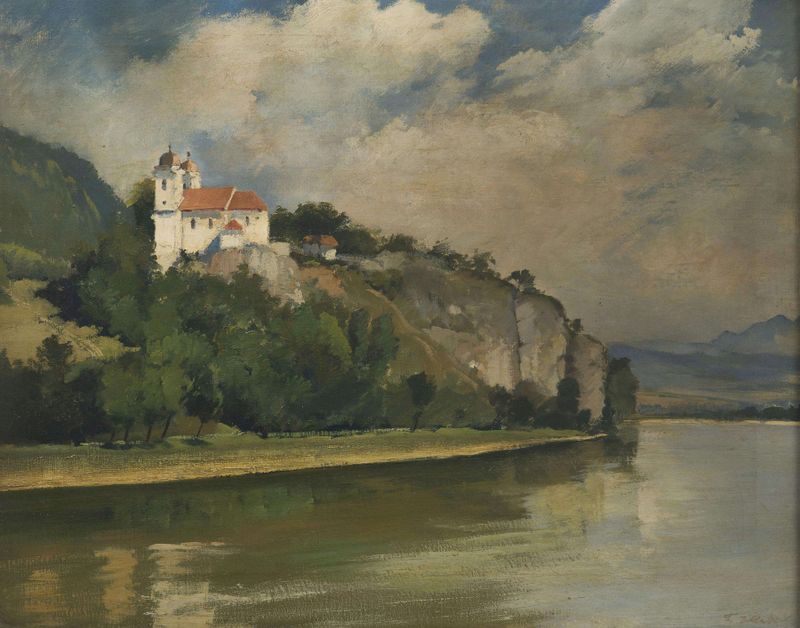
What if silence could speak through light? In the stillness of Rocks above the River, a haunting solitude emerges, inviting us to contemplate the weight of isolation and nature’s quiet embrace. Look to the center of the canvas, where the interplay of shadow and light creates a mosaic of textures on the rugged rocks. The artist’s deft brushwork captures every crevice, the sun’s rays glancing off the surface, illuminating their steadfast presence against the flowing river below. The cool blues of the water contrast beautifully with the warm, earthy tones of the stones, establishing a dialogue between the elements.
This careful composition not only highlights the natural beauty but also evokes a sense of stillness, as if time has paused in reverence. Beneath this serene tableau lies a profound emotional undercurrent. The robust rocks, symbols of endurance, stand alone, embodying the weight of solitude. The river rushes onward, a constant reminder of the world’s movement, while the stones remain unchanged, suggesting a tension between the passage of time and the permanence of nature.
This juxtaposition speaks to the loneliness that accompanies periods of stillness, capturing the essence of isolation amidst beauty. František Hladík created Rocks above the River during a time of introspection, likely drawing inspiration from his surroundings and personal experiences. Though the exact date remains unknown, Hladík’s work is characterized by a deep connection to nature and a reflection on the human condition. His artistic journey unfolded against the backdrop of a changing world, where he sought solace in the quiet corners of landscapes, bringing forth emotions that resonate with viewers even today.