The Church above the River — History & Facts
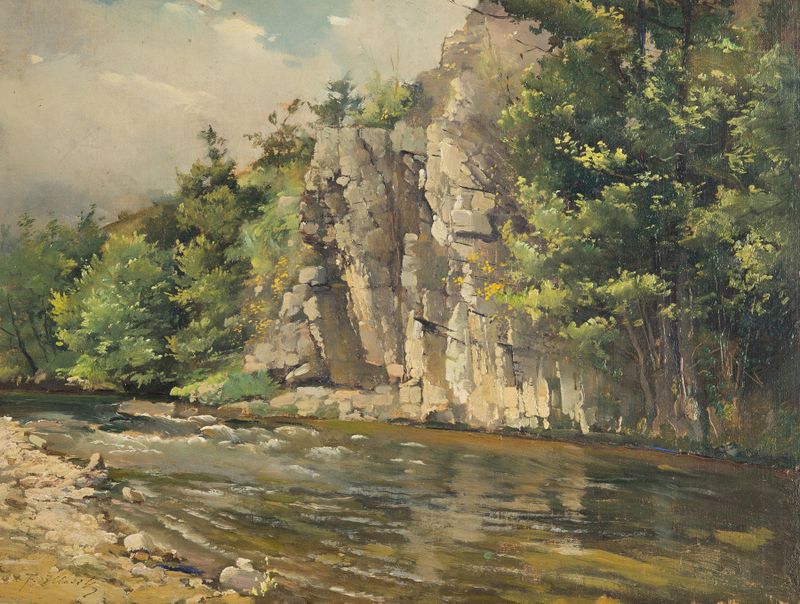
In moments of revolution, our truths are painted in strokes both bold and tender, revealing the heart of humanity’s struggle. Look to the center where the church, a steadfast symbol of faith, rises above the gentle ripples of the river below. Its solemn facade is bathed in soft hues of earthy browns and muted greens, contrasting with the vibrant blue of the water that flows beneath it. The artist’s brushwork gives life to the surface, creating a shimmering effect that draws the eye and invites contemplation.
Notice how the light dances across the water, merging seamlessly with the shadows cast by the trees, suggesting a dialogue between nature and the manmade. Beneath this serene landscape lies an undercurrent of tension. The church, while a beacon of hope, also represents the rigid structures of society that often resist change. The flowing river, ever-moving, signifies the relentless passage of time and the inevitability of transformation.
In the distance, the soft haze hints at a world on the brink of awakening, where the whispers of revolution lure us to question the status quo. František Hladík painted this scene during a transformative period in history, likely influenced by the artistic movements of the 20th century, which sought new expressions amid societal upheaval. His work reflects a time when traditional values faced challenges from modernity, navigating the turbulent waters of change that defined his contemporaries. In capturing this moment, he invites us to engage with the complexities of faith, tradition, and progress.