Roeiboot op zee — History & Facts
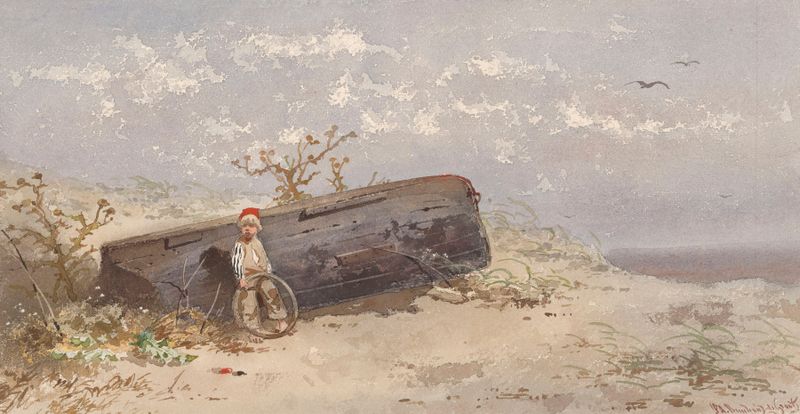
Can beauty exist without sorrow? As the gentle waves lap against the sides of a small rowing boat, the innocence of the moment fills the air with a bittersweet tension. Each stroke of the oars dances in harmony with the shimmering water, embodying both freedom and fragility in a fleeting existence. Focus on the carefully rendered figures in the boat, their expressions a mix of determination and leisure. Notice how the light captures the water droplets cascading from the oars, reflecting a spectrum of blues and greens.
The composition leads your eye toward the distant horizon, where the sky seems to embrace the sea, creating a serene yet poignant connection between the two. Hidden within this tranquil scene are whispers of life’s complexities. The boat, a fragile vessel of hope, contrasts sharply against the vastness of the sea, symbolizing the delicate balance between aspiration and the unknown. The soft hues evoke a sense of longing, suggesting that the journey, much like innocence, is often tinged with underlying currents of vulnerability. Created between 1834 and 1872, this work emerged during a period of profound change in the Netherlands.
The artist, navigating his own artistic evolution, was influenced by Romanticism's embrace of nature's beauty and the human spirit. As the world grappled with industrialization, his depiction of serene maritime life reflects a yearning for simplicity amidst turmoil, capturing an essence that resonates through time.