Romantic landscape — History & Facts
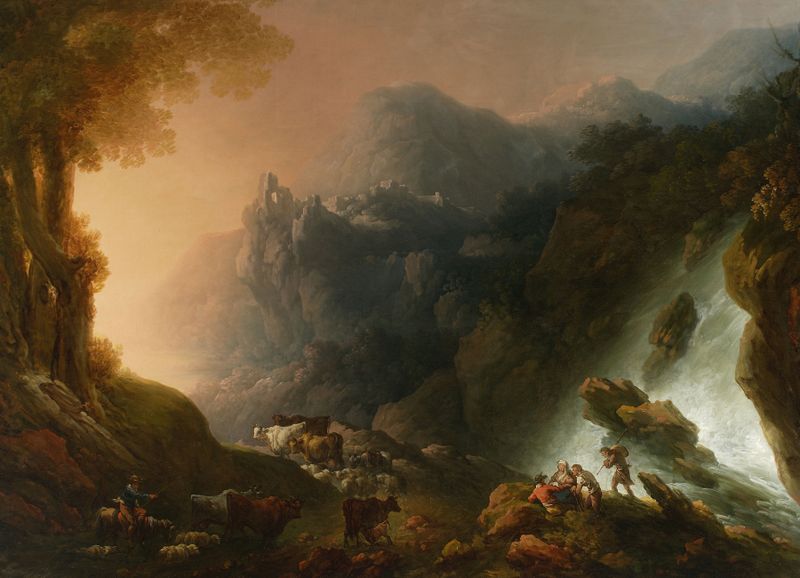
When did color learn to lie? In a world that yearns for truth, nostalgia clings to every brushstroke, reshaping the memory of what once was. It invites us into a dreamscape, where the past swells with longing, demanding our attention. Focus on the horizon where soft, ethereal hues blend seamlessly, creating an illusion of a distant realm. Notice how the warm golden light bathes the landscape, infusing the scene with a gentle radiance that seems almost alive.
As you follow the winding path through verdant hills, the rich greens and deep blues evoke a sense of serenity, while subtle textures hint at the artist's meticulous technique, each stroke breathing life into the pastoral beauty. Yet, beneath this tranquil exterior lies a poignant tension. The juxtaposition of light and shadow reveals a bittersweet reality; the landscape is not merely a celebration of beauty but also an echo of loss. The lushness invokes a yearning for a simpler time, where the natural world provided solace, while the looming shadows serve as reminders of change—a world forever altered, a nostalgia tinged with melancholy. Painted in the 1820s, this piece emerged amidst a burgeoning Romantic movement in Europe, where artists sought to capture emotion and the sublime.
Franciszek Ksawery Lampi, based in Poland, was influenced by both the lush landscapes of his homeland and the shifting political tides of the era. As he transformed personal experiences into visual poetry, he contributed to a larger dialogue of longing and beauty, inviting viewers to reflect on their own connections to the past.