
Romantische Landschaft im Abendlicht — History & Facts
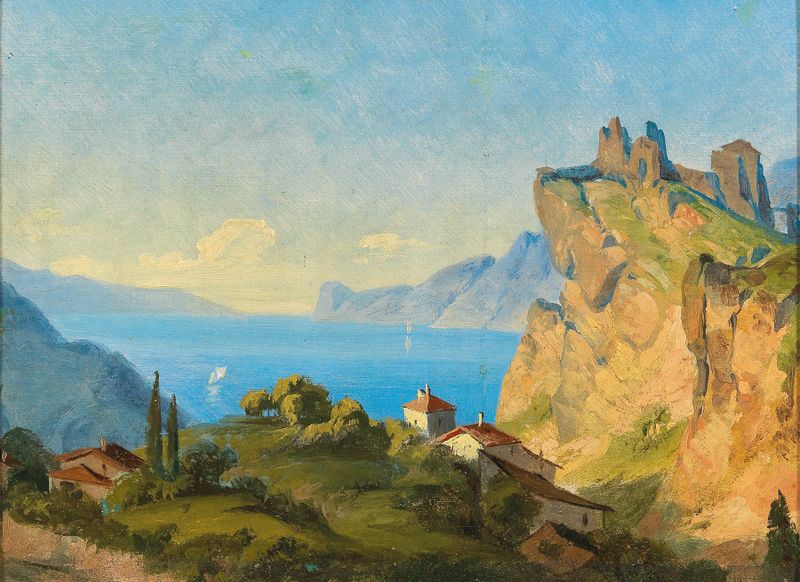
Can beauty exist without sorrow? In Romantische Landschaft im Abendlicht, the tension between tranquility and latent violence paints an intricate emotional landscape that invites contemplation. Look to the foreground where ethereal light bathes the rolling hills, casting soft shadows that play gently across the terrain. The warm hues of sunset—golden yellows mingling with deep oranges—create a stunning contrast against the cooler blues of the distant mountains. The winding river, a silvery snake, draws the eye toward the horizon, where the sky bruises into twilight.
It’s in this delicate balance of color and composition that a sense of calm is punctuated by an underlying unease. The juxtaposition of serenity and violence pulses through the work. Observe the wildflowers swaying gently in the evening breeze; their vibrant beauty stands in stark contrast to the dark, tumultuous undercurrents of the river's flow, suggesting that tranquility can easily be disrupted. The expansive sky, while divine in its glow, hints at a storm brewing on the horizon, reminding us that beauty often coexists with unseen turmoil, echoing the complexity of human emotion. Edmund Von Wörndle painted this piece in 1859 during a time of significant social upheaval and transformation in Europe.
His focus on romantic landscapes paralleled the broader artistic shift toward emotional expression and the sublime in nature. This was a period when artists explored the tension between beauty and darkness, using their canvases to reflect both the serene and the chaotic realities of life.
More Artworks by Edmund Von Wörndle
Browse all →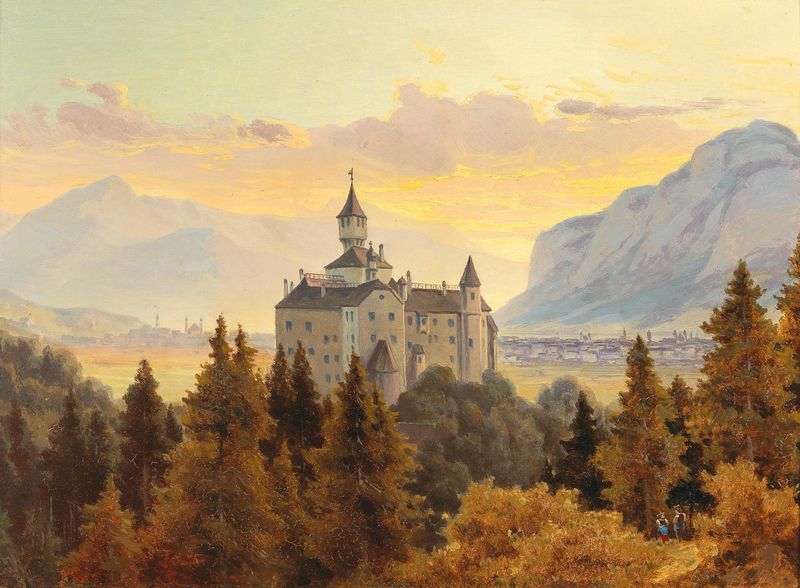
View Of Schloss Ambras Near Innsbruck
Edmund Von Wörndle
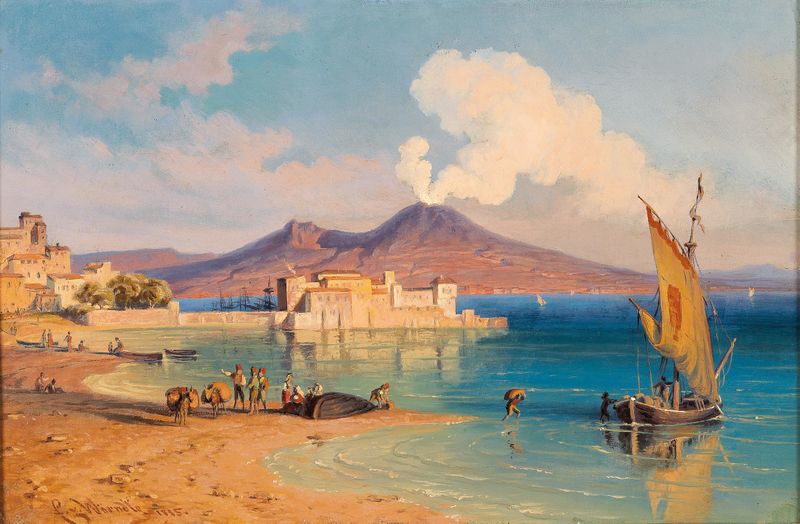
View From The Riviera Di Chiaia To The Castel Dell’ovo, Naples
Edmund Von Wörndle
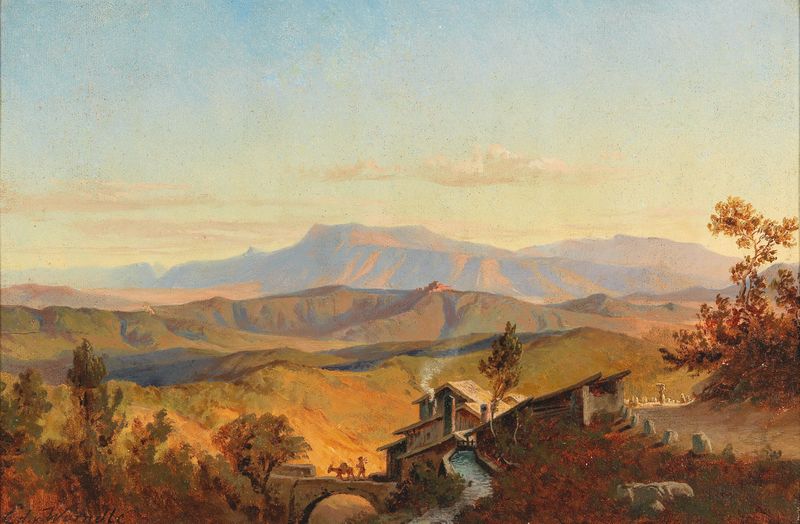
View From The Sabine Hills Near Rome
Edmund Von Wörndle
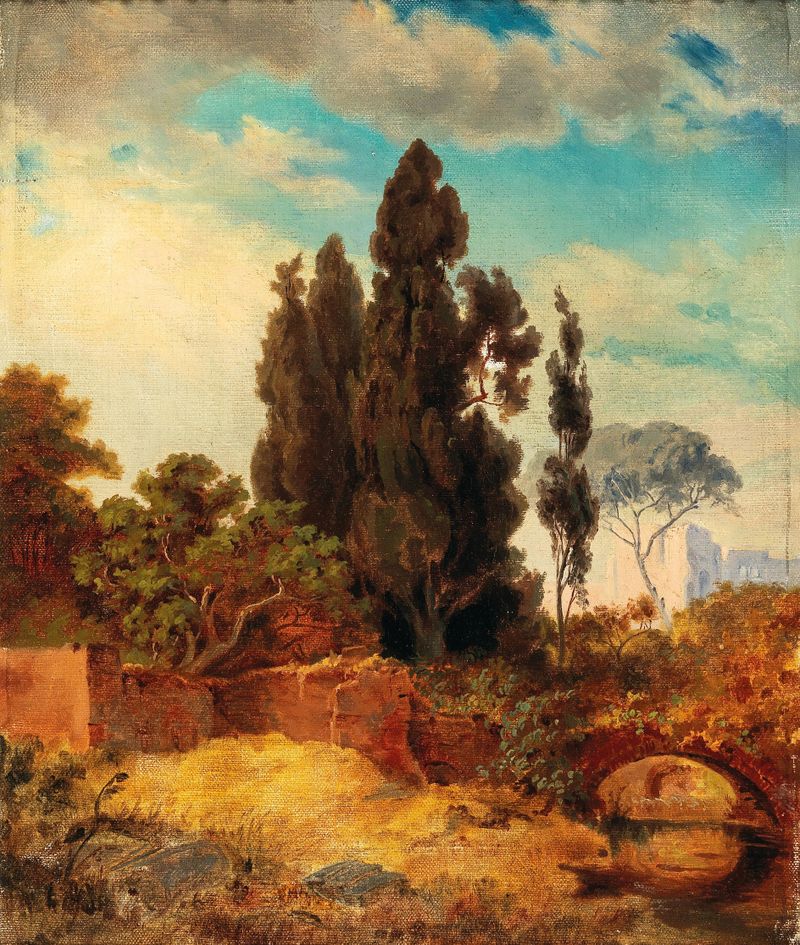
View Of The Villa Hadriana, Tivoli
Edmund Von Wörndle

Stadt und See Tiberias
Edmund Von Wörndle
View of Nago on Lake Garda
Edmund Von Wörndle





