
Rome, a View of Castel Sant’Angelo and St. Peter — History & Facts
In the delicate interplay of hues, one can sense the fragility of fleeting moments captured in time. A landscape can hold whispers of history, and the viewer stands at the threshold of this serene vista, contemplating the soft dance of light and shadow. Look to the left at the imposing silhouette of Castel Sant’Angelo, its sturdy form softened by the gentle strokes of pastel colors. Notice how the light bathes the ancient stone in warm golds, while the cool blues of the sky create a tranquil backdrop that invites the eye to wander.
The meticulous brushwork conveys both detail and depth, allowing the viewer to feel the weight of the architecture while simultaneously embracing the surrounding atmosphere. The ethereal quality of the scene evokes a sense of nostalgia, as if the viewer might just step into a memory. Delve deeper into the contrasting elements at play here — the robust fortress overshadowed by the delicate dome of St. Peter’s Basilica.
This juxtaposition reflects the tension between human tenacity and the ephemeral nature of faith. The distant horizon hints at the fragility of civilization, suggesting that even the grandest structures are subject to the passage of time. Each stroke feels intentional, capturing not just a view, but an essence that speaks to the soul’s yearning for permanence amidst inevitable change. In 1870, Jankowski painted this work while living in Italy, a period marked by the unification of the country and the evolution of artistic expression.
During this time, artists were exploring new themes of light and atmosphere, seeking to depict their surroundings with authenticity. His focus on the interplay of architectural strength and natural beauty reflects a broader artistic trend, as well as his personal journey in embracing the profound simplicity of everyday sights.
More Artworks by Johann Wilhelm Jankowski
Browse all →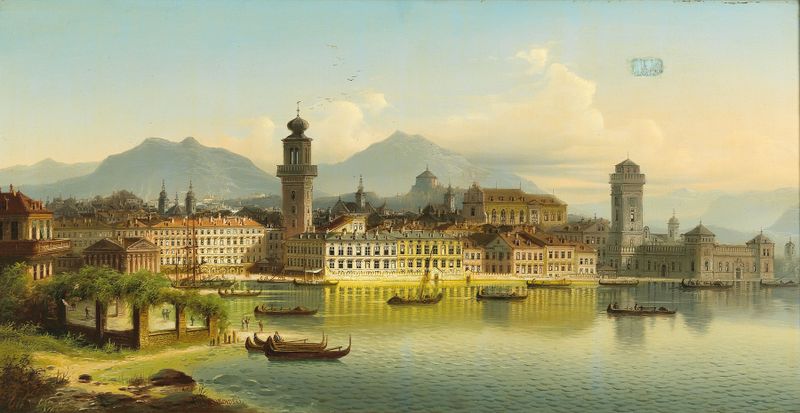
View of Riva on Lake Garda
Johann Wilhelm Jankowski
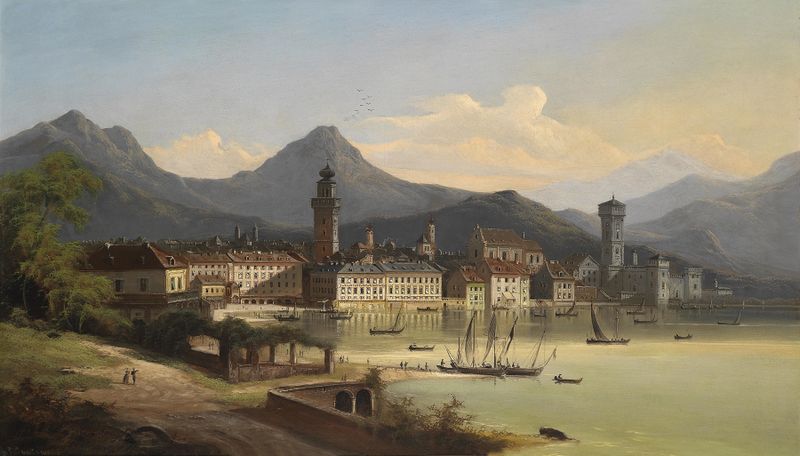
Riva am Gardasee
Johann Wilhelm Jankowski
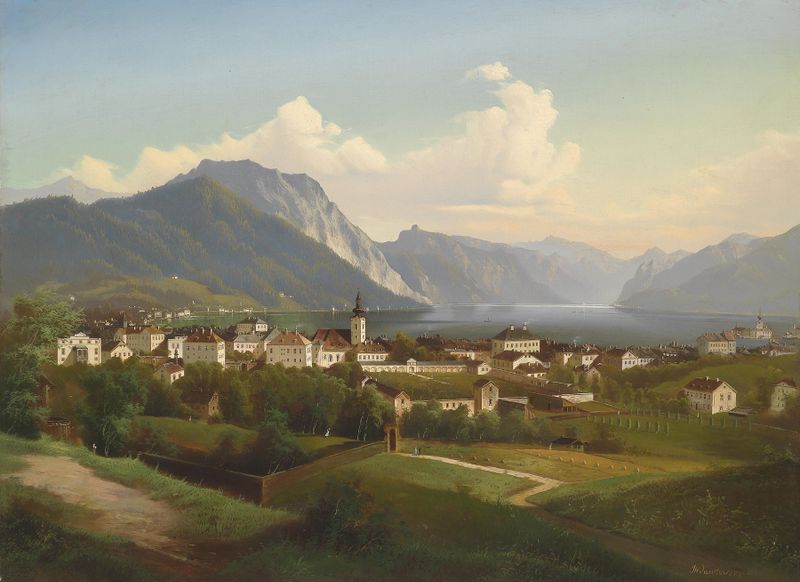
Blick auf Gmunden mit Schloss Orth
Johann Wilhelm Jankowski
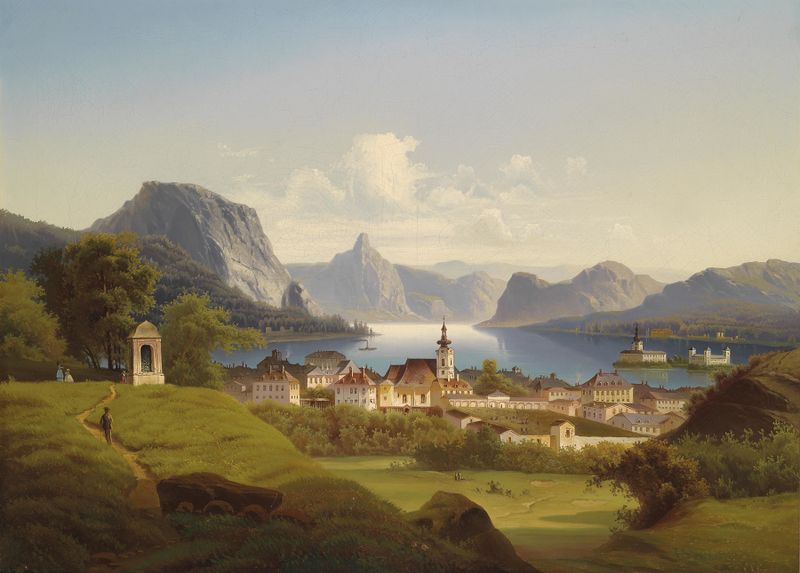
Blick auf Gmunden mit Schloss Orth
Johann Wilhelm Jankowski
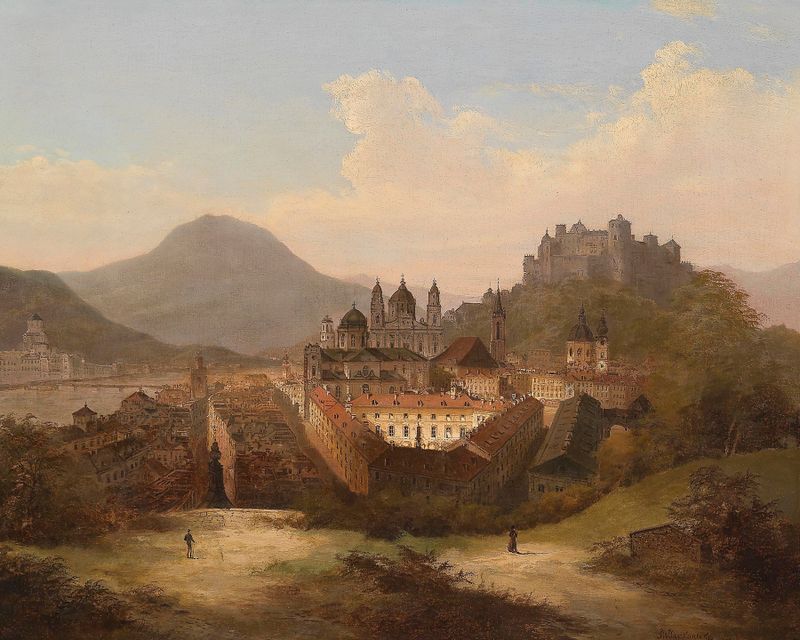
Blick auf Salzburg
Johann Wilhelm Jankowski
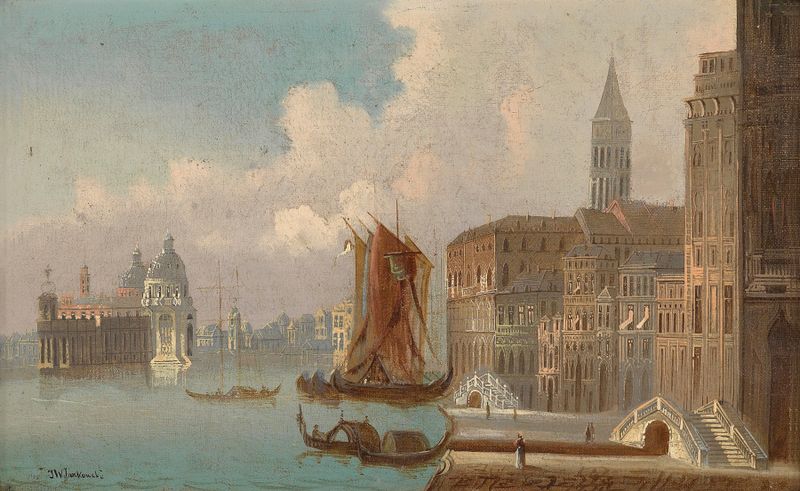
Partie aus Venedig
Johann Wilhelm Jankowski
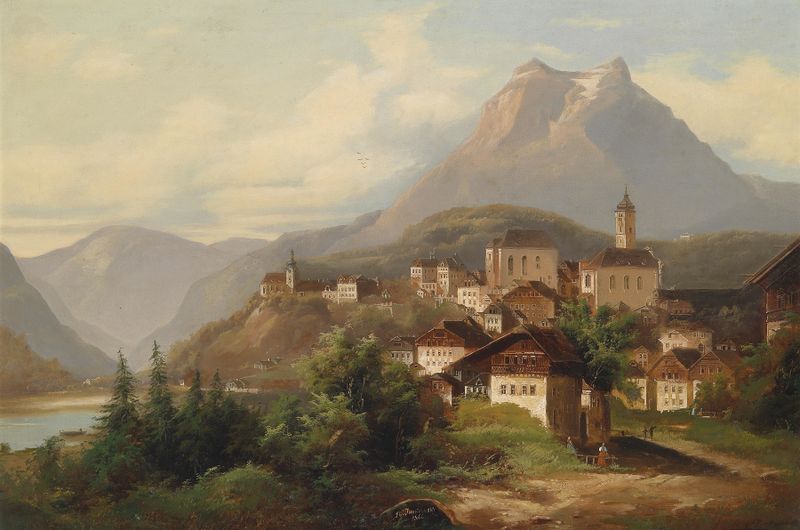
Blick auf Pilatus mit Tomlishorn
Johann Wilhelm Jankowski
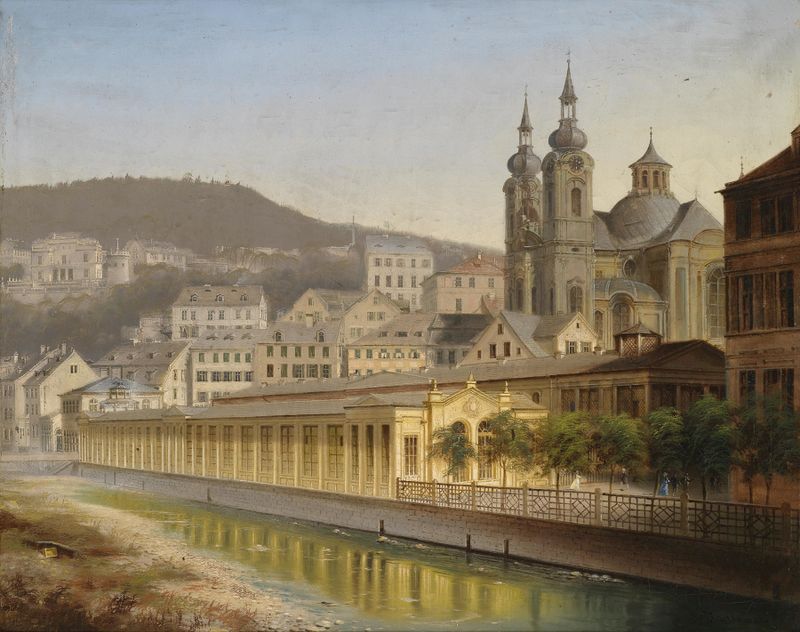
Blick auf Karlsbad
Johann Wilhelm Jankowski
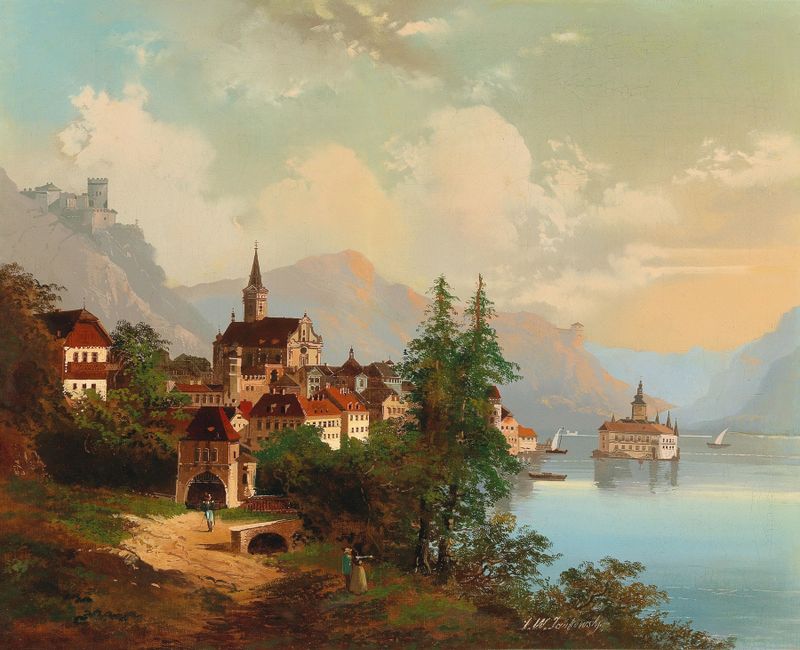
Blick auf eine Stadt und ein Wasserschloss
Johann Wilhelm Jankowski
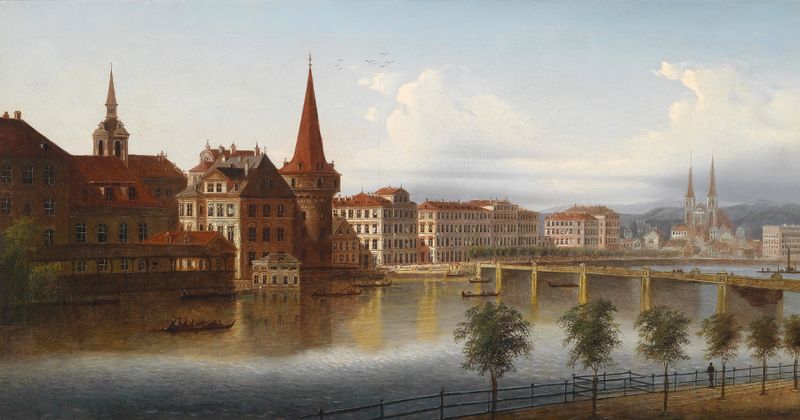
Luzern
Johann Wilhelm Jankowski





